
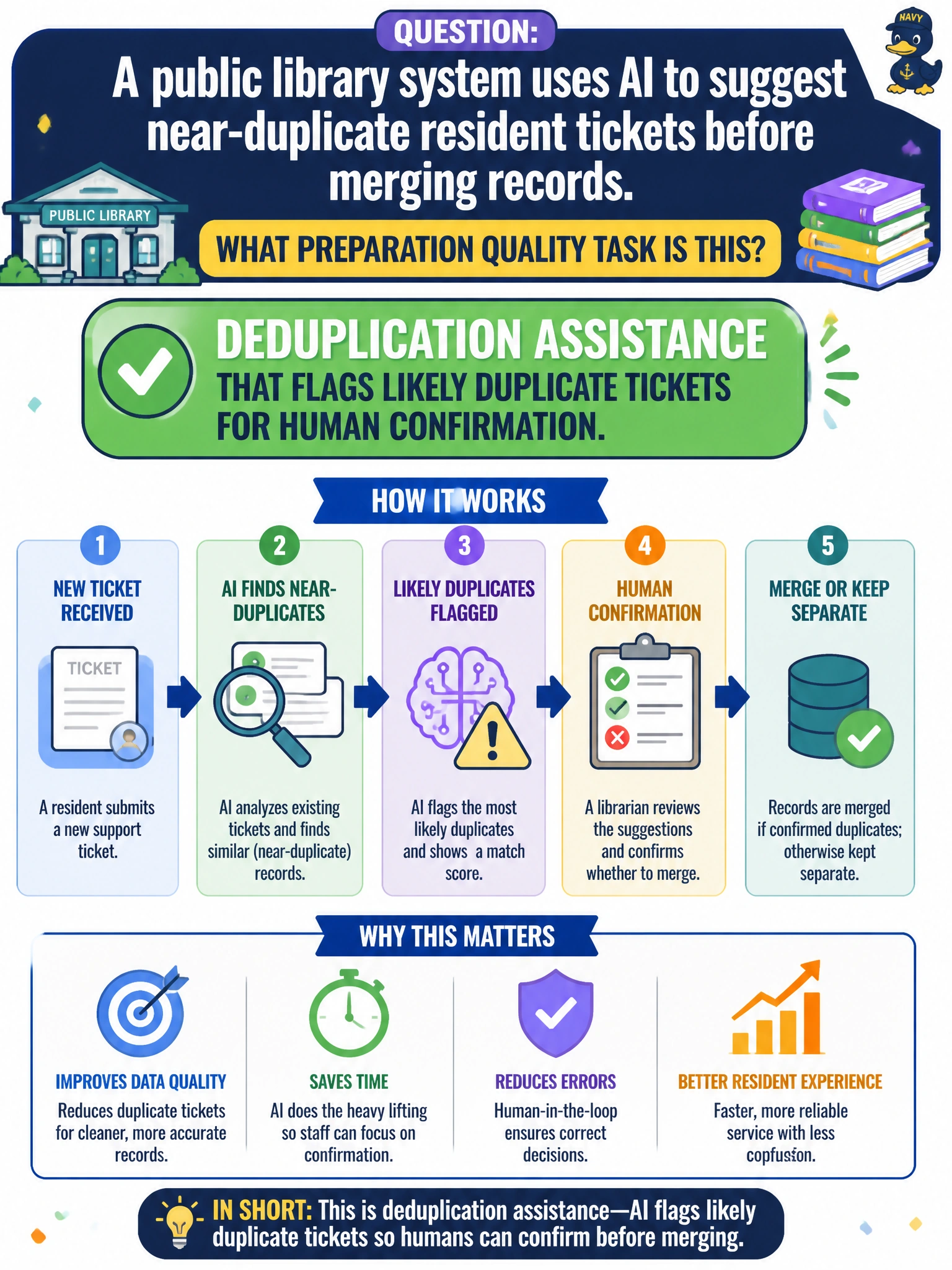
A public library system uses AI to suggest near-duplicate resident tickets before merging records. What preparation quality task is this?
Select an answer to reveal the explanation.
Short Explanation
Near-duplicate suggestions are a polite tap on the shoulder—“these two tickets look alike.” Staff still decide whether to merge. AI helps quality and dedup; it should not auto-fine people or silently shred history.
Full Explanation
Suggesting near-duplicate resident tickets before merging records is a deduplication assistance quality task in data preparation: AI proposes likely pairs so library (or 311-style) staff can confirm whether submissions refer to the same incident. The civic value is cleaner service history and less double counting, while humans retain merge authority and auditability. Near-duplicate detection is probabilistic support, not automatic identity of incidents.
Automatically fining residents for duplicate submissions fails because penalties require policy and due process; prep quality tools are not enforcement engines. Guaranteeing two similar tickets are always the same incident fails by concept: similar text can be repeat issues, household vs neighbor reports, or coincidental wording—confirmation is required. Erasing the older ticket without any audit trail fails because service systems need lineage for FOIA, quality metrics, and dispute handling; silent deletes are a control failure.
Exam caveat: Dedup thresholds trade precision and recall; overly aggressive auto-merge can erase legitimate distinct requests and bias workload stats. Language and accessibility differences may make true duplicates look dissimilar—do not rely on English-only similarity.
Operational check: Present ranked near-duplicate pairs with diffs, require staff confirm/deny, log merge decisions, retain pointers to superseded tickets, and forbid auto-fines or unaudited deletes from the AI suggestion path. Periodically sample merges for false-positive rate.