
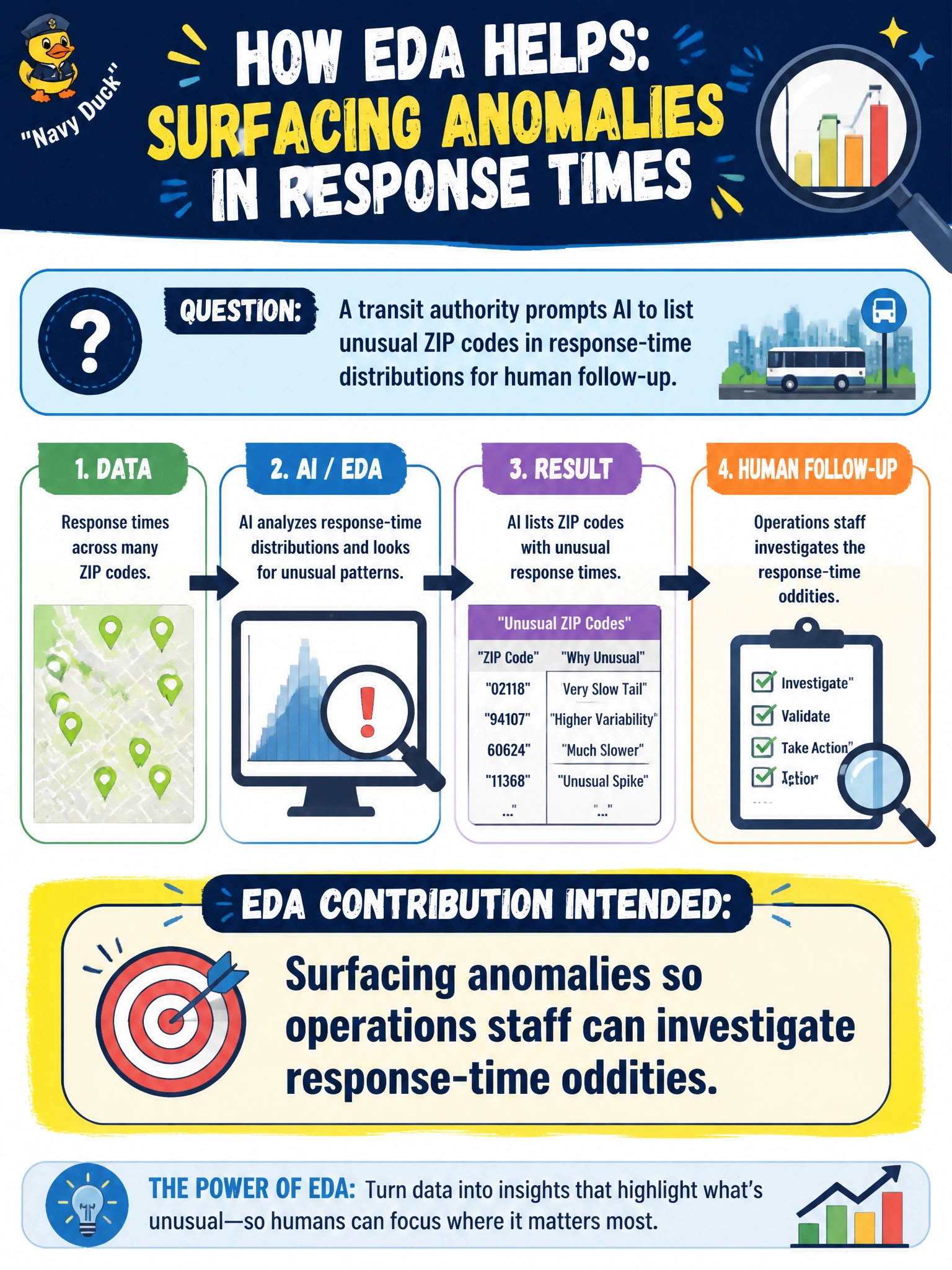
A transit authority prompts AI to list unusual ZIP codes in response-time distributions for human follow-up. What EDA contribution is intended?
Select an answer to reveal the explanation.
Short Explanation
Anomaly lists are smoke alarms, not demolition orders. The model highlights weird ZIP codes in response times so humans can poke at schedules, geocodes, or demand. Do not reassign fleets or write off neighborhoods on a first AI shout.
Full Explanation
Prompting AI to list unusual ZIP codes in transit response-time distributions is an anomaly-surfacing contribution to EDA: the model highlights geographic or distributional oddities so operations staff can investigate schedules, demand, geocoding, or data joins. The intended value is prioritized human follow-up, not autonomous network redesign. Transit authorities benefit when exploration narrows where supervisors look first while humans retain service and equity decisions.
Automatically reassigning drivers based on the AI list alone fails because workforce and run-cut changes need operational validation, labor rules, and safety review—not an unverified anomaly dump. Declaring those ZIP codes permanently out of service fails by concept: unusual response times may reflect temporary events, map errors, or sparse samples; delisting service is a policy act far beyond EDA flagging. Proving that unusual ZIP codes are always geocoding errors fails because anomalies have multiple causes; AI lists candidates, they do not certify a single root cause.
Exam caveat: Geographic anomalies can encode equity issues (underserved areas) rather than mere “bad data.” Sparse ZIPs produce noisy averages—require minimum sample rules before acting. Do not paste customer addresses into unapproved tools when exploring.
Operational check: Produce an anomaly ZIP list from approved aggregates, join to CAD/AVL and geocode QC flags in a logged notebook, have operations validate a sample of trips, and only then open service-planning tickets. Prohibit automated driver reassignment or permanent out-of-service actions from the EDA assistant output.