
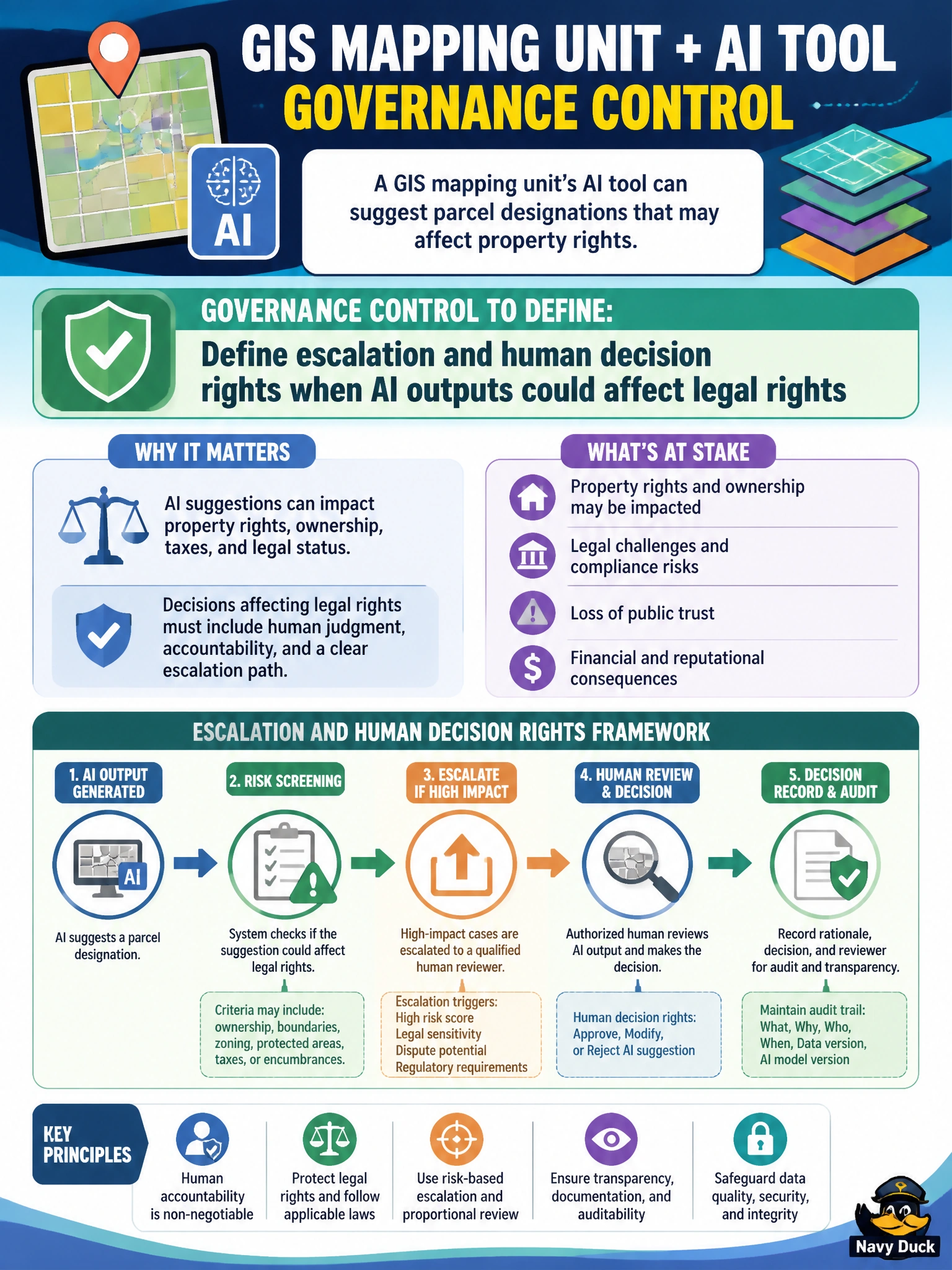
A GIS mapping unit’s AI tool can suggest parcel designations that may affect property rights. What governance control should be defined?
Select an answer to reveal the explanation.
Short Explanation
When an AI nudge can change someone’s property rights, that’s not a autocomplete moment—it’s an escalation moment. Humans keep the decision, and the path upstairs is written down.
Full Explanation
When a GIS mapping unit’s AI tool can suggest parcel designations that may affect property rights, governance should define escalation and human decision rights when AI outputs could affect legal rights. Model suggestions about zoning, overlays, or designations can influence ownership burdens and land use; those outcomes must remain under accountable human authority with a written path to elevate contested or high-impact cases. Governance that separates suggest from decide protects due process and civic legitimacy for property owners and the city.
Auto-filing designation changes without human review to save time improperly delegates legal-effect decisions to a model and removes necessary accountability. Hiding model outputs from property owners forever conflicts with transparency expectations when designations affect rights. Treating every suggestion as final law once the model prints it confuses probabilistic assistance with binding municipal action.
Exam caveat: human decision rights do not forbid AI assistance; they forbid unsupervised legal-effect automation. Operational check: document which outputs require planner or attorney sign-off, implement workflow blocks against auto-commit of designations, train staff that AI parcel suggestions are advisory until human approval, and log who accepted or rejected each high-impact suggestion.