
Public defender IT is drafting rules for how attorneys may use generative AI with case materials. What does an effective AI governance policy typically define?
Select an answer to reveal the explanation.
Short Explanation
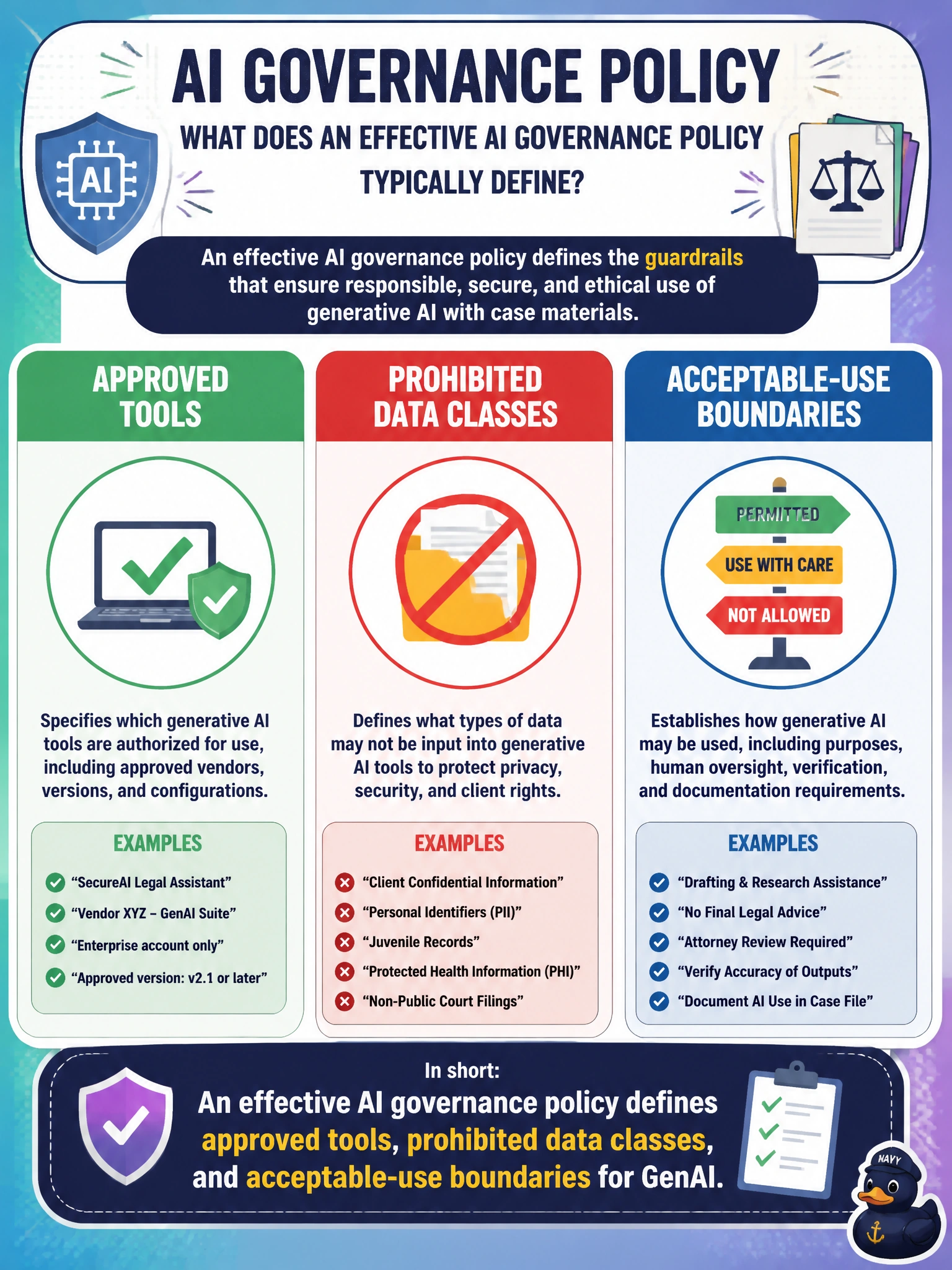
A good AI policy is the office rulebook: which tools are OK, what case data never leaves the building, and where humans stay in charge. Screensavers and total bans on spelling help don’t get you there.
Full Explanation
An effective AI governance policy for public defender IT typically defines approved tools, prohibited data classes, and acceptable-use boundaries for GenAI. Attorneys need clarity on which products may touch case materials, which data—client confidences, sealed records, discovery—must never enter consumer or unapproved models, and where human professional judgment remains mandatory. Those elements turn ethics and confidentiality duties into operational rules staff can follow when drafting, summarizing, or researching with GenAI without compromising representation.
Defining only the preferred screensaver theme for attorney laptops is cosmetic IT preference, not AI governance. Banning all spell-checkers because they might use language models is an over-broad prohibition that fails to distinguish low-risk writing aids from high-risk case-data processing and often drives shadow use. Requiring every brief to be written solely by an unattended agent abandons professional responsibility and quality control rather than governing GenAI use.
Exam caveat: governance specifies boundaries and accountability; it need not ban all GenAI to be effective. Operational check: publish the approved-tool list, classify case data that is prohibited in prompts, require training acknowledgment, sample matters for policy adherence, and refresh the policy when new vendor features change data-flow risk.