
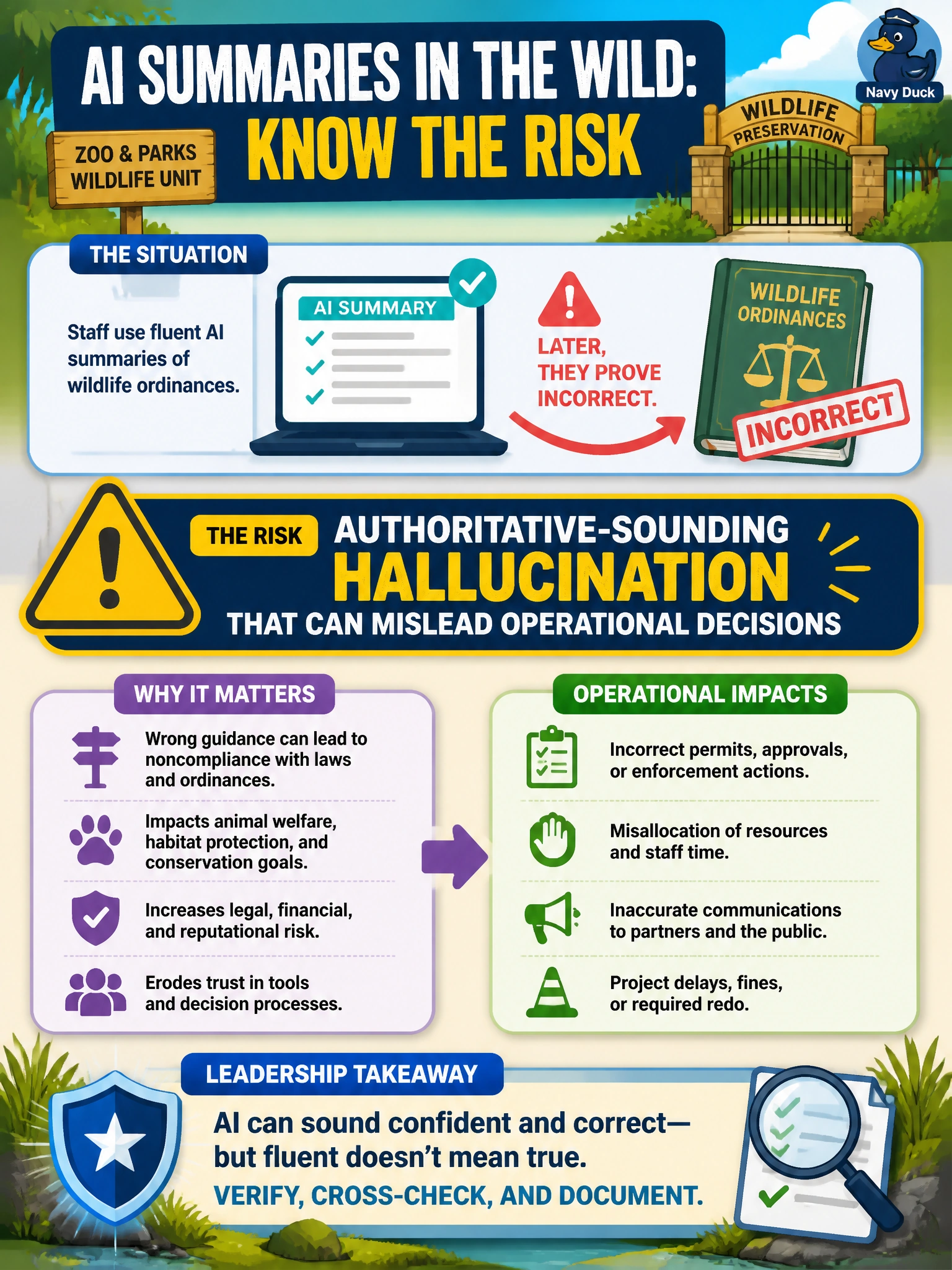
A zoo and parks wildlife unit notices staff trusting fluent AI summaries of wildlife ordinances that later prove incorrect. What risk should leadership highlight?
Select an answer to reveal the explanation.
Short Explanation
Fluency is not the same as being right—the model can sound like a city attorney and still invent a clause. Treat polished legal summaries as drafts that need a human check against the real ordinance.
Full Explanation
When zoo and parks wildlife staff trust fluent AI summaries of wildlife ordinances that later prove incorrect, leadership should highlight authoritative-sounding hallucination that can mislead operational decisions. Generative models often produce polished legal-sounding prose that invents clauses, misstates penalties, or omits exceptions. Fluency creates over-trust: officers and educators may act on a summary as if it were counsel-approved ordinance text, creating compliance and enforcement risk for a civic wildlife unit.
That the gift-shop card reader needs a new battery is a retail POS maintenance issue, not hallucinated legal guidance. Late bamboo feedstock delivery is a husbandry logistics problem. Parking-lot restriping before peak season is facilities work. None of those explain incorrect ordinance summaries from an AI tool.
Exam caveat: hallucination risk is about incorrect generative content that sounds right; it is distinct from mere latency or UI bugs that delay access to correct ordinance text. Operational check: require staff to verify AI legal summaries against official municipal code or counsel-approved digests, prohibit citing chatbot text as controlling law, and sample high-use ordinance queries for accuracy.