
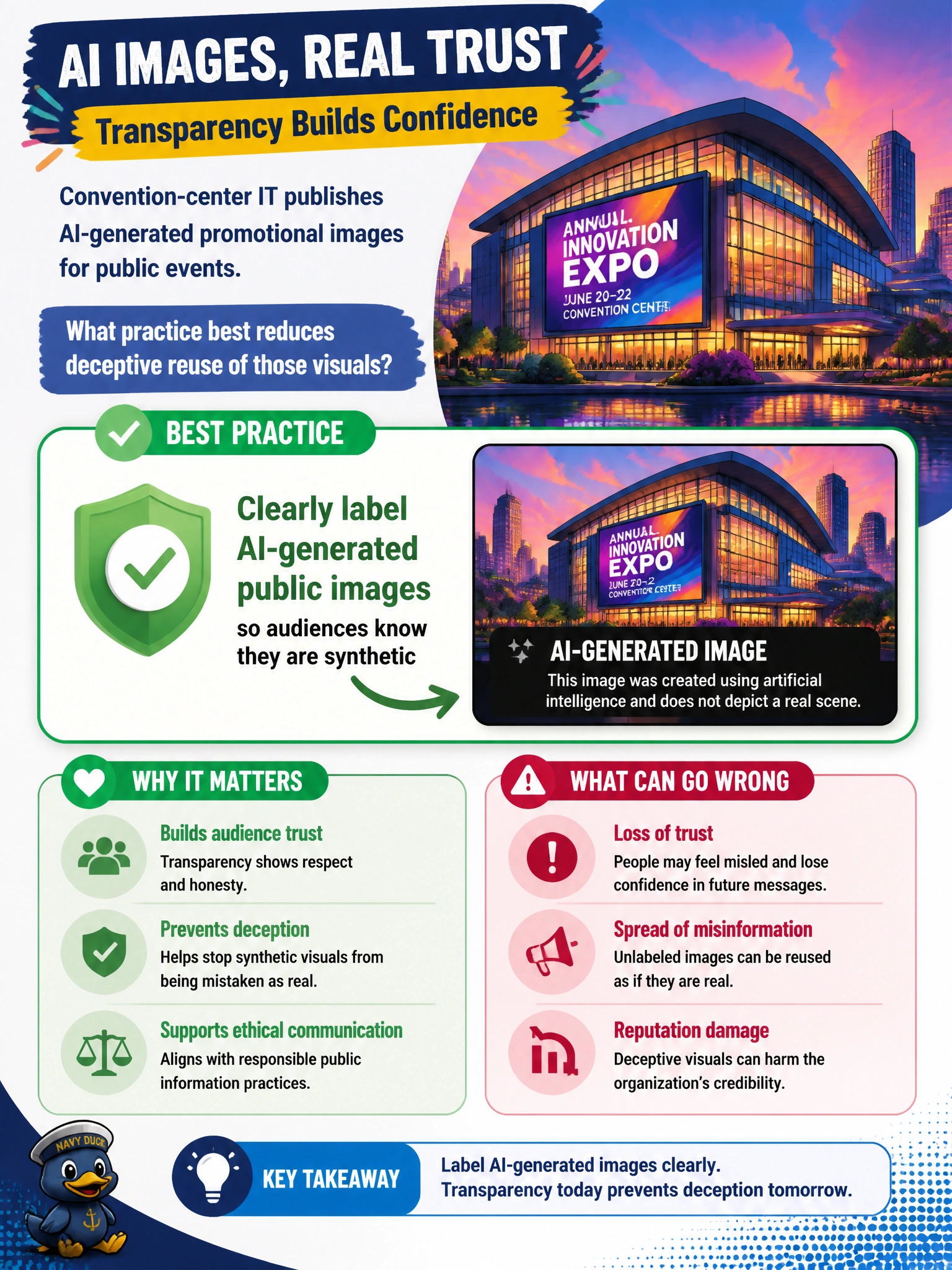
Convention-center IT publishes AI-generated promotional images for public events. What practice best reduces deceptive reuse of those visuals?
Select an answer to reveal the explanation.
Short Explanation
A clear AI-generated label lets you enjoy the promotional art without mistaking a synthetic crowd or scene for documentary photography. You can appreciate the image while knowing how it was made.
Full Explanation
Clearly labeling AI-generated public images lets audiences know that promotional visuals are synthetic, reducing the chance that crowds or scenes will be mistaken for documentary photography. Transparent disclosure supports informed viewing and helps convention-center communications meet expectations for honesty about synthetic media. It does not rule out useful AI-generated marketing; it makes the image’s provenance clear to residents and partners. Forbidding any image file larger than a postage stamp is an arbitrary size limit: it does not reveal whether an image is synthetic and may harm accessibility or print quality. Deleting EXIF data and refusing to label synthetic media removes technical clues while withholding the human-readable disclosure audiences need, creating opacity rather than transparency. Stating that convention staff photographed every promotional image, including AI-created visuals, is an active falsehood that increases misinformation risk and can damage institutional trust if discovered. Exam caveat: labeling addresses transparency and deceptive reuse, but does not replace review of copyright, likeness, or accessibility concerns. Practical check: place a visible “AI-generated” label on public images and record their provenance in the content management system so staff do not present synthetic scenes as documentary photos.