
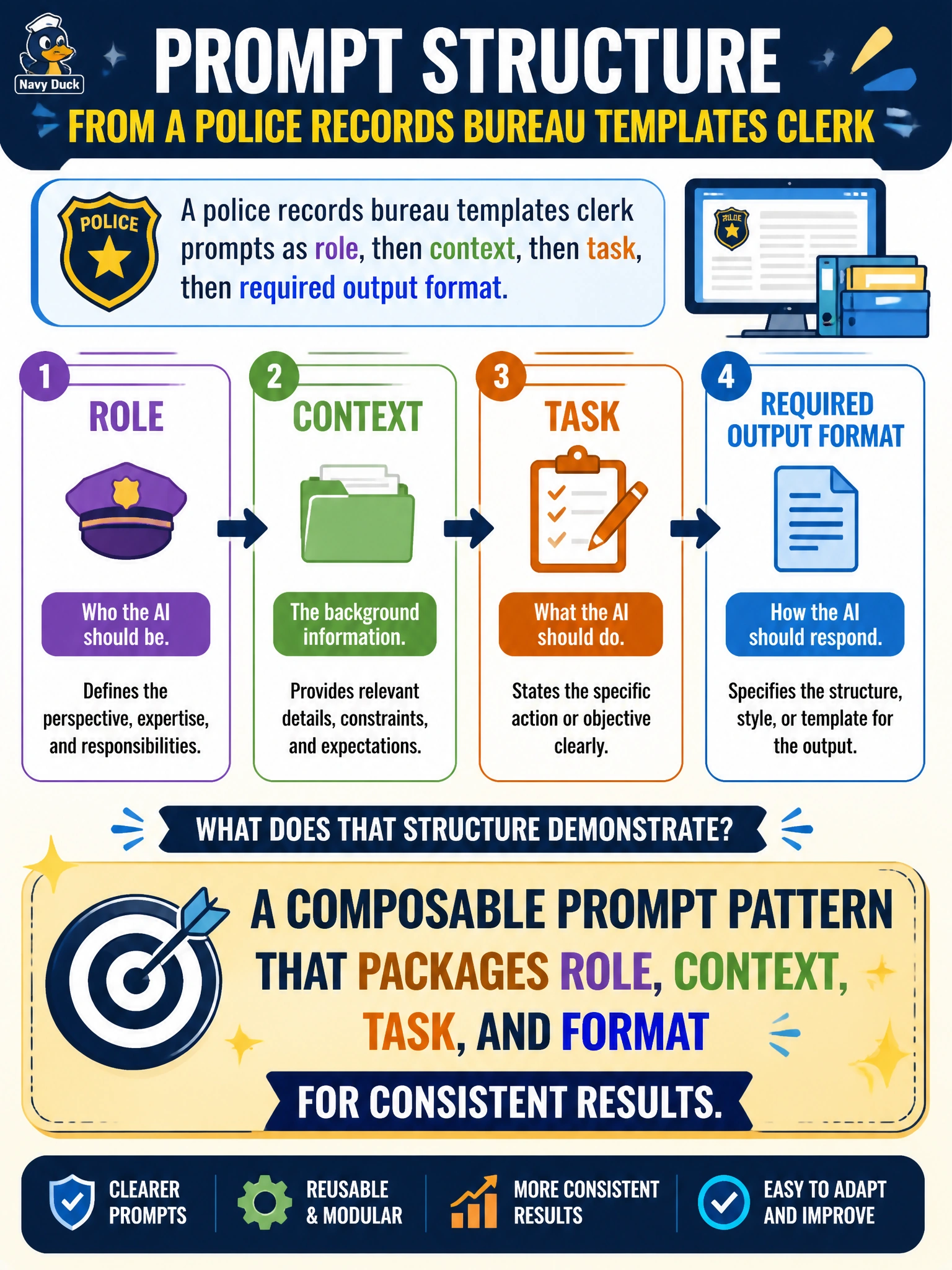
A police records bureau templates clerk prompts as role, then context, then task, then required output format. What does that structure demonstrate?
Select an answer to reveal the explanation.
Short Explanation
Good prompts stack like a work order: who you are, what you’re looking at, what to do, how to hand it back. Role + context + task + format keeps clerks from getting free-form mush.
Full Explanation
Templating clerk prompts as role, then context, then task, then required output format demonstrates a composable prompt pattern. Each element supplies a different kind of guidance: who the model should act as, what record or policy it is looking at, what to accomplish, and how to structure the reply. Police records bureaus benefit because consistent packaging reduces free-form drift across clerks and shifts.
Sending only the output-format block while omitting the task leaves the model without the work order—format without purpose yields empty structure or guesswork. Storing context exclusively in GPU firmware is nonsense; context belongs in the prompt or retrieved documents. Banning roles and tasks from the same prompt breaks composability; they are meant to work together.
Exam caveat: composable order can vary by team style, but completeness matters more than rigid sequence religion. Missing any pillar (especially task or format) is what usually produces mushy records output.
Operational check: issue the same records request with a full role–context–task–format template versus a bare ask; compare consistency of fields returned and whether clerks still need to re-prompt for format compliance.