
An airport authority compares annual cloud token spend to a one-time workstation GPU purchase for a steady internal drafting workload. Which cost framing is most accurate?
Select an answer to reveal the explanation.
Short Explanation
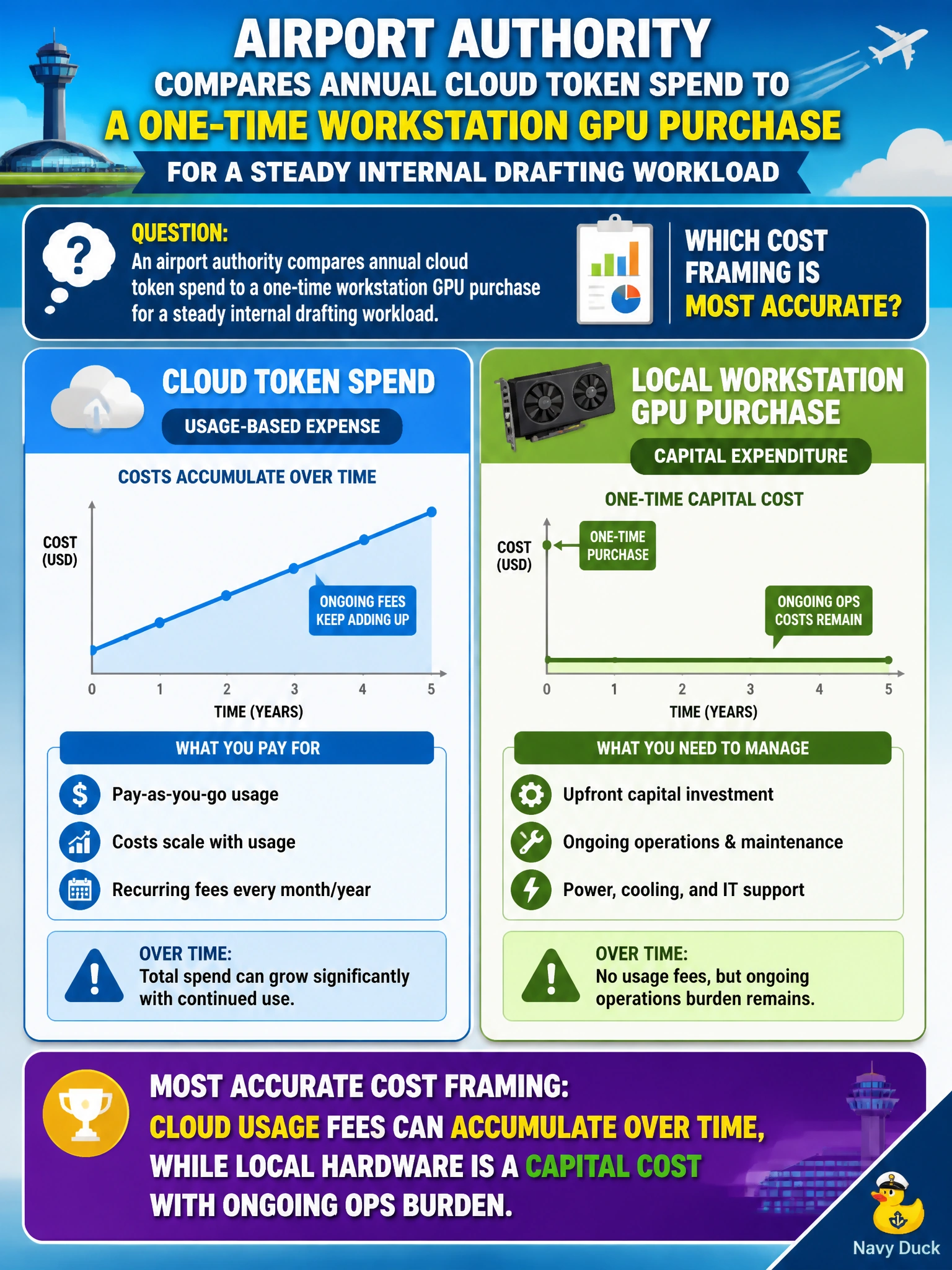
Cloud feels like a meter that never stops; a workstation GPU is a bigger check up front plus the care and feeding afterward. Steady workloads make that trade-off worth running with real numbers—not slogans.
Full Explanation
Cost trade-offs matter for steady internal drafting: cloud usage fees accumulate with tokens and traffic, while local hardware is a capital outlay plus ongoing operations—power, patching, and staffing. The airport authority should compare total cost of ownership, not slogans. Neither side is universally cheaper. Predictable internal load can amortize a local GPU workstation; spiky or exploratory use may stay cheaper as metered cloud until sustained volume justifies capital spend and ops ownership. Claiming local GPUs have zero operational cost after purchase ignores electricity, cooling, downtime risk, spare parts, and administrator time. Claiming cloud tokens are always cheaper at every volume ignores sustained high usage where monthly bills exceed local TCO over the same horizon. Treating hardware purchase price as the only cost that ever matters ignores cloud operating expense and local operating expense alike. Exam caveat: sound generative hosting judgment compares TCO and workload shape (steady vs bursty), not a single sticker metric from a quote or invoice. Operational check: estimate monthly token volume for drafting workloads, include staff hours for local patching in the model, add egress and support fees for cloud, revisit the decision quarterly as usage grows, and separate experimental spend from production budgets so pilots do not silently become permanent cost centers.