
A SOC wants suspicious files collected by several other security tools to be submitted to Cisco Secure Malware Analytics automatically, with verdicts returned to those tools, instead of analysts uploading samples by hand. What enables this?
Select an answer to reveal the explanation.
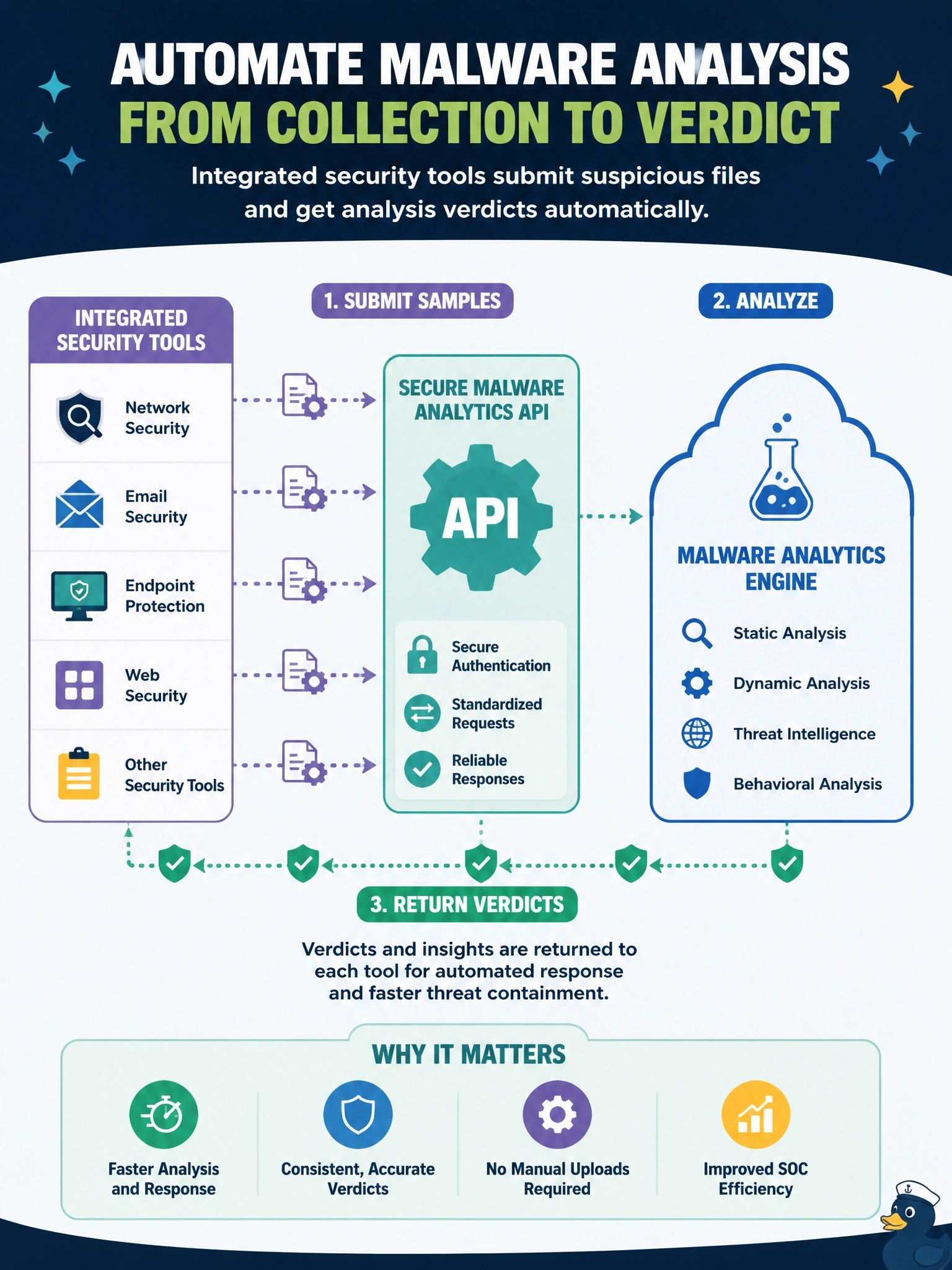
Short Explanation
If you want machines talking to machines, you give them an API, not a person with a mouse. Each tool sends the sample over the API and comes back later for the verdict. Syslog and SNMP are great for messages and alerts, but they don't carry files to a sandbox.
Full Explanation
Cisco Secure Malware Analytics exposes a REST API that authenticated clients use to submit samples, check analysis status and retrieve reports, threat scores, behavioral indicators and artifacts. Cisco products such as Secure Firewall, Secure Endpoint and email security integrate with it, and SOAR platforms and custom scripts use the same API with an API key. That allows files from many sources to be submitted automatically and verdicts to flow back into blocking or ticketing workflows without manual uploads. Syslog carries event messages, not files, and the sandbox does not use log messages to fetch samples from other products. SNMP traps carry small management notifications; they are not designed to transport files and are not a submission method for malware analysis. DNS policy in Secure Access acts on domain resolution, and a DNS layer never sees file content, so it cannot redirect downloaded files to a sandbox. Exam caveat: API keys grant submission and reporting rights, so they should be stored securely and scoped to the integration that needs them. Operational check: submit a test sample through the integration, confirm that it appears in the Secure Malware Analytics sample list with the integration as its source, and verify that the originating tool displays the returned verdict.