
After the company adopts SSE for user access to the internet, SaaS and private applications, an executive asks whether the data center firewall that protects public-facing servers from inbound internet traffic can now be removed. What is the correct answer?
Select an answer to reveal the explanation.
Short Explanation
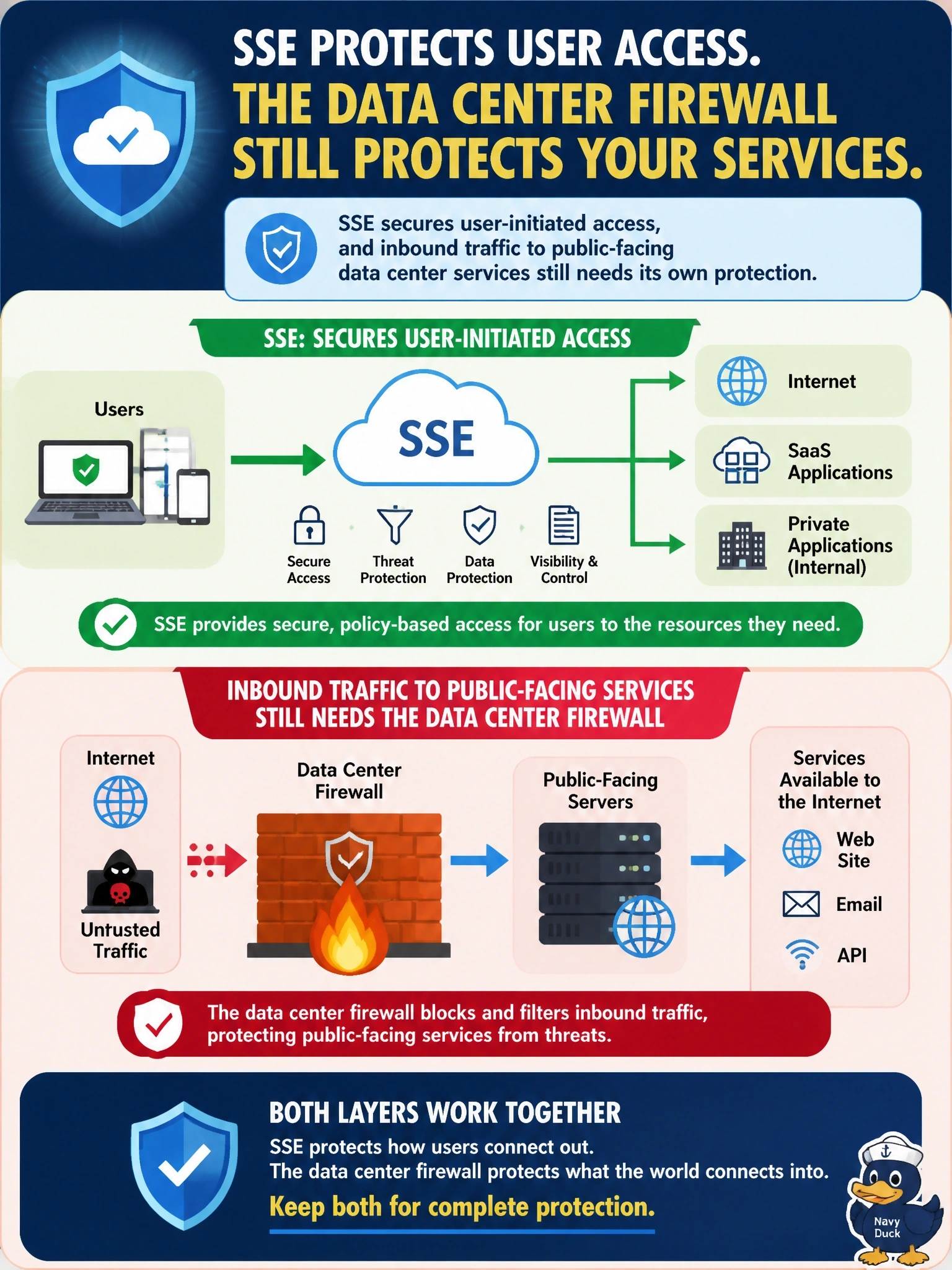
SSE guards the doors your users walk out of; it doesn't guard the shop window strangers walk up to. Inbound traffic to your public servers still needs its own perimeter protection. The trap is thinking connectors or PoPs magically sit in front of your public services — they don't.
Full Explanation
Security Service Edge protects user-initiated access: traffic from users and sites to the internet, to SaaS applications and to private applications through ZTNA or VPN as a service. It does not, by itself, sit in front of an organization's public-facing services to filter unsolicited inbound connections from the internet. Web servers, APIs and other services published from the data center still need inbound protection such as a perimeter firewall, intrusion prevention, web application firewalling and DDoS mitigation. So the executive's question has a clear answer: SSE complements the perimeter for those flows rather than replacing it. Points of presence do not receive inbound internet traffic destined for the company's public addresses unless the architecture is deliberately changed to route it there, which SSE adoption does not do. Resource connectors initiate outbound connections to the service to carry private access traffic; they do not filter inbound connections that reach the data center by other paths. SSE platforms can decrypt and inspect user HTTPS traffic, so the claim that they cannot inspect encrypted traffic is false, and it is not the reason the firewall stays. Exam caveat: SSE can reduce exposure by removing the need to publish private apps or VPN headends to the internet, but published public services remain. Operational check: inventory every inbound internet-facing service and confirm each one is still protected after any perimeter change.