
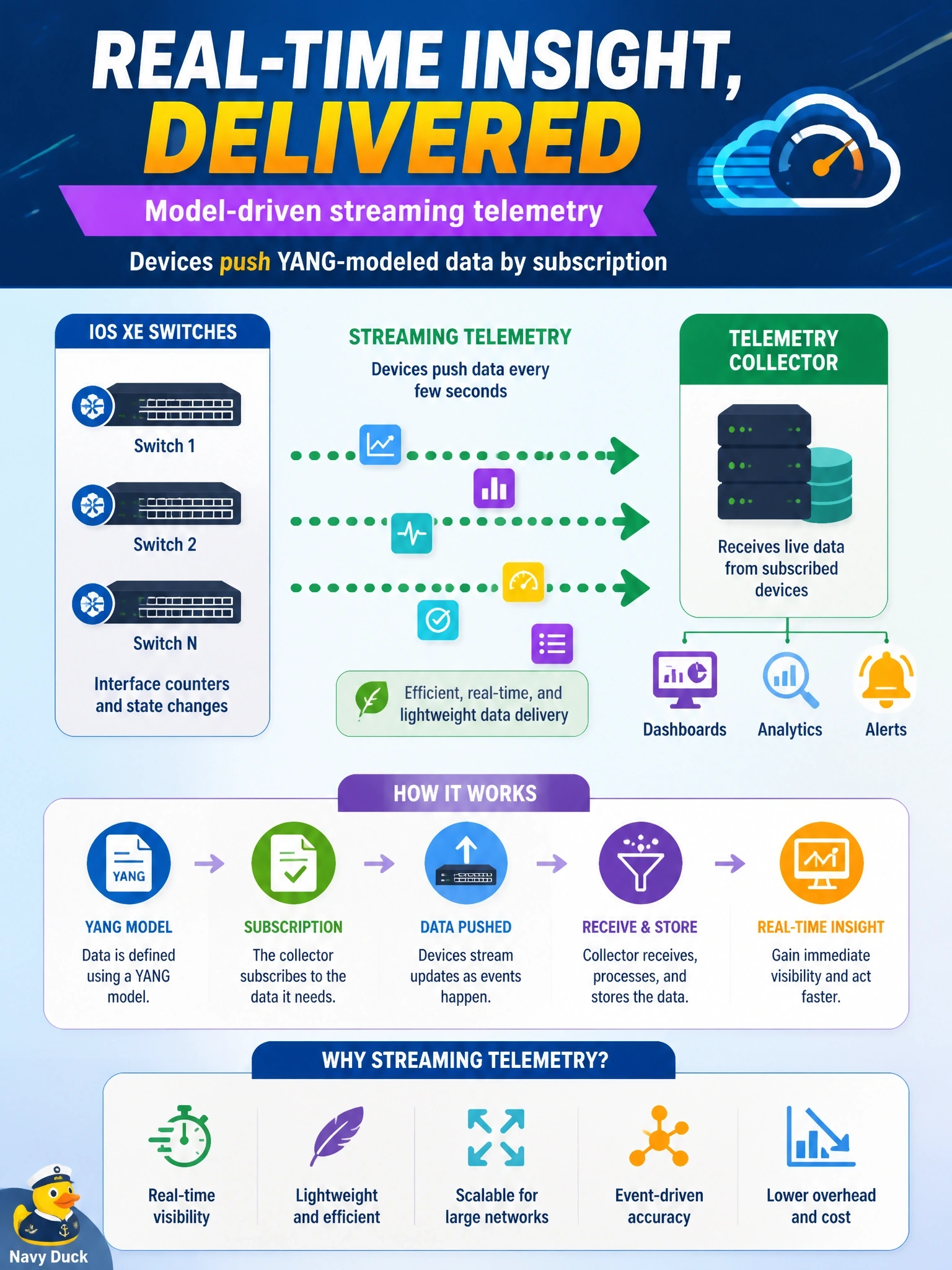
Operations wants interface counters and state changes from IOS XE switches pushed to a collector every few seconds, instead of a management server polling each device on a timer. Which technology fits?
Select an answer to reveal the explanation.
Short Explanation
Polling is calling every device to ask how it's doing; streaming telemetry is the device texting you updates the moment you've subscribed. That push model scales far better at short intervals. The trap is shortening the SNMP poll, which is still asking, just more often.
Full Explanation
Model-driven telemetry inverts the monitoring model. Instead of a manager sending periodic requests, a collector subscribes to data paths defined in YANG models, such as interface statistics or operational state, and the device streams updates at a chosen interval or when values change, over transports such as gRPC or NETCONF. Because the device pushes structured, model-defined data without per-request overhead, short intervals across many devices are practical, and change-based subscriptions deliver state transitions promptly. SNMP polling with a shorter interval is still a pull model; every poll requires a request and a response, load grows with frequency and device count, and changes between polls can be missed. Syslog carries event messages, such as an interface going down, but it does not report counter values every few seconds and its messages are unstructured text. NetFlow records describe traffic conversations; they do not carry interface counters or general device state. Exam caveat: telemetry subscriptions can be configured on the device (dial-out) or requested by the collector (dial-in), and both use YANG-modeled data. Operational check: confirm the subscription is valid and connected on a switch, then verify that the collector receives updates at the configured interval and that a test interface shutdown appears promptly.