
A factory IoT network shows a new host in the Fibre Channel name server after FLOGI, and an operator assumes the host can reach its target. The zoneset has no entry for that host. Which statement is correct?
Select an answer to reveal the explanation.
Short Explanation
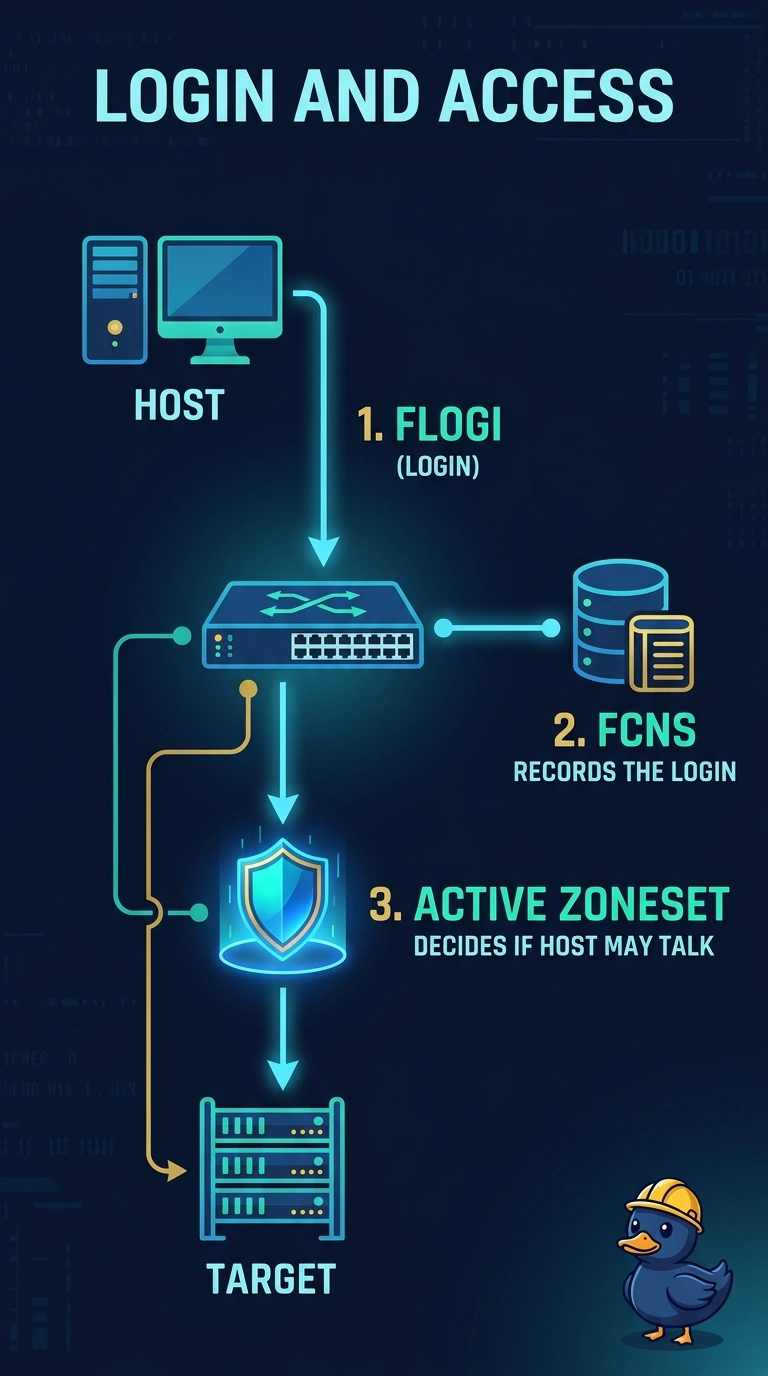
The name server is a sign-in sheet, not a permission slip. You can see the host listed after FLOGI and still have a zoneset that refuses the conversation with the target. Check the active zoneset before you tell the factory the path is open.
Full Explanation
The Fibre Channel name server learns a device when that device logs in. An entry there proves the host completed FLOGI and the switch knows its FCID and port name. It does not add the host to a zone, and it does not change the active zoneset. The factory host can be visible in the name server and still be denied when it tries to reach a target that shares no active zone with it. Treating the name-server row as zoning permission mixes two databases. An FCNS entry does not rewrite the active zoneset on this VSAN or on any other VSAN. FLOGI is how a device gets into the name server. Zoning is not a prerequisite for that login on a normal MDS fabric, so a missing zone member does not make FLOGI fail. The name server is not a list of zone pairs, and the zoneset is not a list of domain IDs. Domain IDs are assigned by the fabric, while zones name members that are allowed to talk. Caveat: some designs use default-zone permit, and in that mode unzoned members can communicate, which is a poor production choice and is not what an explicit zoneset is for. Operational check: show the name-server entry for the host, then show the active zoneset and confirm the host and target share a zone before you call the path ready.