
A factory IoT network VSAN had a zoneset active that included the camera zone. An engineer activated a different zoneset that omits that zone, and the cameras lost the array. Why did the original zone stop working?
Select an answer to reveal the explanation.
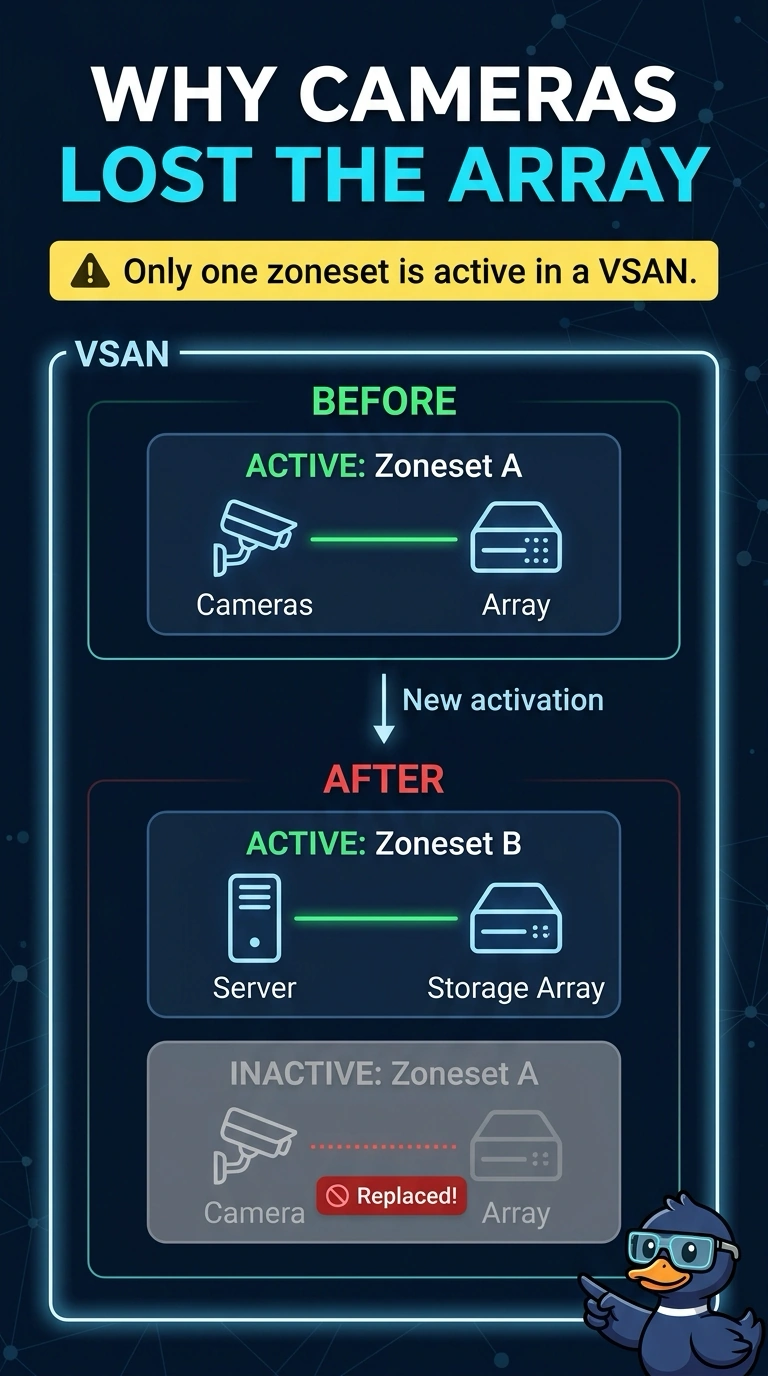
Short Explanation
A VSAN has one microphone, and someone else just took it. You activated a different zoneset, so the zoneset that contained the cameras is no longer the one being enforced. Commit of a device alias does not retire a zoneset, and the cameras dropped because the active set changed.
Full Explanation
An MDS VSAN enforces only one active zoneset. When the engineer activated a different zoneset, that new zoneset became the active one and the previous zoneset stopped being enforced. The camera zone was not in the newly active set, so the cameras lost the array even though the old zone object still exists in the configuration. A device-alias commit distributes friendly names. It does not remove a zone from the active set when the alias database merges. NPV makes an edge switch log in with NP ports and take no domain ID. It does not inherit zones from the core and then drop zones that use a port world wide name. Clearing the name server removes login records until devices FLOGI again. It does not deactivate the zoneset, and the principal election is not what puts a zoneset back into service. Caveat: if the camera zone is added to the zoneset you want and you do not activate that zoneset, the cameras stay isolated even though the edit looks finished. Operational check: display the active zoneset for the VSAN, confirm whether the camera zone is in it, and activate the zoneset that contains the required members.