
A state university SAN port-channel is up with one member. A second ISL between the same MDS pair stays out because that link runs at a different speed. What lets the second link join?
Select an answer to reveal the explanation.
Short Explanation
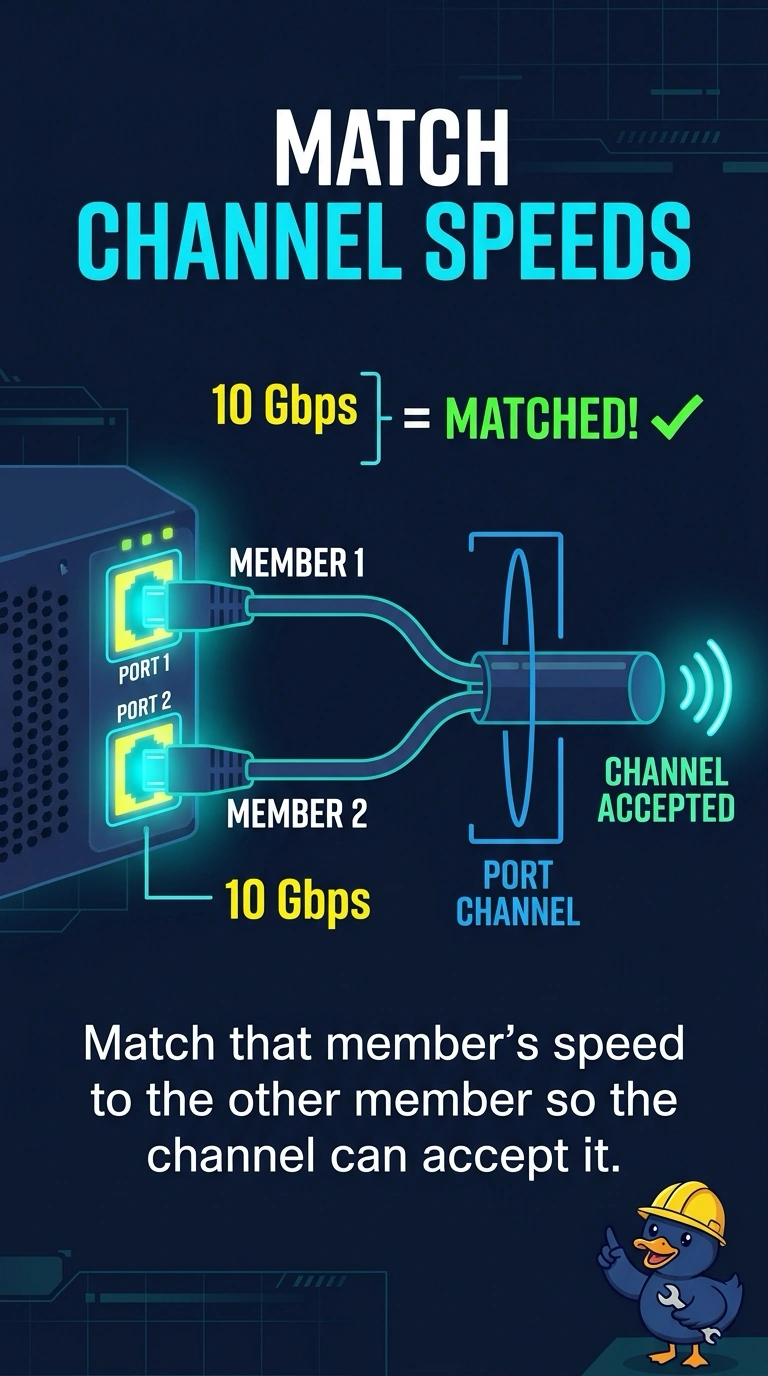
A port-channel is a pair of lanes that have to be the same width. You set the second ISL to the same speed as the member that is already in the channel, and then it can join. Ethernet LACP is the handshake for copper and fiber Ethernet bundles, not the one this Fibre Channel ISL uses.
Full Explanation
An MDS SAN port-channel accepts a member only when that link is compatible with the channel, including speed. A second ISL running at a different speed stays out even though the channel itself is up on the first member. Matching the speed removes that incompatibility and lets the university link join. Ethernet LACP bundles Ethernet ports. A Fibre Channel ISL does not negotiate with Ethernet LACP, so enabling it on the MDS does not pull this member in. Both switches still need unique domain IDs. Sharing one domain ID isolates a fabric merge. It is not a prerequisite for a port-channel member, and forcing a duplicate domain would make the ISL worse. CFS distributes databases such as device aliases. It does not hold a port-channel member out until the alias database is empty, and disabling it does not change member speed. Caveat: the allowed VSAN list and the channel mode also have to match, or a corrected speed can still leave the member incompatible. Operational check: set the matching speed, confirm the second link is up inside the port-channel, and confirm it is no longer an independent ISL.