
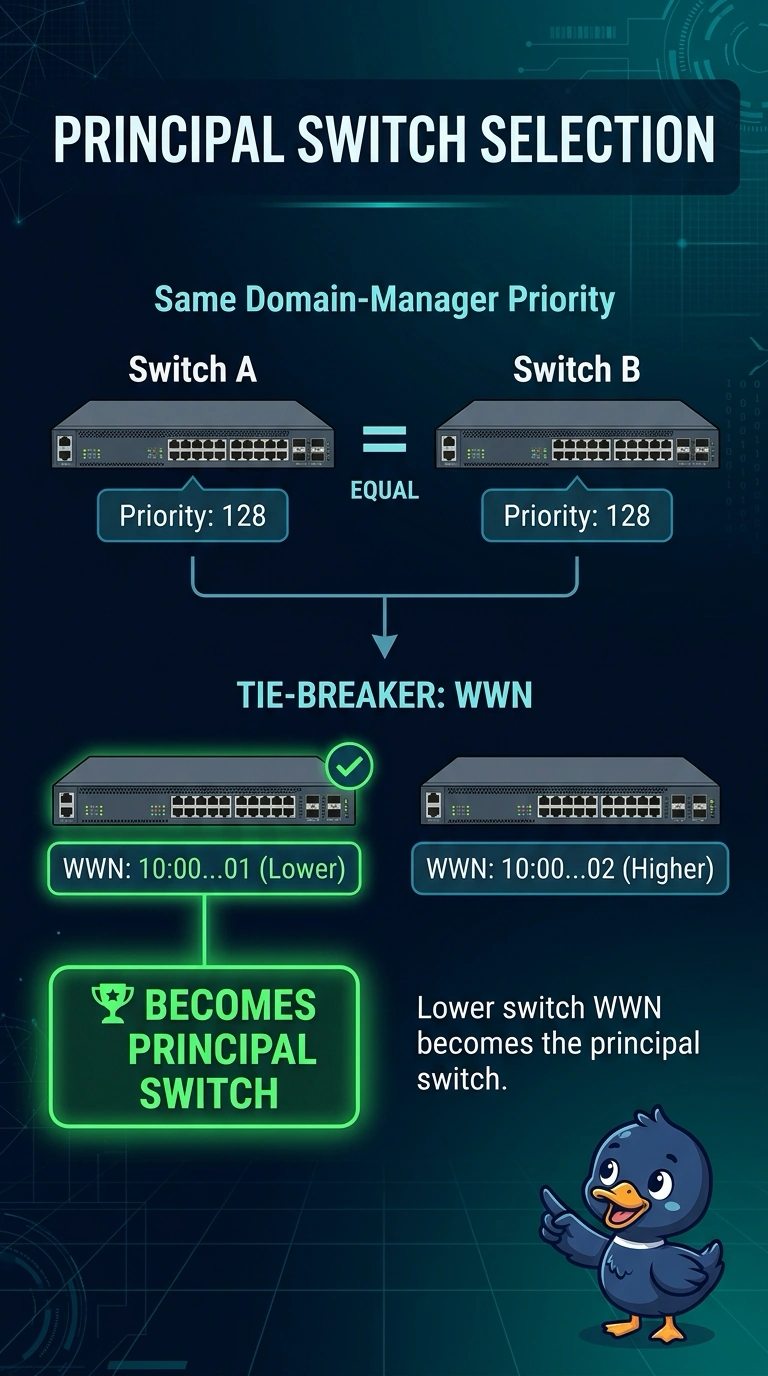
A factory IoT network brings up two MDS switches in a new VSAN, and both switches use the same domain-manager priority. Which switch becomes the principal switch?
Select an answer to reveal the explanation.
Short Explanation
When two switches tie on priority, the election reads the name tag and the lower tag wins. You are looking at the switch WWN, and the lower one becomes principal. A higher domain ID or a zoneset activation does not break that tie.
Full Explanation
Principal switch selection compares the domain-manager priority of the switches in the VSAN. Cisco treats priority 1 as the most preferred configurable value and 254 as the least preferred, with 128 as the default, so a lower number is a stronger priority. When the configured priorities are equal, the switch with the lower switch WWN becomes principal. That WWN tie-break is the answer for this new factory VSAN. The higher WWN loses the tie. It does not win because the name looks larger. The domain ID is assigned under the principal's control. It is not the key the election uses to pick the principal, and a higher domain ID does not outrank a WWN. Zoneset activation programs zoning. It does not start a principal election and does not choose a winner when priorities match. Caveat: the configured priority becomes the running priority when the Fibre Channel domain is restarted, and a disruptive restart logs devices out, so a priority change on a live fabric is not a casual toggle. Operational check: display the domain status for the VSAN on both switches, confirm the priorities match, and confirm the principal is the switch with the lower switch WWN.