
A state university enables device-alias distribution with CFS, enters a new alias, and the peer MDS still does not list it. The device-alias change was never committed. What is the missing step?
Select an answer to reveal the explanation.
Short Explanation
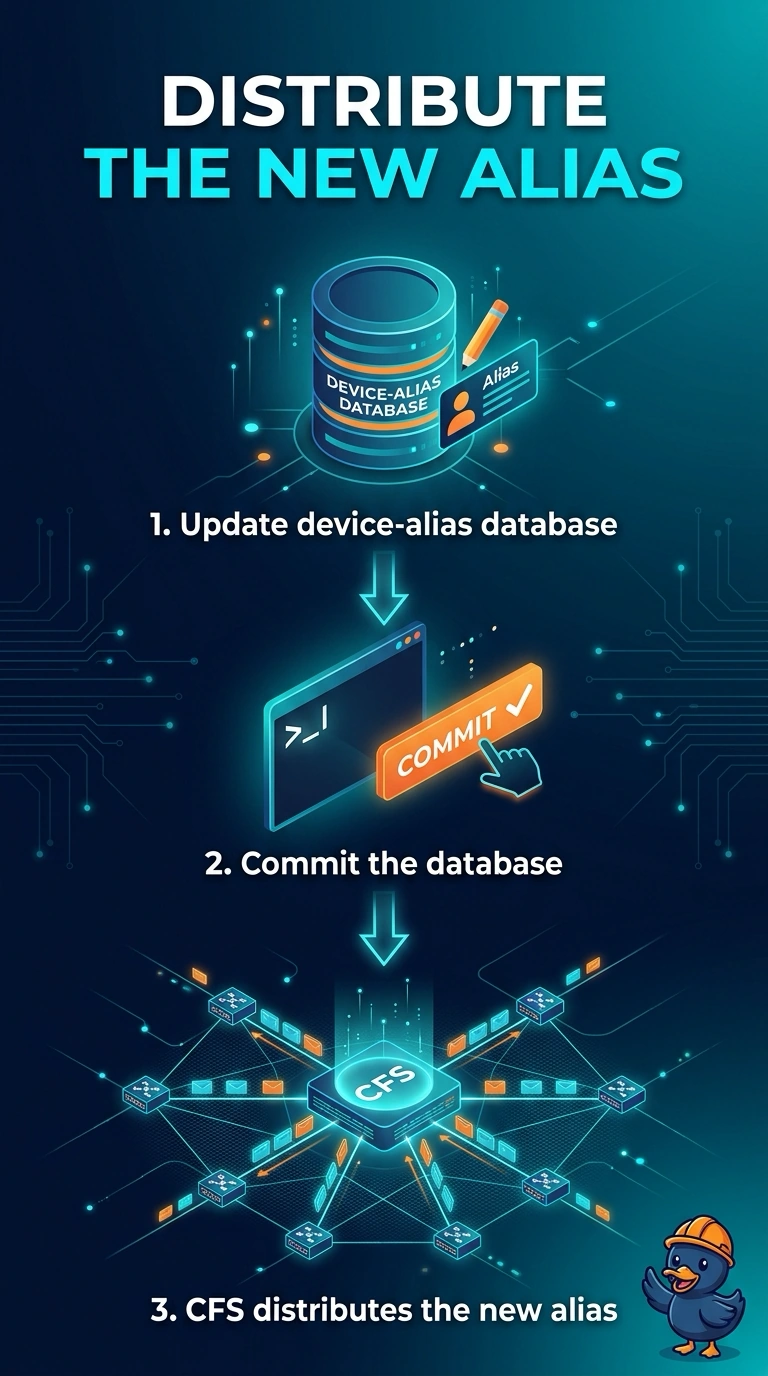
Typing a name into a shared book does nothing until you hand the book to the courier. You commit the device-alias database so CFS can carry the new alias to the peer. Zoneset activation distributes zoning rules, not this alias database.
Full Explanation
Device aliases are distributed with Cisco Fabric Services, and a change sits in a pending database until it is committed. The university already enabled distribution, and the peer still lacks the alias because the change was never committed. Without that commit, the pending entry stays local and the peer never receives it. Committing the database is what CFS distributes. Zoneset activation installs zoning policy for a VSAN. It does not push the device-alias database, even when a zone later uses an alias name. The principal switch coordinates domain IDs. Device aliases are not limited to the principal, and becoming principal does not distribute a database that was never committed. An fcalias is a zone alias stored in the VSAN zoning configuration. Converting the name does not flood it across every VSAN, and it does not replace the commit that device-alias distribution requires. Caveat: a successful commit still needs CFS connectivity to the peer. A peer that is not in the CFS fabric stays out of date after the commit. Operational check: commit the device-alias change, then confirm the peer shows the same alias and that the device-alias application is merged.