
A factory IoT network has a working zoneset in a VSAN. An engineer builds a second zoneset for a change window and activates it. Hosts that existed only in the first zoneset lose their targets. Why?
Select an answer to reveal the explanation.
Short Explanation
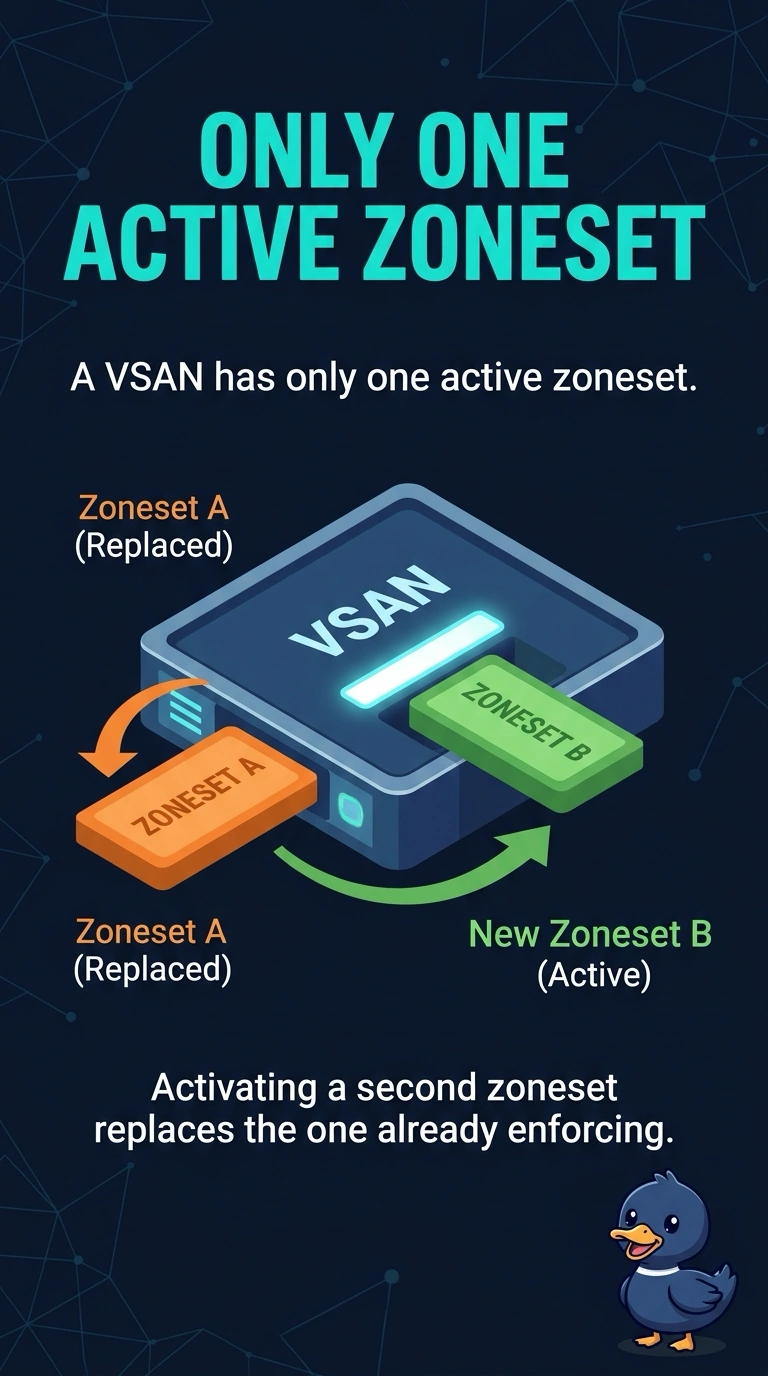
A VSAN keeps one active guest list, and posting a new list takes the old one off the door. You activated a second zoneset, so the first one stopped enforcing and those hosts lost their targets. Smart zoning does not stack multiple active zonesets.
Full Explanation
Each VSAN has a single active zoneset. When the engineer activates the second zoneset, that zoneset becomes the enforcement plane and the previous active zoneset is no longer enforcing. Hosts and targets that were only in the first zoneset lose their permission to talk, which is the factory outage. The cure is to put every pair that must stay up into the zoneset you activate, not to expect both zonesets to remain active. The default zone policy decides what happens to members that are in no active zone. It does not keep retired zonesets enforcing, and turning CFS off does not either. Smart zoning changes how members inside a zone are paired when they are marked as initiator, target, or both. It does not merge every configured zoneset into one permanent active list. The name server records devices that have logged in. It does not enforce zoning, and it does not keep a zoneset active after a different zoneset was activated. Caveat: a full zoneset activation can disrupt the VSAN briefly, so the new zoneset needs a review before it replaces a working one. Operational check: show the active zoneset for that VSAN, confirm it is the second one, and add any still-needed zones before you activate again.