
A university engineer creates a device alias on one MDS switch and commits it there. A second MDS in the same fabric never shows the alias. CFS distribution for device alias is disabled. What is missing?
Select an answer to reveal the explanation.
Short Explanation
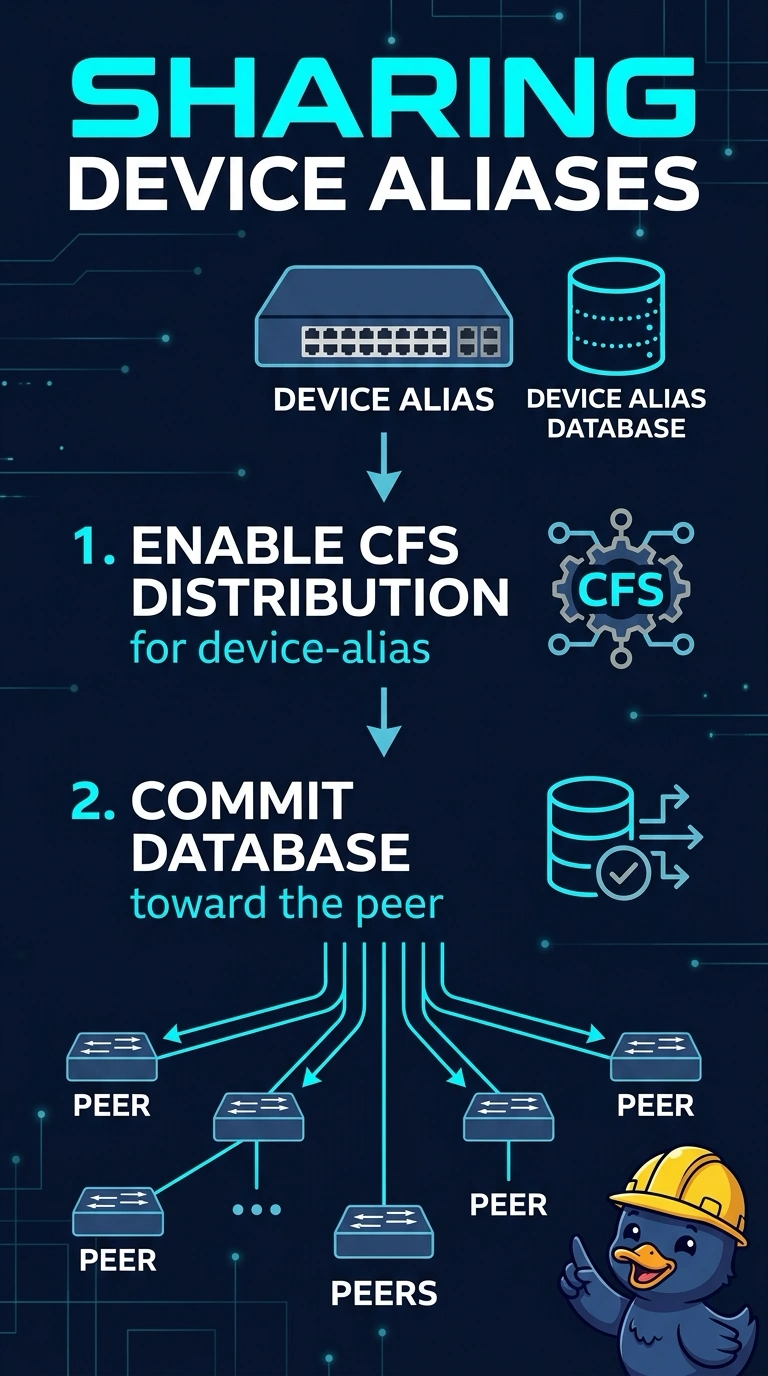
A device alias is a shared phone book, and CFS is the courier. You turn distribution on and commit, or the other MDS never gets the page you wrote locally. Activating a zoneset does not deliver that phone book.
Full Explanation
Device aliases are a fabric-wide name database, and Cisco Fabric Services is the mechanism that distributes that database between MDS switches. With distribution disabled, a local commit stays on the switch that created the alias, so the peer's database never gains the entry. Enabling device-alias distribution and committing the change is what copies the database across the fabric. Zoneset activation programs the zoning enforcement plane. It does not transport the device-alias database, even if a zone member happens to reference an alias name. An fcalias is a zone alias stored with the zoning configuration and scoped to a VSAN. It does not automatically flood out TE ports the way a CFS-distributed device alias does, so converting the name does not fix a missing CFS session. The principal switch owns domain-ID coordination. It is not a requirement that device aliases exist only on the principal. Caveat: CFS still needs IP connectivity between the switches, and a peer that is not in the CFS fabric will stay out of date after you enable distribution. Operational check: enable distribution, commit, then confirm the peer lists the same device alias and that CFS shows the device-alias application merged.