
A government agency operator can edit service profiles in one UCS organization and cannot see a second organization at all. The operator's role already permits service profile changes. What is limiting the view?
Select an answer to reveal the explanation.
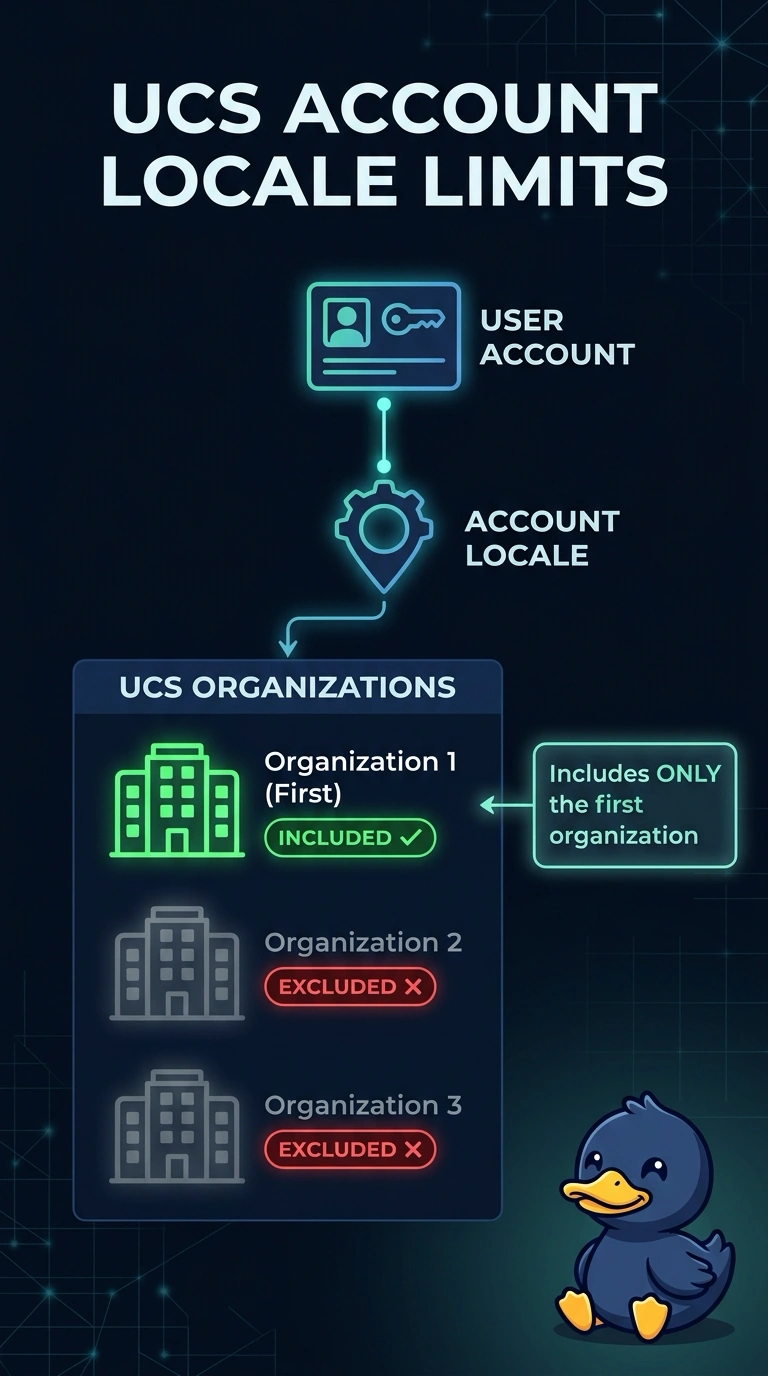
Short Explanation
A role is what you are allowed to do, and a locale is which rooms you are allowed to enter. You already have a role that can edit service profiles, but the locale only includes the first organization, so the second one is invisible. A Nexus read-only role and a discovery policy do not draw that boundary.
Full Explanation
Cisco UCS separates what an account may do from where it may do it. A role grants operations such as modifying service profiles. A locale grants organizational scope. The agency operator already has a role that permits the changes and still cannot see the second organization, so the locale attached to the account is the limit. Adding that organization to the locale opens the view without inventing a new kind of privilege. The NX-OS network-operator role is a read-only role on a Nexus switch. It is not the object that hides UCS organizations, and removing TACACS+ would not draw organization boundaries. MACsec encrypts frames on a link. It does not encrypt one organization inside UCS Manager or Intersight, and it does not filter the organization tree. The chassis discovery policy sets how many links are required before a chassis is discovered. Organizations are logical folders. They do not appear or disappear based on link count. Caveat: if the role were read-only as well, widening the locale would reveal the second organization and still block edits, so both objects have to match the job. Operational check: add the second organization to the operator's locale, log in again, and confirm those service profiles are visible and editable.