
A government agency SAN rejects a newly cabled MDS. Fabric binding is enabled, and the new switch WWN is not in the binding list. What must be added before that switch may join?
Select an answer to reveal the explanation.
Short Explanation
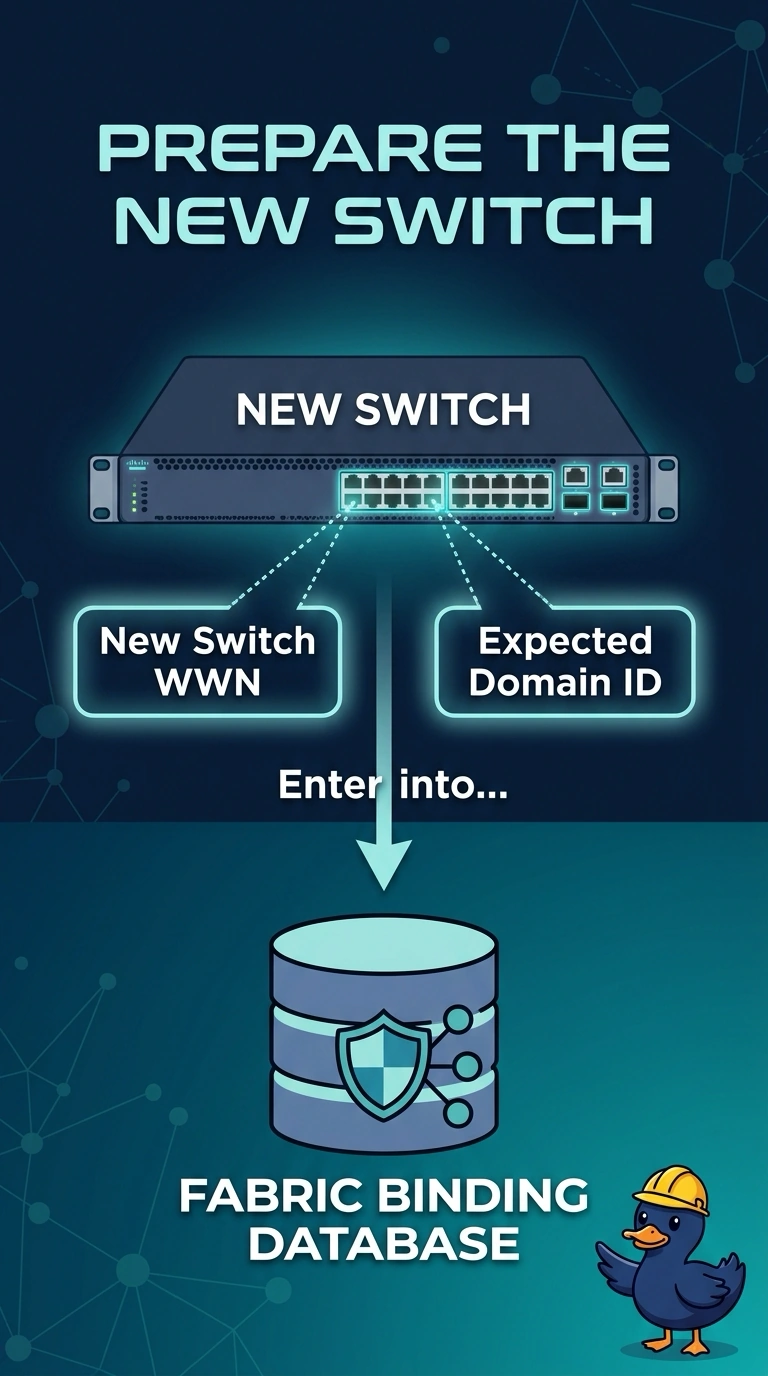
Fabric binding is a guest list of buildings, not of the people inside them. You add the new switch world wide name and the domain ID it is supposed to use, or the fabric will not let it merge. A host adapter pin is a different door, on an F port, and it does not admit a switch.
Full Explanation
Fabric binding authorizes which switches may join a fabric by checking the switch world wide name and the domain ID against a configured list. With binding enabled, an MDS whose switch WWN is absent is refused, so the ISL does not become a normal fabric link until that WWN and its expected domain ID are entered. Port security is the host-side control: it pins a PWWN to an F port. Fabric binding does not compare host HBA names when a switch tries to merge. A device alias is a friendly name for a device PWWN and is distributed with CFS. Binding does not match alias strings in place of the switch WWN. Zoning controls which logged-in devices may talk. An active zone that names two switch WWNs does not authorize a switch to join, and the principal switch is not zoned to its peers as a substitute for binding. Caveat: the domain ID in the binding entry has to be the domain that switch will actually use, or the WWN can be listed and the merge can still fail. Operational check: add the switch WWN and domain ID, recheck the ISL, and confirm the switch joins instead of being refused by fabric binding.