
A government agency's MDS fabric rejects a replacement switch that has a new switch WWN, even though the ISL cables are correct and fabric binding is enabled. What must be updated before that switch can join?
Select an answer to reveal the explanation.
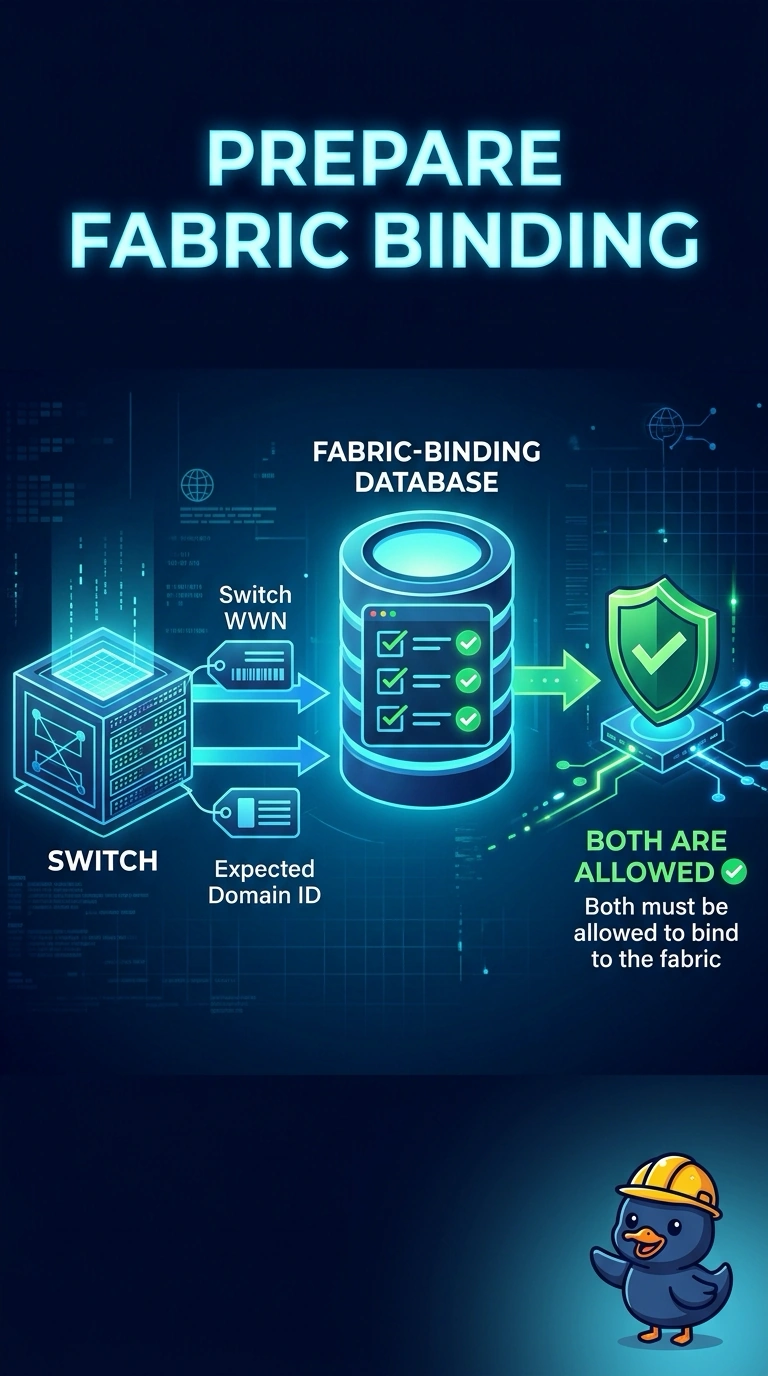
Short Explanation
Fabric binding is the guest list for switches, not for hosts. You add the replacement switch WWN and its domain ID to that list, or the ISL stays shut out even though the cables are right. Zoning and the name server do not admit a switch into the fabric.
Full Explanation
Fabric binding on an MDS restricts which switches may join a VSAN. Each allowed entry pairs a switch WWN with the domain ID that switch is expected to use. A replacement chassis has a new switch WWN, so the existing database still describes the old switch and the ISL is refused even when the cables and speed are fine. Updating the fabric-binding entry with the new switch WWN and the domain ID this switch will use is what lets it join. The default zone policy decides whether unzoned end devices can talk inside a VSAN. It does not authorize a switch WWN, and permitting it would not clear a fabric-binding rejection. The Fibre Channel name server lists devices that have logged in. It does not assign a WWPN to a switch or override fabric binding on an ISL. A SPAN destination copies frames to an analyzer. Mirrored traffic is not an authorization list for fabric merge. Caveat: the domain ID in the binding entry has to match the domain ID the new switch actually requests, or the WWN alone still fails the check. Operational check: add the new switch WWN and domain ID to the fabric-binding database for that VSAN, then confirm the ISL leaves the isolation state and the switch shows as allowed.