
A game studio engineer runs the NX-OS install impact check and it reports the upgrade as disruptive. What happens to forwarding if the install continues?
Select an answer to reveal the explanation.
Short Explanation
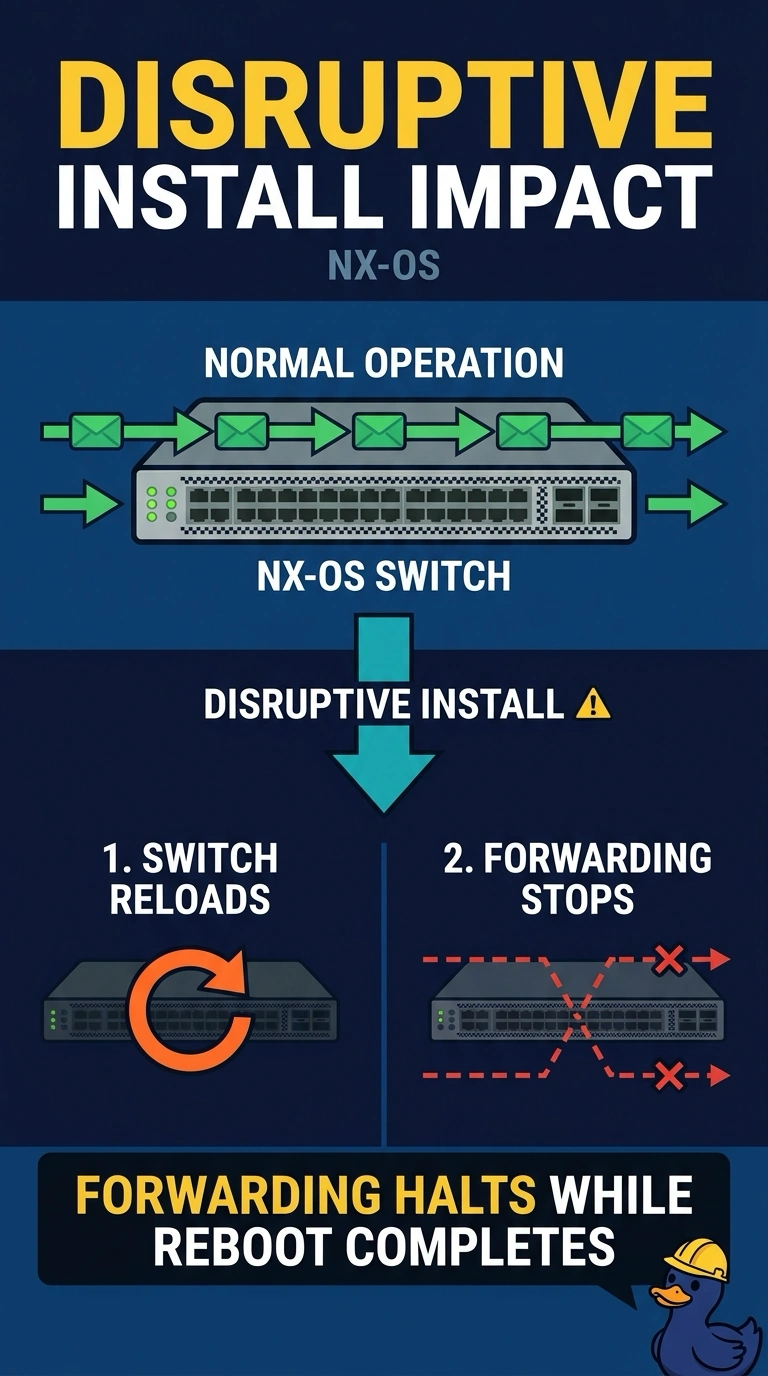
The impact check is a road sign that says the lane is about to close. You continue the install and this switch reloads, so forwarding through it stops until it is back. A nondisruptive result would have been the sign for an in-service upgrade, and that is not the sign you got.
Full Explanation
The NX-OS install impact check tells you whether a proposed image upgrade is disruptive or can be performed in service, and whether related programmable logic also has to change. A disruptive result means the switch reloads as part of the install and forwarding stops during that reboot. Continuing after that report is a planned outage for this switch, not a hitless upgrade. The disruptive flag is not limited to an EPLD filename. An EPLD update can force a reload, and a disruptive system-image path reloads even when you are thinking about the system image itself. The scheduler can run a job at a set time, but the install process does not wait for a scheduler window merely because the impact was disruptive. Guest shell is an optional Linux environment. Restarting it is not how a system-image upgrade behaves, and the data plane does not stay on the old image through a disruptive install. Caveat: a redundant path through a second switch can keep hosts forwarding while this one reloads, which is a network design question, not a change to the impact result. Operational check: read the impact output again, confirm it says disruptive, and take the reload window before you let the install proceed.