
Two Nexus switches at a retail bank send OSPFv2 hellos on a link, use the same area, and use the same IP MTU, but no adjacency forms. One side's dead interval was changed and no longer matches. What is keeping the adjacency down?
Select an answer to reveal the explanation.
Short Explanation
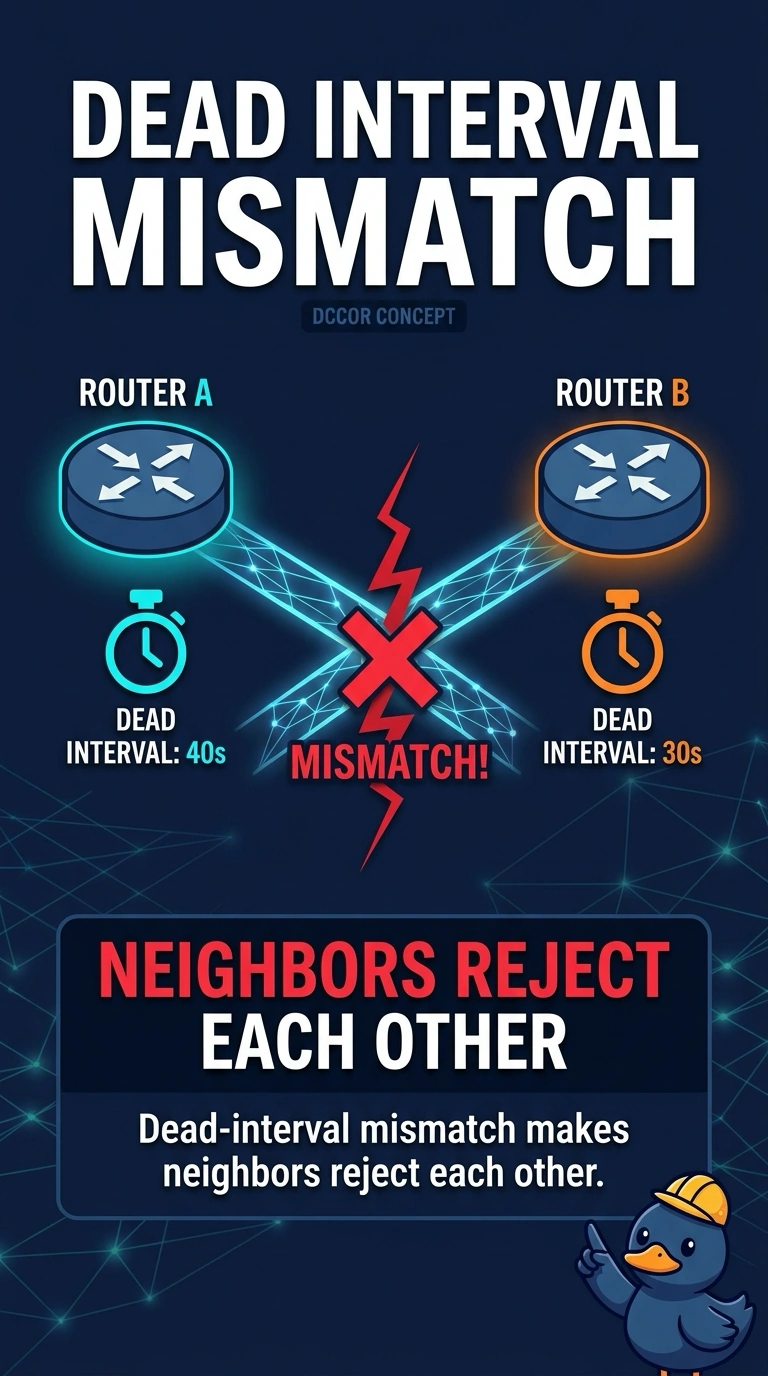
You’ve matched the area and IP MTU, but the dead-interval mismatch still keeps the neighbors from accepting each other. The OSPF process tag is local, and EVPN is not part of this hello, so matching those won’t bring the adjacency up.
Full Explanation
OSPF neighbors compare hello parameters, including the dead interval, before forming an adjacency. When the dead intervals differ, each side rejects the other, so the adjacency never starts even though hellos are on the wire and the area and IP MTU match. The dead-interval mismatch is what keeps the bank link down. The OSPF process tag is a local name for the process; neighbors do not compare it, so making the tags identical would not create an adjacency. The MTU check occurs later, during database description exchange, and a failure there leaves the neighbor in EXSTART. These switches have not reached that stage, and their MTUs are equal, so an MTU stall does not explain the problem. An EVPN address family is a BGP construct for overlay advertisements; OSPF forms its own adjacency without BGP configuration. Exam caveat: a hello-interval mismatch or authentication mismatch can also stop a neighbor, and those appear as different fields in the hello. Practical check: compare the dead interval on both interfaces, make the values equal, and confirm the neighbor reaches the full state.