
A retail bank has a new NX-OS system image and an EPLD file on bootflash. The bank wants to know whether installing the system image will reload the switch, and it is not programming EPLDs yet. Which check answers the system-image question?
Select an answer to reveal the explanation.
Short Explanation
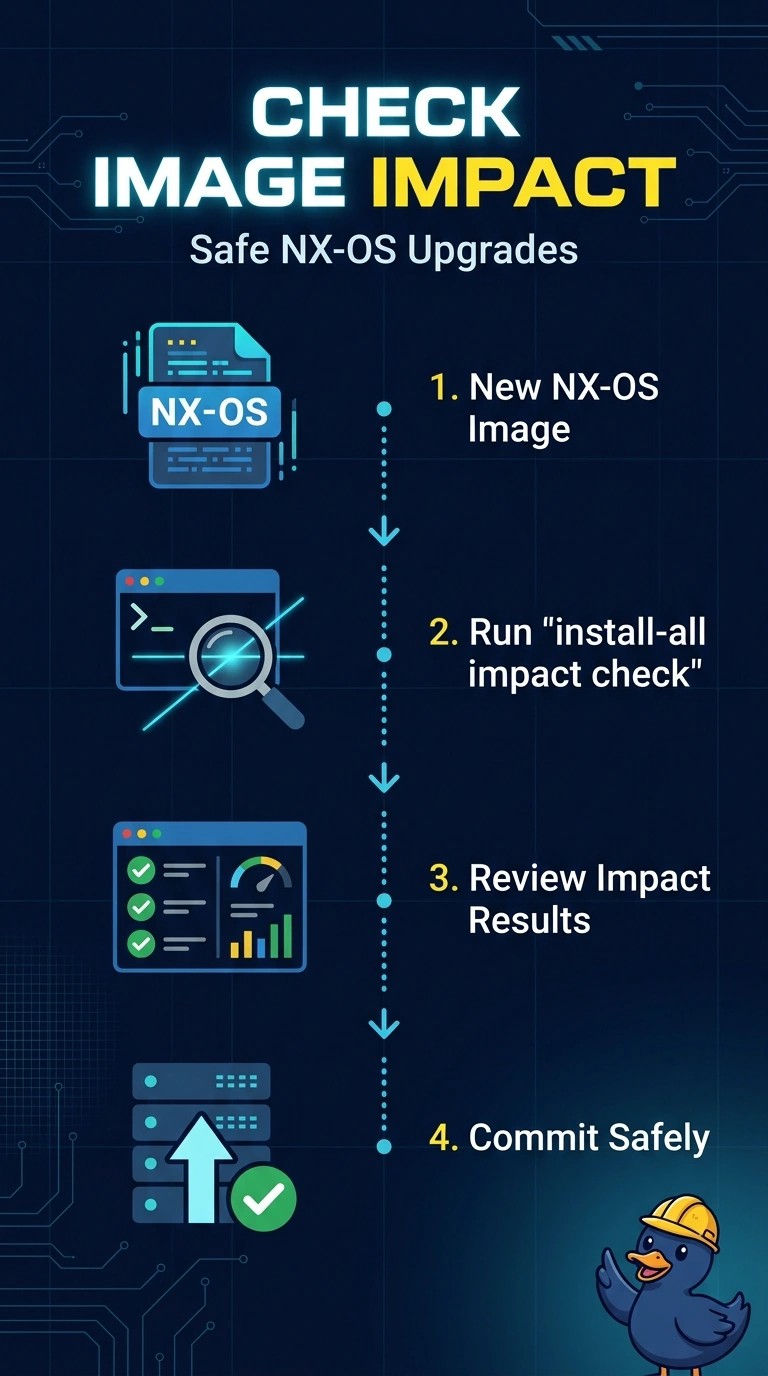
The impact check is a dress rehearsal before the reload. You run the install-all impact check against the system image to learn whether that upgrade will reload the switch. The EPLD file on bootflash is a different update and does not answer the system-image question.
Full Explanation
Before an NX-OS upgrade, the install-all impact check compares the running software with the system image you name and reports whether that upgrade is disruptive. The bank can see if the switch will reload before anything is committed. That is the check for the system-image question. An EPLD update programs hardware logic and is a different operation from installing the NX-OS system image. Reading the EPLD filename does not say whether the system-image upgrade will reload the switch. A SPAN session copies frames. Watching the management port while the file copies to bootflash does not predict the install behavior. A UCS full-state backup is a binary snapshot of a fabric interconnect domain. It does not analyze a Nexus system image. Caveat: a non-disruptive result on a supported path still depends on the hardware and the upgrade path the impact check evaluated, and it does not mean an EPLD update would be non-disruptive. Operational check: run the impact check against the intended system image, read whether it reports a reload, and only then schedule the install.