
A factory replaces a failed blade and associates the same service profile to the new blade. The SAN zones still name the previous WWPN, and the new blade logs in with that same WWPN. Why did the WWPN stay the same?
Select an answer to reveal the explanation.
Short Explanation
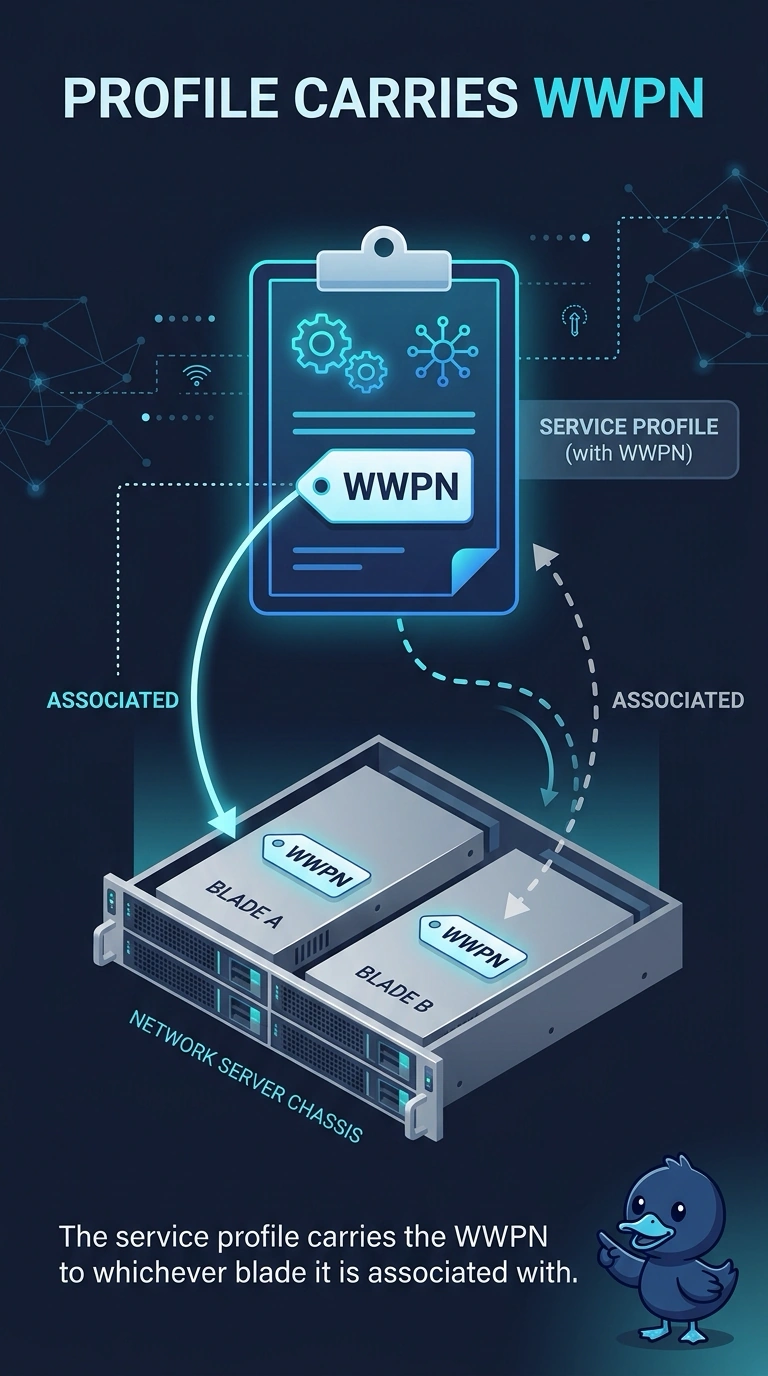
The name badge belongs to the job, not to the person who wore it yesterday. A service profile owns the WWPN and takes it to the blade you associate. The new blade presents that WWPN, so the existing zones still match and you do not rezone to a hardware address the new blade is not using.
Full Explanation
UCS service profiles exist so a blade can be replaced without renumbering the SAN. The WWPN is drawn from the pool into the profile, and association programs that identity onto the VIC of whichever blade receives the profile. The factory's new blade logs in with the old WWPN because the profile moved, not because the vendor burned that WWPN into the replacement hardware. A server pool qualification filters which blades may receive a profile. The zone database on the MDS does not write WWPNs into that qualification. A host firmware package selects BIOS, CIMC, and adapter code. It does not edit Fibre Channel zones on the array or the SAN switch. Caveat: this holds when you reuse the profile. If you create a new profile, it draws a new WWPN and the zones miss until you update them. Operational check: after association, compare the vHBA WWPN on the new blade with the zone member and confirm they are the same value. Unassociating the profile from the failed blade before you associate it to the replacement avoids two blades presenting one WWPN at the same time.