
A bank edits the BIOS settings on a service profile template. Every blade already associated from that template schedules a reboot under the maintenance policy. Which template type pushes a later edit into profiles that already exist?
Select an answer to reveal the explanation.
Short Explanation
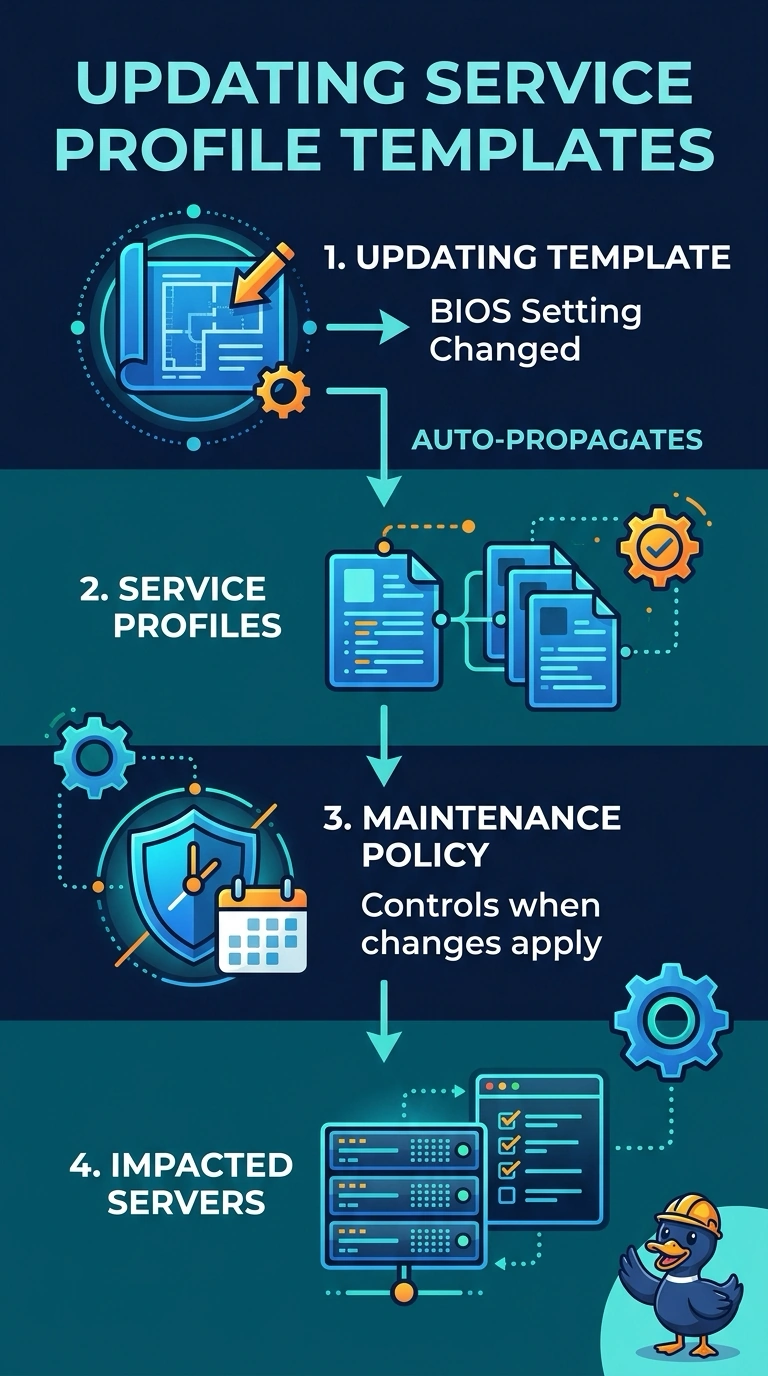
You’re looking for the template type that carries a later edit into profiles already created from it. An updating service profile template stays linked to those profiles, so the BIOS change reaches them and the maintenance policy schedules the reboot.
Full Explanation
An updating service profile template propagates later changes into the service profiles bound to it, so a BIOS edit reaches the bank’s associated blades and the maintenance policy schedules their reboot. A server pool qualification that matches those blades determines which blades are eligible to receive a profile; it does not push BIOS changes into existing profiles. A chassis discovery policy that counts IOM links sets the link requirement for chassis discovery; it does not change server BIOS settings or update profiles. A boot policy that lists local disk ahead of a SAN target controls boot-device preference; it does not propagate a template edit to existing profiles. The updating service profile template is therefore the choice that applies the later edit to profiles already created from it. Caveat: the template change and the reboot are separate steps—the maintenance policy determines when the reboot happens. With immediate maintenance, the blade reboots as soon as the BIOS change reaches its profile. Practical check: confirm the template is updating before making another BIOS edit, then inspect one bound profile to verify that the new setting has propagated.