
A media company applied a new host firmware package to a service profile. Hours later the blade still runs the previous firmware. The maintenance policy is user-ack, and no reboot has been acknowledged. Why is the firmware unchanged?
Select an answer to reveal the explanation.
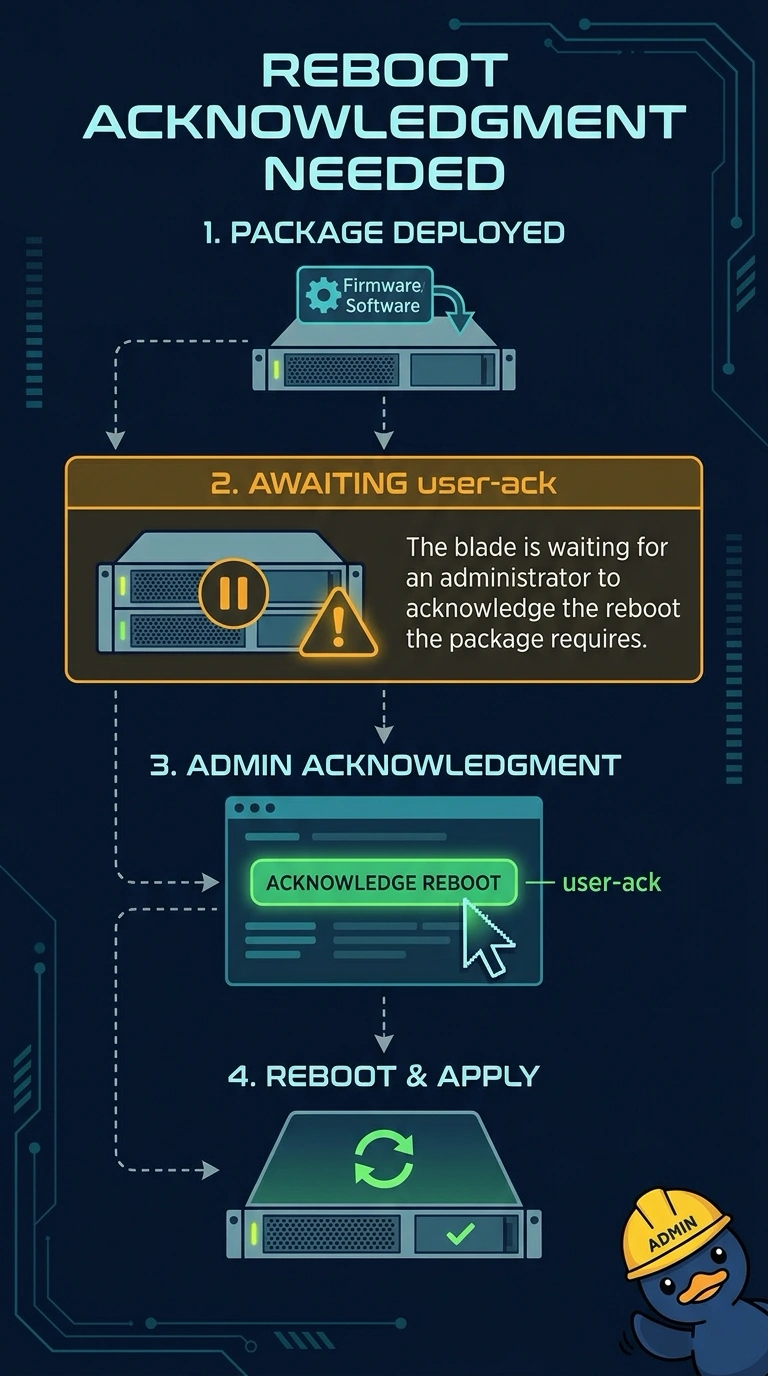
Short Explanation
Your blade is waiting for you to acknowledge the required reboot before it activates the new firmware under the user-ack policy. Reloading both fabric interconnects is a separate event, and neither an immediate install nor a SAN zoning change explains this pending reboot.
Full Explanation
The blade is still running the previous firmware because the host firmware package is associated with its service profile, but the user-ack maintenance policy requires an administrator to approve the disruptive reboot before the new firmware activates. Since no one has acknowledged that reboot, the blade continues running its existing version. Reloading both fabric interconnects at the same time is not required to activate host firmware; infrastructure firmware on the interconnects is a separate upgrade, and their reload does not approve the blade’s pending maintenance action. A user-ack policy also does not install firmware immediately or bypass a pending reboot—it waits for administrator approval, unlike an immediate policy that can reboot without that acknowledgement. The SAN uplink does not deliver the host firmware package to the blade, so changing zoning is not a prerequisite for activation. Exam caveat: an immediate maintenance policy could cause an unacknowledged reboot, which may be unacceptable on a live service. Practical check: acknowledge the pending reboot for the profile, confirm that the blade reloads, and verify that its running firmware matches the host firmware package.