
A SaaS platform team changes BIOS settings in the CIMC of a C-series server that is integrated with UCS Manager. After the next association the settings revert. The service profile has a BIOS policy. Where should the change be made so it stays?
Select an answer to reveal the explanation.
Short Explanation
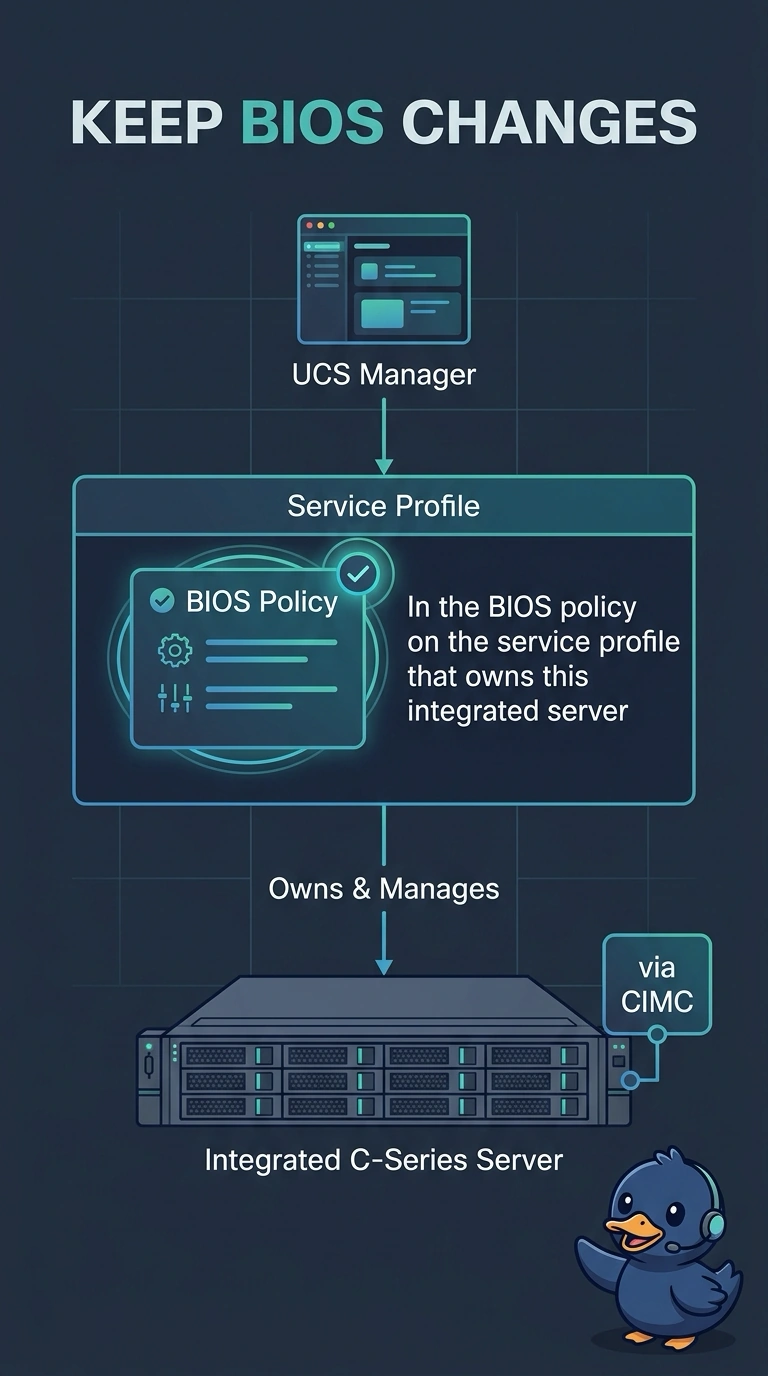
Once the rack server joins UCS Manager, the service profile is the landlord. You change the BIOS policy on that profile or the next association paints over the CIMC edits. The zoneset does not keep a copy of BIOS tokens.
Full Explanation
An integrated C-series server is managed by the service profile. The BIOS policy on that profile is reapplied when the profile associates, so a one-time edit in CIMC is overwritten and the SaaS team sees the old tokens return. Making the change in the BIOS policy keeps it with the identity that owns the server. Integration does override local CIMC BIOS settings. That override is the point of putting the server under UCS Manager. An MDS zoneset controls which Fibre Channel names may talk. It does not store BIOS settings. The chassis power policy models how blade chassis supplies are fed. It does not hold rack-server BIOS tokens, and a standalone rack server is not using a blade power policy for this. Caveat: if the server is later removed from the domain and run standalone, CIMC becomes the place to edit BIOS again. While it is integrated, the profile wins. Operational check: set the token in the BIOS policy, reassociate or accept the maintenance action, and confirm CIMC now shows the policy value after association.