
A regional hospital assigns a new host firmware package and the bound servers reboot immediately, even though the team wanted to wait for a change window. Which policy turns that package change into an immediate reboot?
Select an answer to reveal the explanation.
Short Explanation
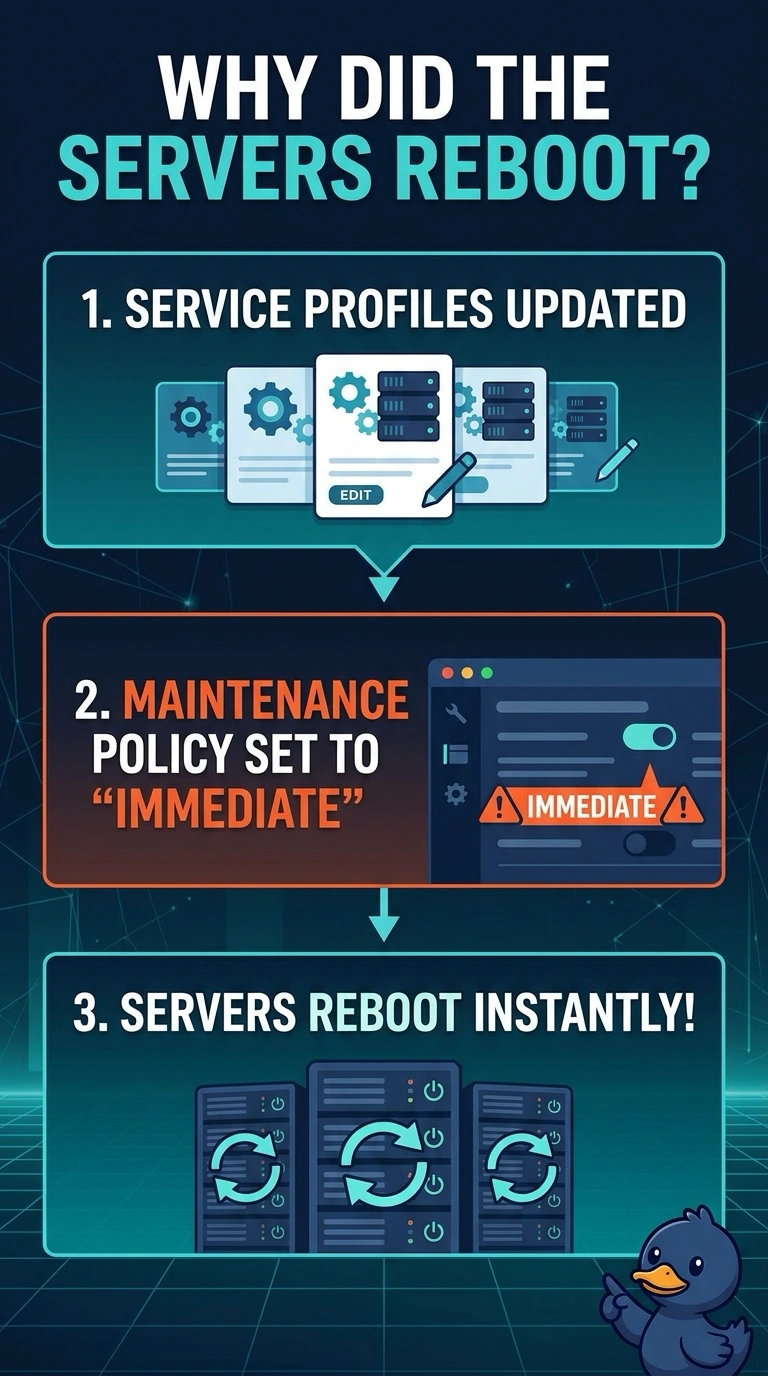
You gave the servers a new toolbox, and the standing rule was to install it the moment it arrived. The maintenance policy set to immediate makes the servers reboot as soon as the host firmware package is applied. The boot policy chooses the next device to try, but it does not force this reload.
Full Explanation
A host firmware package holds server images, such as BIOS, adapter, and controller firmware, that a service profile applies to a blade or rack server. The maintenance policy decides when a disruptive change takes effect. Set to immediate, it reboots the server to activate the package as soon as the change is committed, which explains the hospital’s unexpected restarts. User acknowledgment would instead hold the reboot until an operator allowed it during the change window. The boot policy sets device order, such as whether the local disk or SAN is tried first; it does not reboot a server because its firmware package changed, and the package update does not rewrite that order. A scrub policy runs when a profile is disassociated or a server is otherwise scrubbed; naming a BIOS image does not make it reload every associated server. The chassis power policy describes how power supplies and feeds cover the chassis; it does not treat a firmware assignment as a failed utility feed. Caveat: some firmware components can be staged and still require a later reboot, so changing the maintenance policy after the servers have restarted does not roll back the image. Practical check: set the maintenance policy to user acknowledgment, apply a test package to one profile, and confirm the server waits rather than rebooting on its own.