
A SaaS platform added a VLAN on a UCS X server profile vNIC, but the Intersight Managed Mode uplinks still do not carry that VLAN. The domain profile was not updated. Which change programs the uplinks?
Select an answer to reveal the explanation.
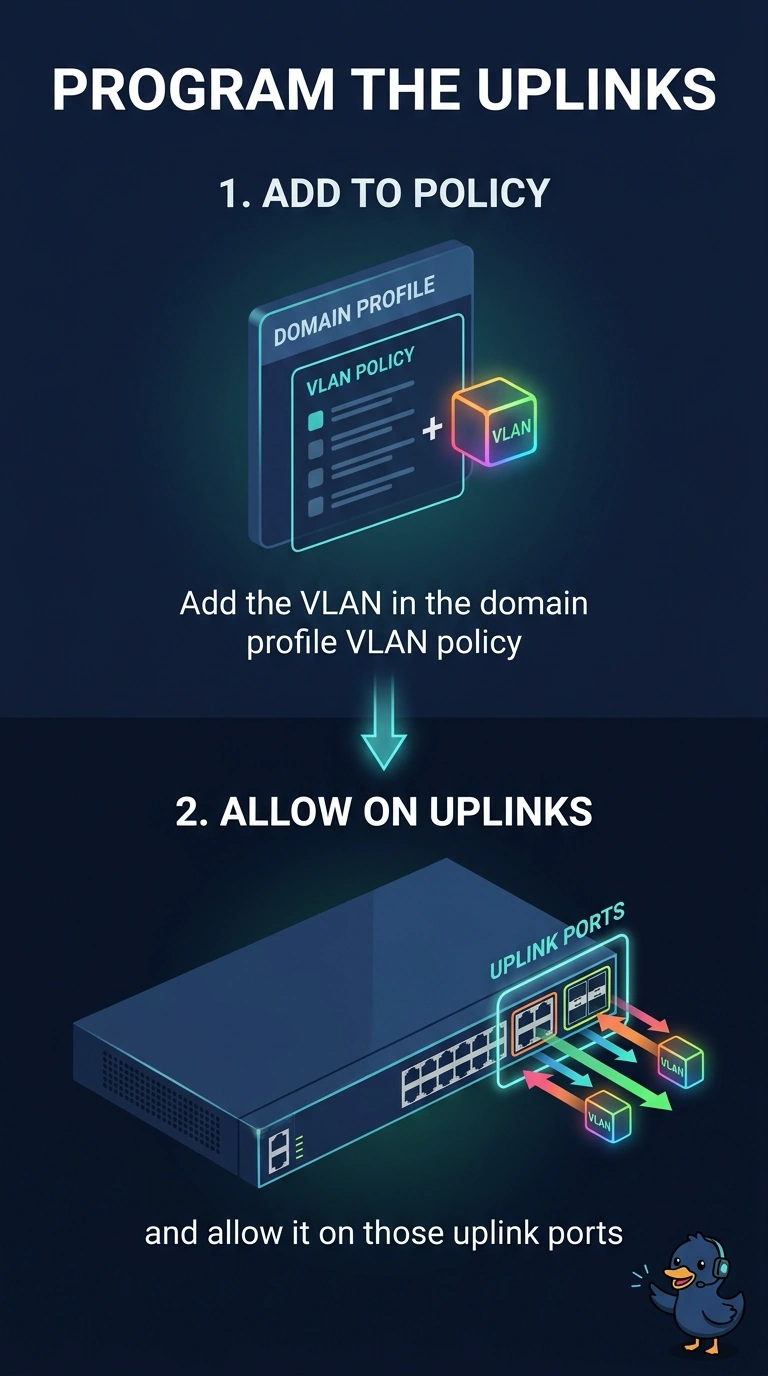
Short Explanation
The domain profile is the building permit, and the server profile is the furniture on one floor. You can label a vNIC with a VLAN and the uplinks still will not carry it until the domain profile allows that VLAN. End-host mode is a forwarding choice, not the place the VLAN is defined.
Full Explanation
In Intersight Managed Mode the domain profile carries the policies that program the fabric interconnects, including the VLAN policy and the port policy that decides what the uplinks allow. A server profile vNIC can use a VLAN only after that domain policy has defined it and the uplink allows it. Adding the VLAN on the vNIC alone leaves the uplinks unchanged, which is this platform's symptom. These X-series interconnects are not running a local UCS Manager domain, so a UCS Manager vNIC template is not the object that programs them. Ethernet end-host mode controls how the interconnect behaves toward upstream switches. It does not copy vNIC VLANs onto uplinks by itself. The host firmware package selects server firmware such as BIOS and adapter code. It does not push VLAN membership to fabric-interconnect uplinks. Caveat: the server profile vNIC still has to list the VLAN after the domain policy exists, or the uplinks can carry a VLAN the blade never uses. Operational check: update the domain VLAN policy and the uplink port policy, deploy the domain profile, and confirm the uplink allows the VLAN the vNIC is using.