
A regional hospital updated a blade's host firmware package and the server rebooted at once during clinic hours. The maintenance policy applies firmware changes immediately. How should the next update be kept from rebooting on its own?
Select an answer to reveal the explanation.
Short Explanation
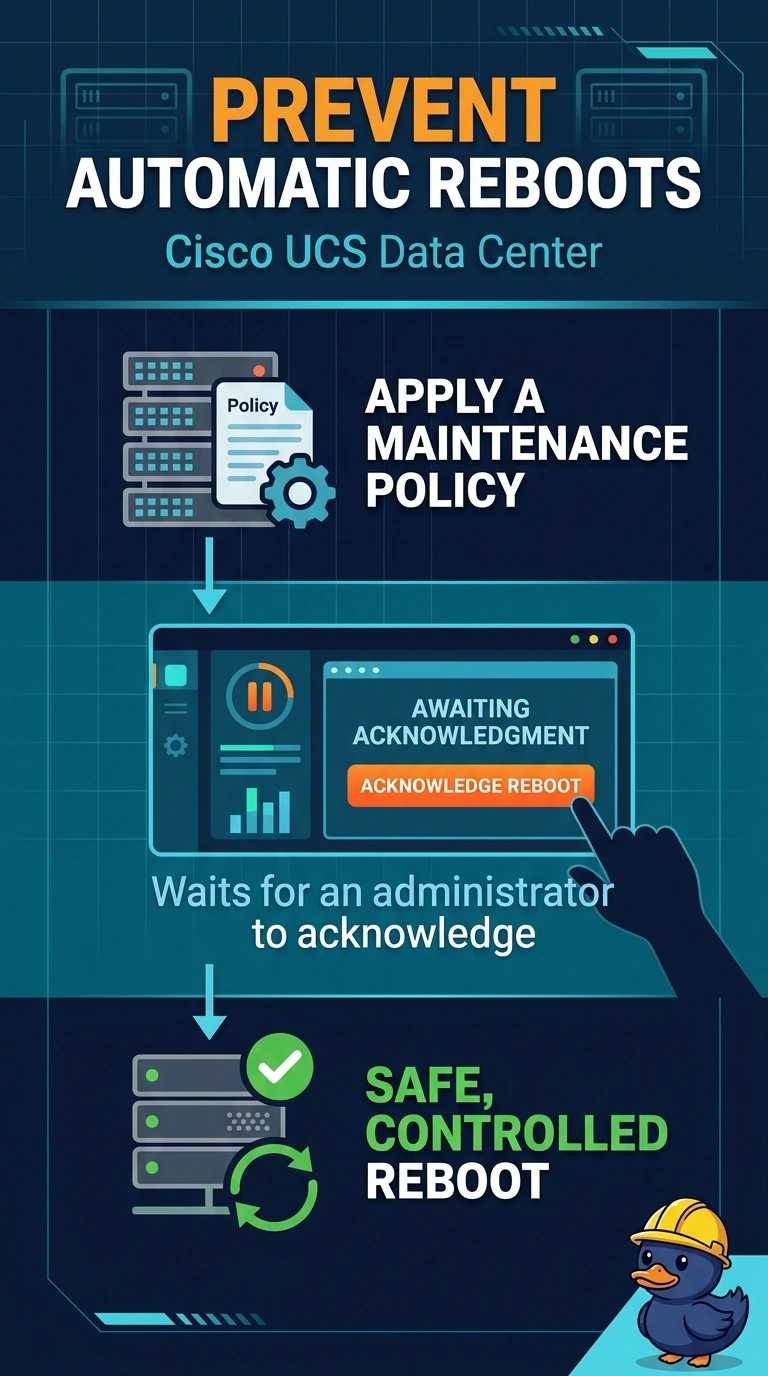
The maintenance policy is the person who decides whether the server reboots now or waits for a nod. You left it on an immediate reboot, so the host firmware change bounced the blade during clinic hours. A policy that waits for an administrator to acknowledge the reboot is how you hold the next one.
Full Explanation
A host firmware package selects the server firmware a service profile will apply, and applying it reboots the server. The maintenance policy decides when that reboot happens. Immediate means the reboot proceeds as soon as the change is committed, which is what interrupted the hospital. A policy set for user acknowledgement holds the change in pending activities until an administrator acknowledges it, so the next update can wait for a maintenance window. Deleting the boot policy removes the boot device order. It does not make the server ignore a host firmware package, and the blade still needs a boot policy to start. A VLAN on a vNIC template is Ethernet membership. Editing it is not what schedules firmware, and removing the VLAN would only break the host network. The chassis power policy describes power redundancy. Non-redundant mode does not defer server reboots and does not turn a firmware change into a weekly job. Caveat: user acknowledgement still requires someone to acknowledge the pending reboot later, or the blade keeps running the old firmware. Operational check: attach a user-acknowledgement maintenance policy, change the host firmware package on a test profile, and confirm the server does not reboot until the pending activity is acknowledged.