
A retail bank's blade chassis is discovered and shows a power-redundancy warning. Each side of the chassis power supplies is plugged into a separate utility feed. Which chassis power policy matches that cabling?
Select an answer to reveal the explanation.
Short Explanation
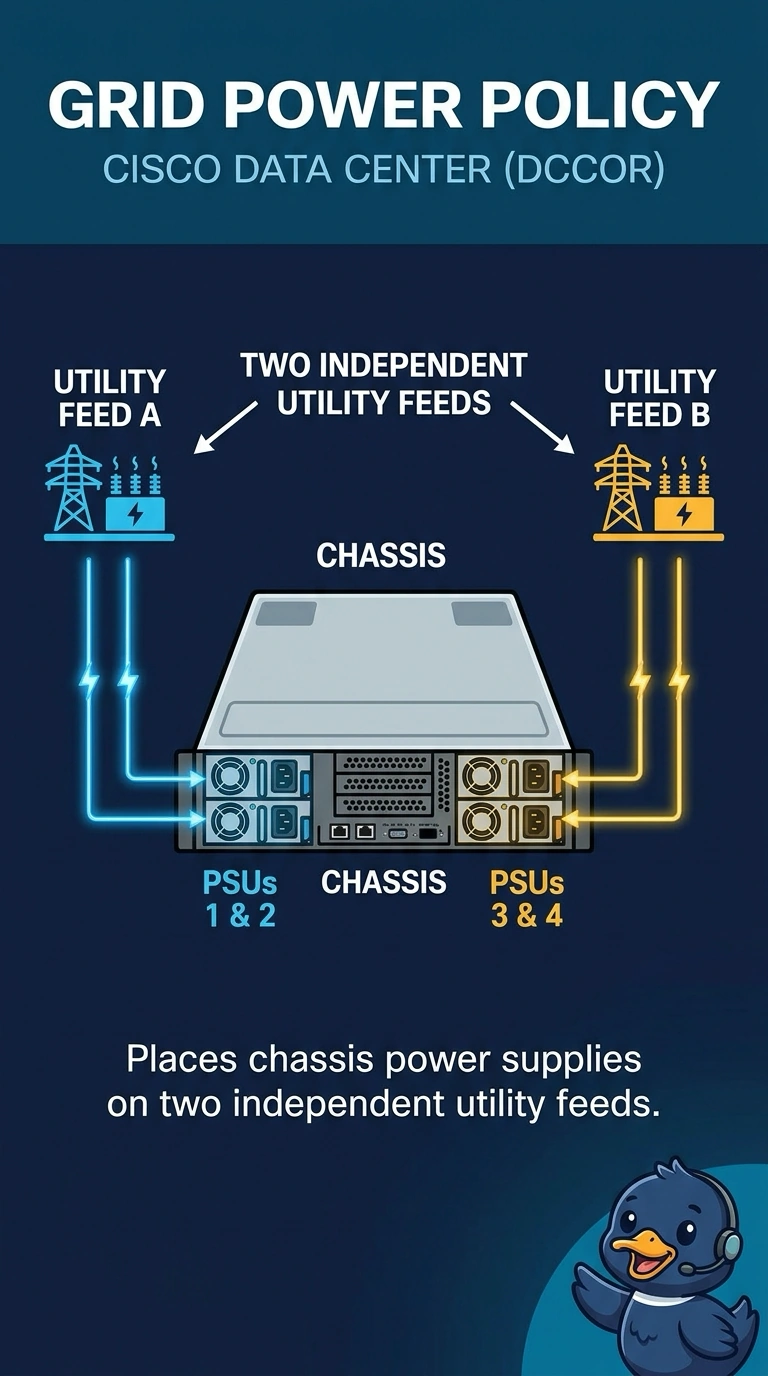
You wired the chassis like a building on two utility companies, so tell UCS that truth. Grid is the policy that expects two independent feeds and lets one side carry the chassis if the other feed dies. N+1 only means one spare supply, and it does not describe two feeds.
Full Explanation
UCS chassis power policy should match how the power supplies are fed. Grid is the policy for two independent sources: the supplies are divided across the two feeds, and the chassis can stay up on the surviving feed if one utility fails. That is the bank's cabling, so Grid clears the redundancy mismatch. N+1 reserves capacity equal to one extra supply. It is the right idea when you have a spare power supply on a single source, and it does not represent two separate utility feeds. Non-redundant assumes the chassis needs every supply at once and plans no failover when a feed or a supply is lost. A server-pool qualification matches blades by attributes such as adapter or memory so a service profile can be placed. It has no relationship to chassis power feeds. Caveat: Grid still requires enough wattage on each side to carry the configured blades, or a single feed failure will brown out the chassis even with the right policy name. Operational check: set the chassis power policy to Grid, confirm the supplies show on the two expected grids, and clear the redundancy warning.