
A logistics company finished configuring a Nexus switch, then every reload stops at the POAP prompt. The engineer applied the changes to running-config and never saved them. Why does POAP return?
Select an answer to reveal the explanation.
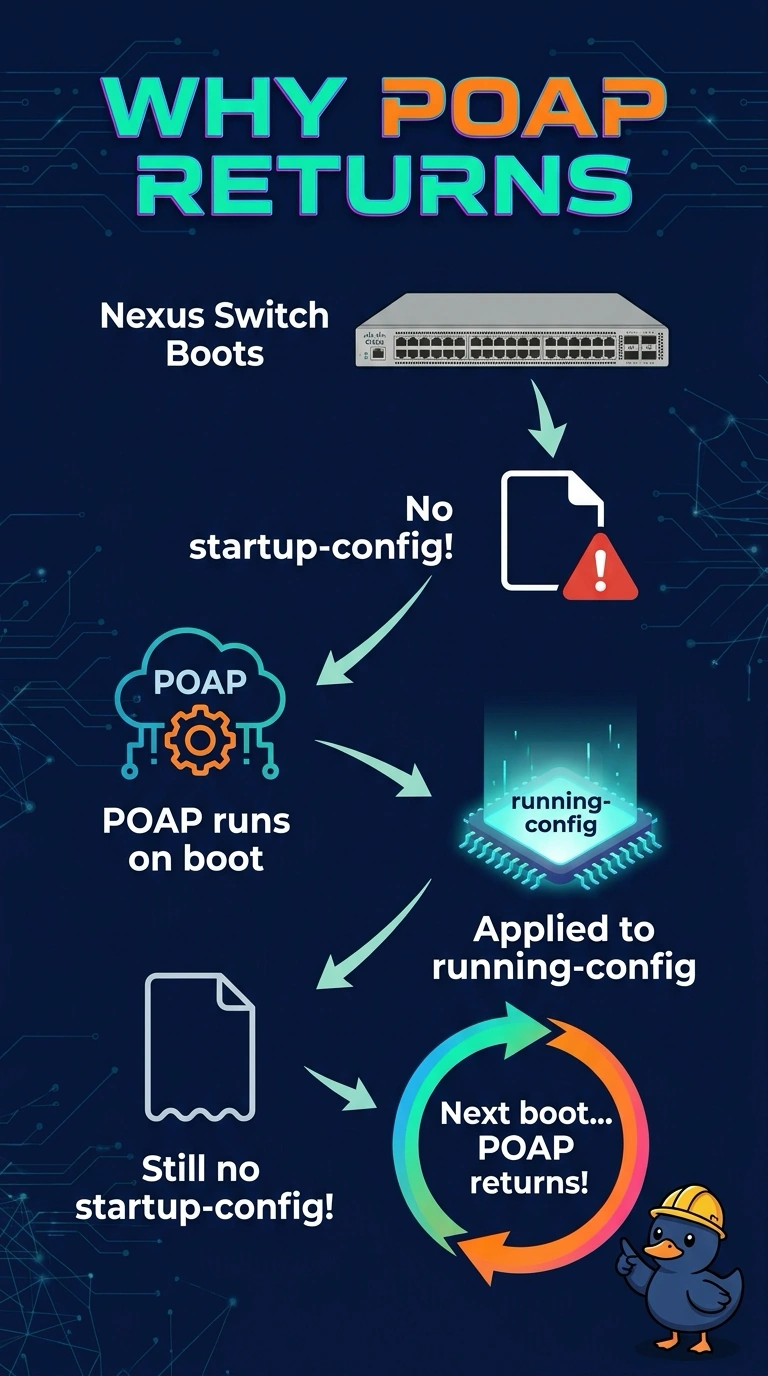
Short Explanation
POAP is the greeting a switch gives when it wakes up with an empty suitcase. You never packed startup-config, so every reload looks like the first day. Save the configuration and the logistics switch stops asking for a bootstrap.
Full Explanation
On Nexus switches, POAP is the day-0 path used when the switch boots and finds no startup configuration. The logistics changes exist only in running-config. A reload discards them, the switch still has no startup-config, and POAP offers itself again. Copying running-config to startup-config gives the next boot a configuration to load, so POAP is no longer the boot path. Guest shell is an optional Linux environment for on-box tools. It does not cause POAP, and POAP does not require it. The scheduler table has nothing to do with whether a boot is considered day-0. MACsec keys protect links. Their absence does not start POAP. Caveat: if someone later erases startup-config, POAP becomes eligible again, which is useful for a rebuild and surprising on a production reload. Operational check: save the configuration, reload a maintenance window or a lab switch, and confirm the boot loads the saved config without stopping at the POAP prompt. Record the before and after values in the change ticket so the next shift can see what changed.