
A government agency automates UCS and Intersight from a Windows host and wants cmdlets that open a session and apply a server policy. Which tool matches that host?
Select an answer to reveal the explanation.
Short Explanation
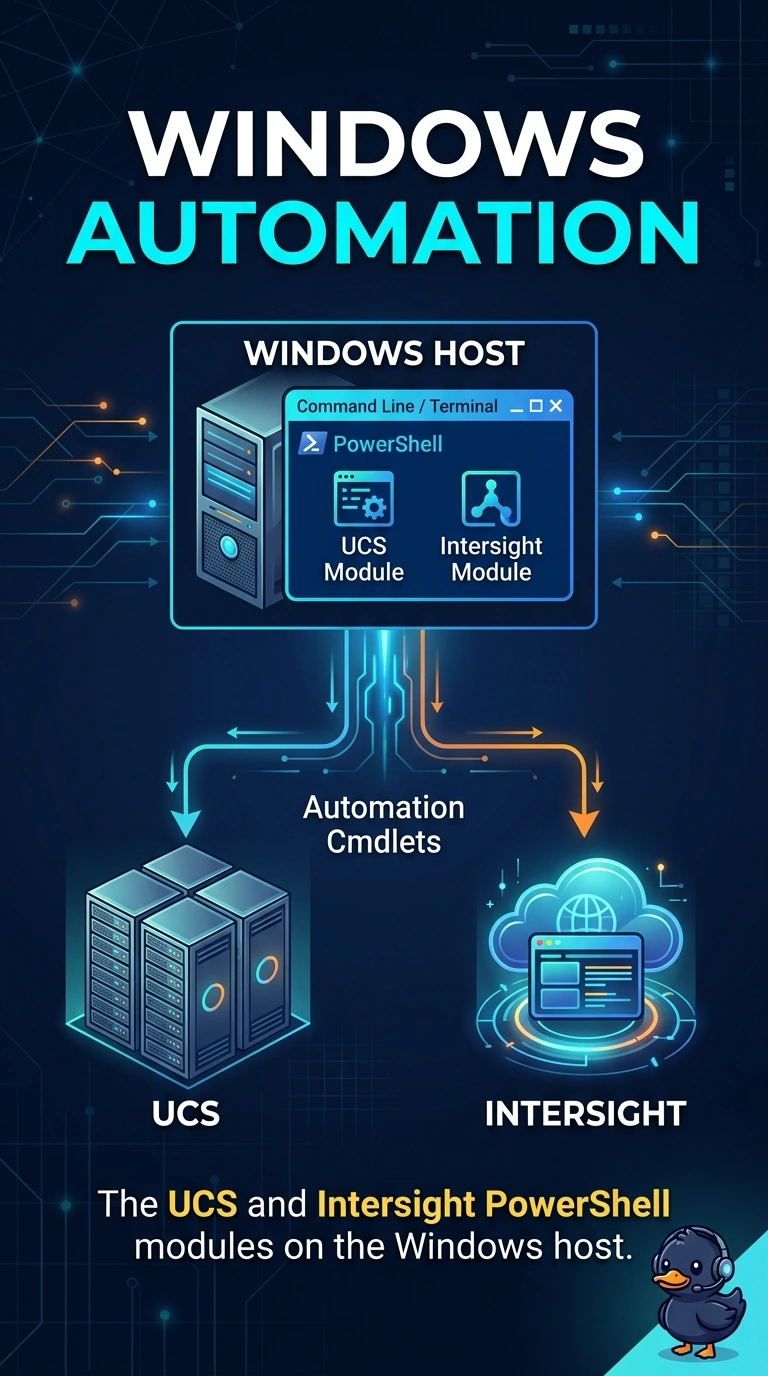
PowerShell is the toolbox already on the Windows bench. You open a UCS or Intersight session with its modules and apply the server policy from that host, which is the workflow this agency asked for. A Terraform plan is a different language and a different tool, even when it can also describe infrastructure.
Full Explanation
Cisco provides PowerShell modules for UCS Manager and for Intersight. From a Windows host an operator connects a session and uses cmdlets to read or apply server policy, which is the government requirement. Terraform expresses desired infrastructure in its own configuration language and tracks state. It is not the runtime those PowerShell cmdlets execute, and choosing it would abandon the cmdlet workflow. The on-box Python cli module runs inside a Nexus switch interpreter. Windows does not open that module to change UCS policy, and a rack or blade policy is not a Nexus CLI show command. An MDS zoneset controls Fibre Channel device membership. Intersight does not store a server policy as a zoneset, and activating zoning does not apply a compute policy. Caveat: the Windows host still needs network reachability to UCS Manager or to Intersight, plus an account whose privileges allow the policy change. Operational check: from the Windows host, open a session with the module, apply the policy to one test profile, and confirm the profile shows the change.