
A logistics company is connecting a GPU cluster that uses RDMA over Converged Ethernet version 2. Under load the fabric drops those frames and the job stalls. What does this traffic need from the Ethernet fabric?
Select an answer to reveal the explanation.
Short Explanation
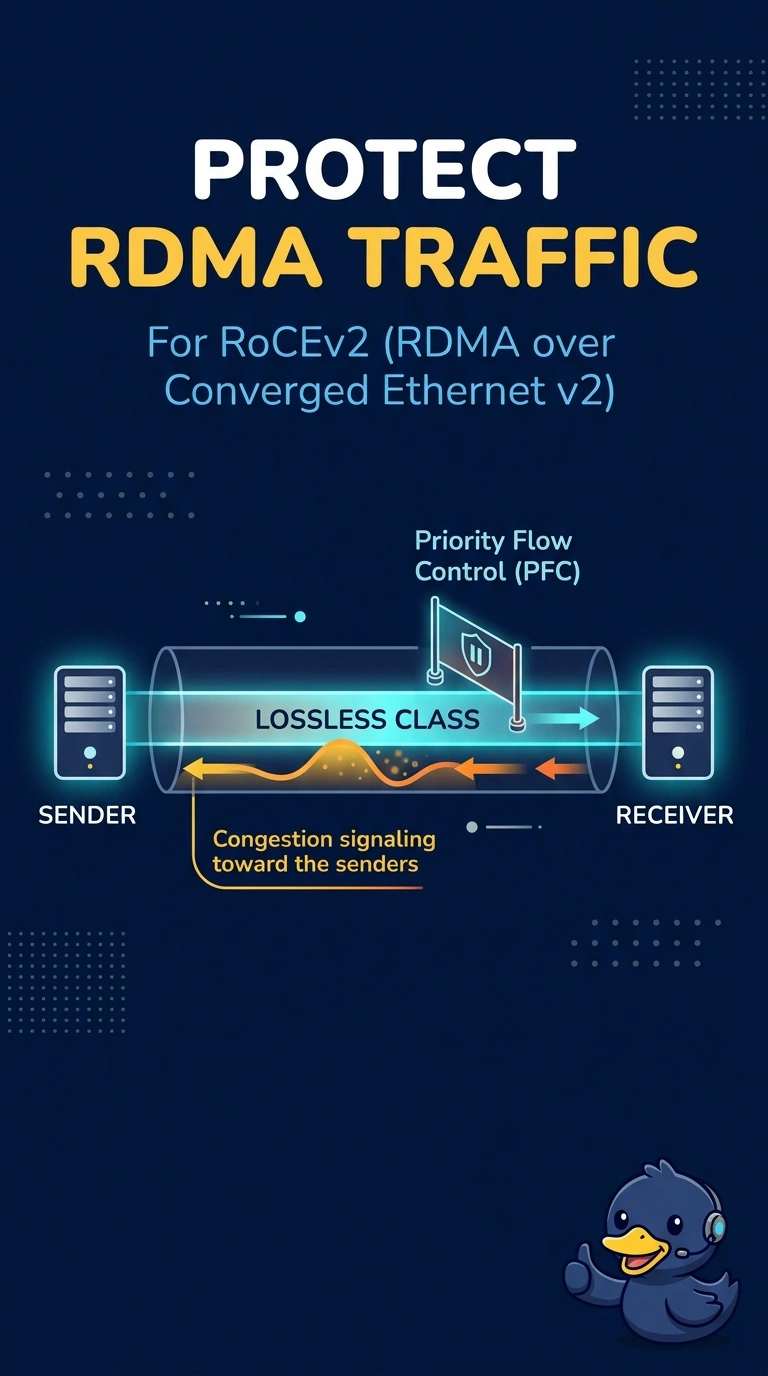
This RDMA traffic is a convoy that stalls if you drop even a few cars. You need a lossless class with priority flow control, plus congestion signaling so the senders slow down before the buffers overflow. A bigger best-effort VLAN still drops, and a SAN zoneset does not carry this Ethernet traffic.
Full Explanation
RDMA over Converged Ethernet version 2 expects the Ethernet fabric to behave as a lossless path for the traffic class it uses. Priority flow control pauses that class on a congested hop instead of dropping it, and congestion signaling tells the senders to slow down so the pauses do not spread forever. The logistics job stalls because the fabric is dropping those frames under load, so the missing piece is that lossless behavior plus the congestion signal, not a wider best-effort VLAN. Best-effort service is allowed to drop. Making the VLAN bigger does not turn drops into pauses, and this transport does not shrug off loss the way a web transfer can. A Fibre Channel zoneset controls who may talk inside a VSAN. These GPU frames are Ethernet, and activating a zoneset does not create a lossless class for them. HSRP elects a default gateway. A preempt delay changes how fast a router takes the active role back. It does not stop a switch from dropping RDMA frames in the middle of the fabric. Caveat: priority flow control has to be enabled for the same class on every hop the traffic crosses, or one drop-prone hop still stalls the job. Operational check: mark the cluster traffic into the lossless class, confirm priority flow control is active on those links, and rerun the job while watching that class for drops.