
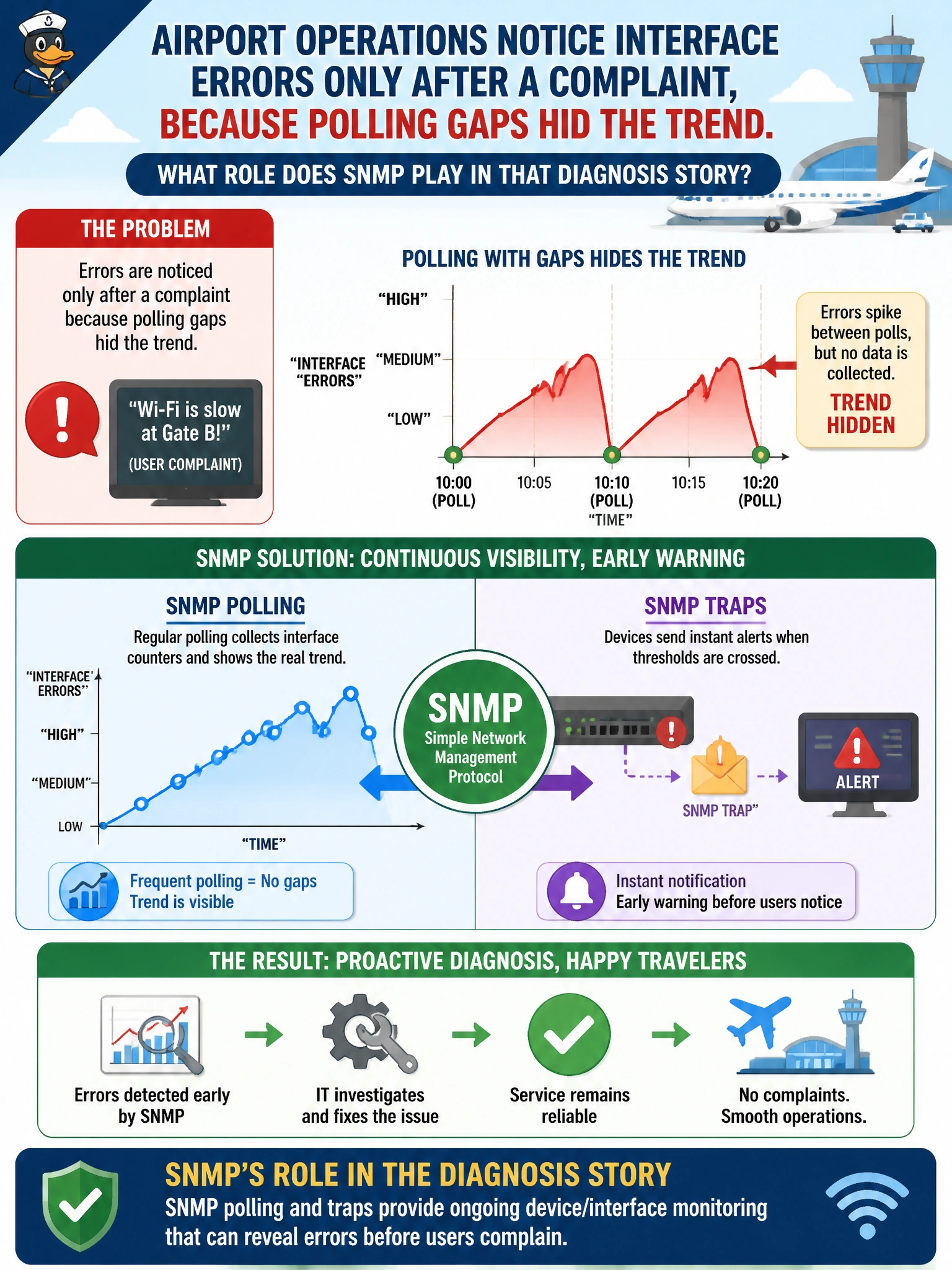
Airport operations notice interface errors only after a complaint, because polling gaps hid the trend. What role does SNMP play in that diagnosis story?
Select an answer to reveal the explanation.
Short Explanation
SNMP is the scheduled wellness check. Poll counters and catch rising errors before passengers feel the pain. Skip the polls and you’re stuck waiting for the complaint desk—exactly the airport gap in this story.
Full Explanation
Airport operations noticing interface errors only after a complaint because polling gaps hid the trend points to SNMP’s monitoring role. SNMP polling and traps provide ongoing device and interface monitoring that can reveal errors, utilization, and state changes before users complain. Regular MIB polls build a trend line; traps can alert on threshold or link events—together they close the visibility gap that left the airport reacting to passenger reports instead of leading with telemetry.
Saying SNMP only configures SPAN sessions and cannot report interface counters fails because SNMP’s core assurance role includes reading interface counters and related MIBs; it is not limited to SPAN configuration. Saying SNMP replaces ping and traceroute for hop-by-hop path discovery fails because SNMP monitors device/interface state over time; it does not replace path-tracing tools. Saying SNMP authenticates NTP peers and assigns stratum values automatically fails because NTP authentication and stratum are NTP functions, not SNMP’s job.
Exam caveat: SNMP = monitoring/management visibility; ping/traceroute = reachability/path; NTP = time; SPAN = local mirror. Keep those tools in their lanes. Polling interval design matters—gaps recreate the “complaint first” failure mode in the stem.
Operational check: verify SNMP reachability and credentials from the NMS, confirm interface error counters are polled at a sensible interval, enable relevant traps/informs, and validate alerts fire on a controlled error-increment test before the next operational surge.