
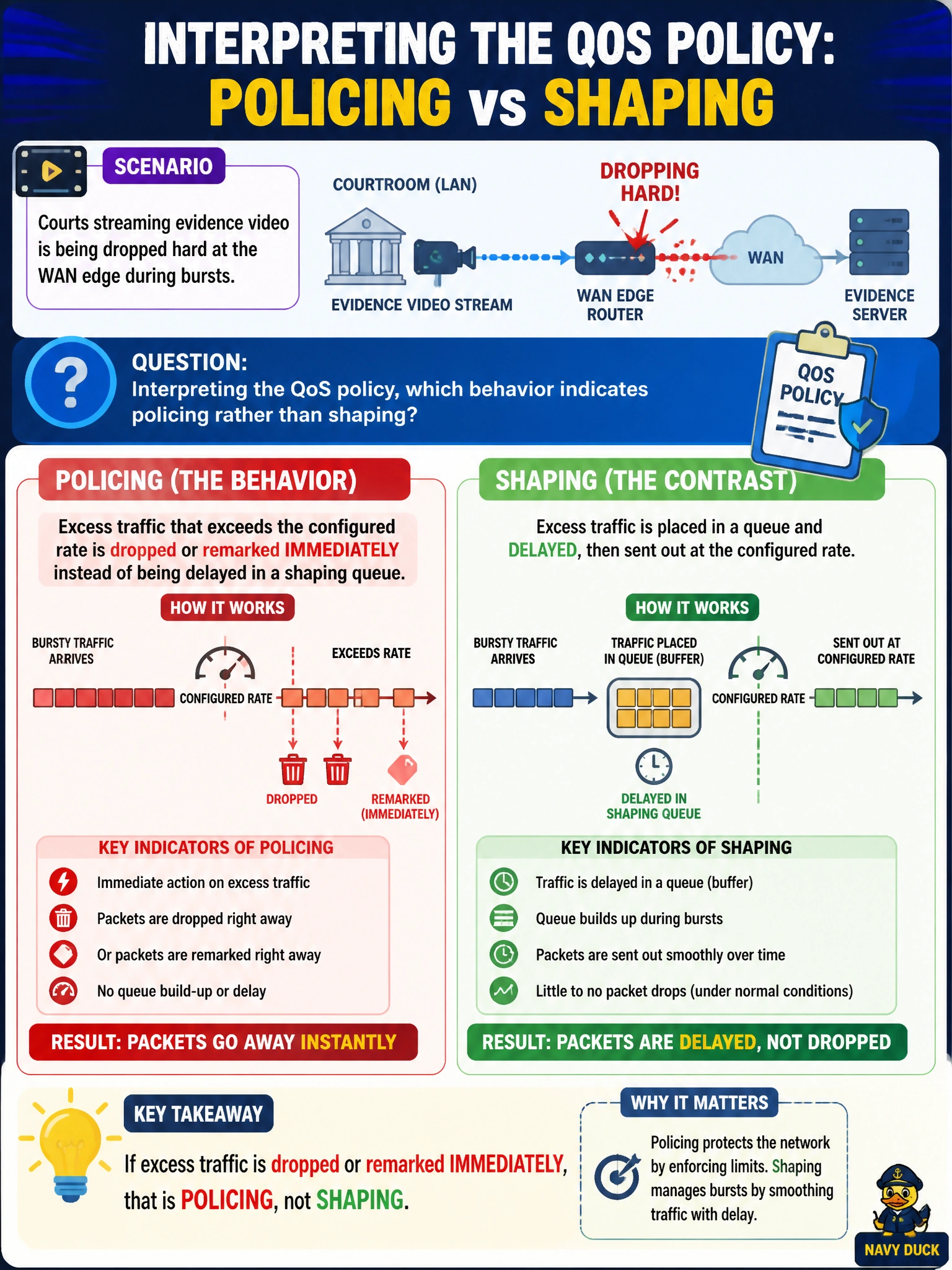
Courts streaming evidence video is being dropped hard at the WAN edge during bursts. Interpreting the QoS policy, which behavior indicates policing rather than shaping?
Select an answer to reveal the explanation.
Short Explanation
Policing is the strict meter maid—go over the rate and the ticket (drop/remark) happens now. Shaping is the on-ramp light that makes you wait in a little queue so the average speed looks polite. Hard drops on bursts scream policing.
Full Explanation
When courts stream evidence video and bursts are clipped hard at the WAN edge, the QoS interpretation question is whether the policy is policing or shaping. Policing meters traffic to a configured rate and acts on excess immediately—typically by dropping or remarking—rather than absorbing the burst in a shaping queue. That immediate disposition of excess is what distinguishes policing from shaping in ENCOR-level policy reading and matches the symptom of hard drops during bursts.
Buffering excess and smoothing it to a rate over time is shaping behavior, not policing. Merely classifying with ACLs without rate limiting is classification only; it neither polices nor shapes. Disabling CEF to process-switch every evidence packet for 'fairness' is unrelated to rate enforcement and would worsen forwarding performance without implementing a policer or shaper.
Exam caveat: many items contrast drop-now policing with delay-and-smooth shaping. Do not confuse classification ACLs with rate tools, and do not drag CEF into a policing-versus-shaping decision.
Operational check: review the WAN-edge policy map for police versus shape actions on the evidence class, correlate drop counters with burst intervals, and if smooth delivery is required, consider shaping or deeper buffers rather than a strict policer that discards courtroom video peaks.