
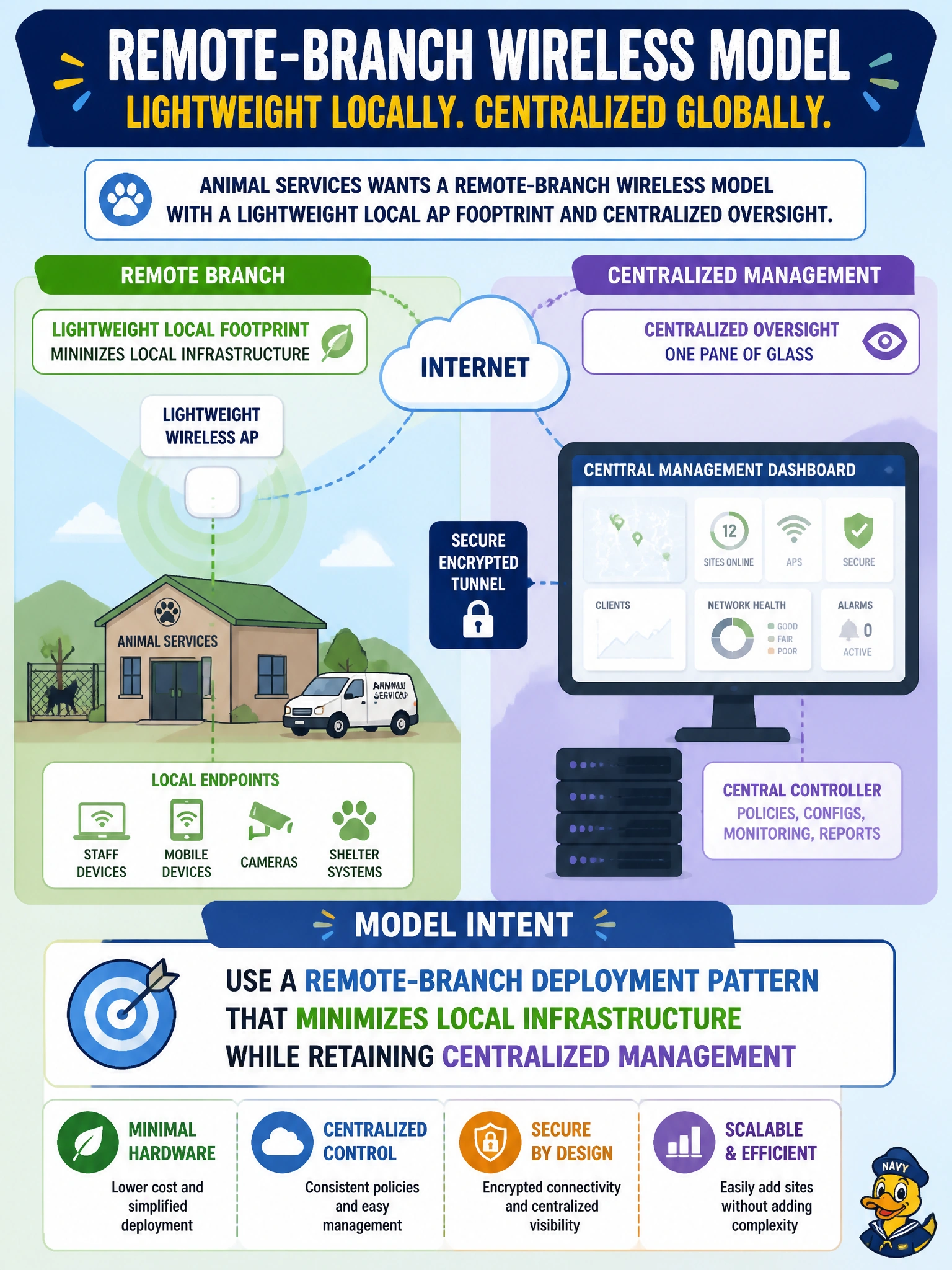
Animal services wants a remote-branch wireless model with a lightweight local AP footprint and centralized oversight. Which statement best identifies that model’s intent?
Select an answer to reveal the explanation.
Short Explanation
Tiny shelter, tiny footprint. Remote-branch wireless keeps a light AP presence on-site and leans on central brains—like a small clinic that still follows hospital policy without building a hospital.
Full Explanation
Animal services wanting a remote-branch wireless model with a lightweight local AP footprint and centralized oversight should use a remote-branch deployment pattern that minimizes local infrastructure while retaining centralized management. Small shelters get managed APs and consistent policy without installing full data-center WLC fabrics in every closet. Central brains handle visibility and configuration; the site keeps a small, serviceable footprint suited to limited power, space, and local IT.
Placing full data-center WLC fabrics in every shelter closet regardless of site size contradicts the lightweight intent. Running only monitor-mode APs that never serve clients fails the need to provide shelter wireless. Requiring on-site wireless engineers before any AP can boot invents an operational barrier that remote-branch models are meant to avoid.
Exam caveat: Remote-branch wireless is about minimal on-site gear plus centralized management—not monitor-only or full per-site controller fabrics.
Operational check: standardize a small AP bill of materials for shelters, onboard them to central management, and verify staff can change SSIDs/policy centrally without deploying engineers to each animal-services site.