
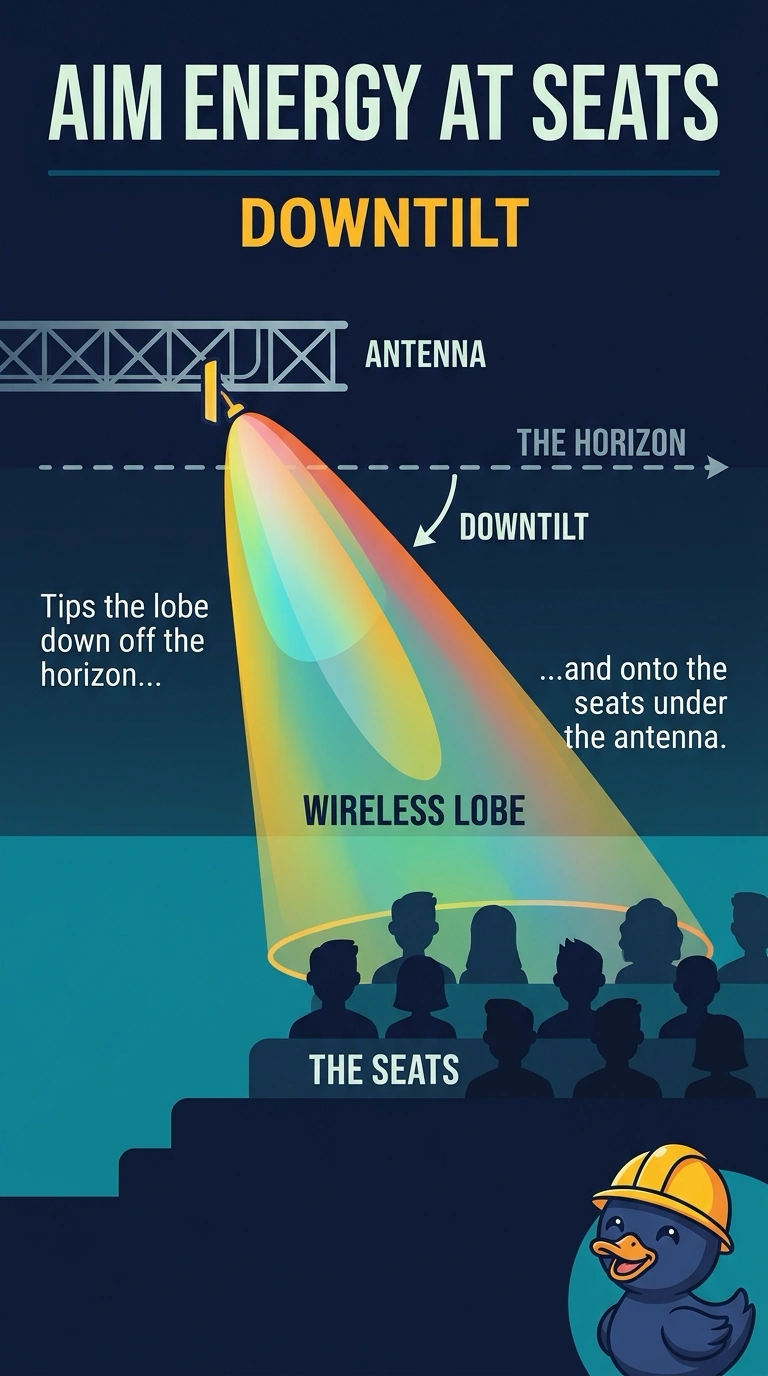
A high-ceiling antenna aimed at the horizon is strong at the far wall and weak in the seats below it. What change aims the energy at the seats?
Select an answer to reveal the explanation.
Short Explanation
The antenna is painting the far wall, and the seats are under the beam. Tip it down. Your extra power would only make the wall louder, and a faster beacon does not steer a lobe.
Full Explanation
Elevation aim decides whether a high-ceiling antenna hits the seats or the far wall. This one is aimed at the horizon, strong at the wall and weak below, so downtilt tips the lobe onto the seats. Raising transmit power makes the existing lobe louder. It does not aim it down. A hidden SSID does not bend a pattern. The beacon interval does not change elevation. A high-ceiling antenna aimed at the horizon lights the far wall and leaves the seats below weak. Downtilt aims the lobe at the seats. Check one live client after the change and leave the rest of the floor alone until that client matches the result you expected. Confirm the symptom on the next attempt before changing anything else. Confirm the symptom on the next attempt before changing anything else. Exam caveat: too much downtilt puts the lobe into the floor under the antenna and starves the far seats. Tilt, then measure both the seats below and the far row. Operational check: set the downtilt, leave the power alone, and compare the seats with the far wall.