
An engineer compares a radio at 10 dBm with the same radio at 20 dBm. Which statement is correct?
Select an answer to reveal the explanation.
Short Explanation
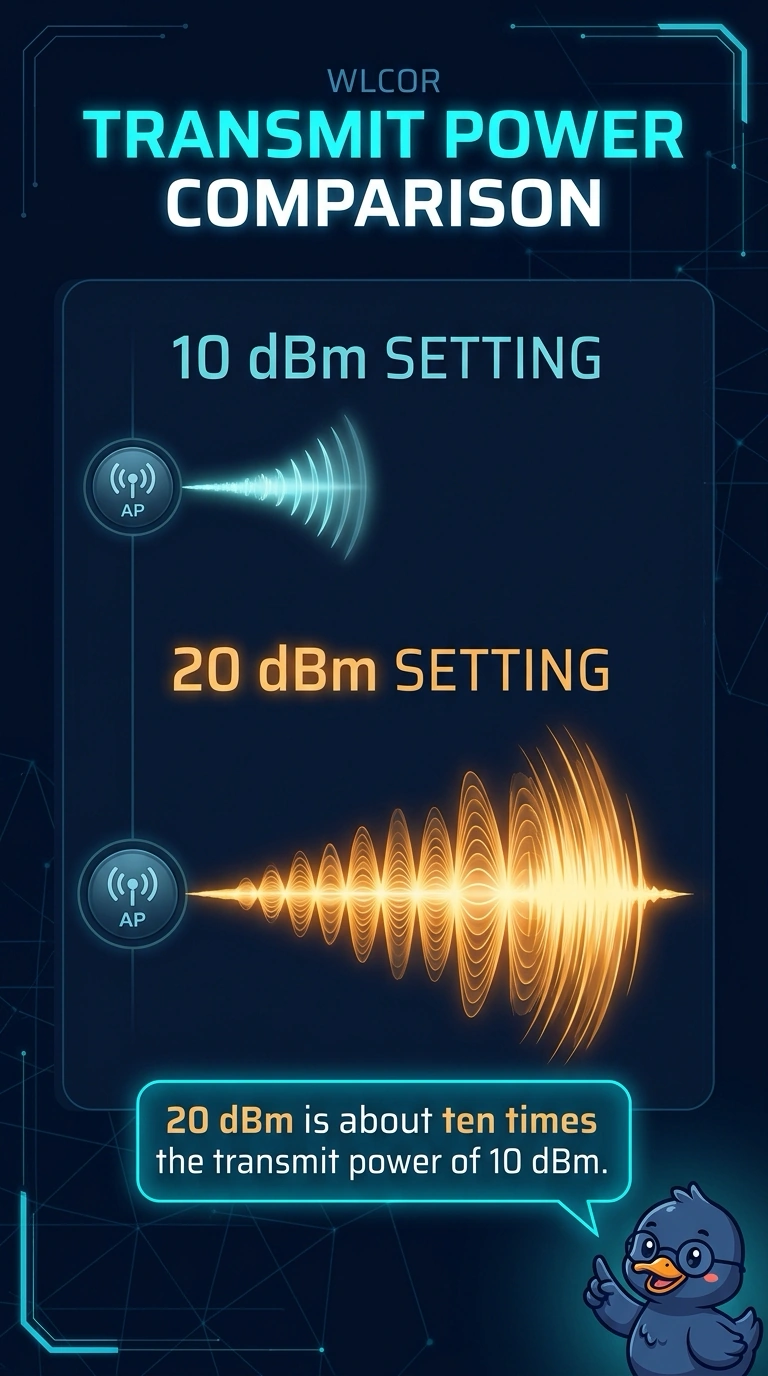
Ten more decibels is a tenfold jump, not a polite doubling. Your 20 dBm setting is about ten times the 10 dBm setting. The extra 10 is not 10 milliwatts tacked on the side.
Full Explanation
A difference of 10 dB is a factor of ten in power, while a difference of about 3 dB only doubles the power. Count the milliwatts if the labels are confusing. 10 dBm is 10 milliwatts, and 20 dBm is 100 milliwatts, so the higher setting is about ten times the power. The same radio and antenna make this a straight comparison of the power setting. Twice the power would be about 3 dB, near 13 dBm, not 20. Treating a 10 dB step as a doubling confuses the 3 dB rule with the 10 dB rule. Adding 10 milliwatts would be a linear bump from 10 milliwatts to 20 milliwatts, which is 13 dBm, not 20 dBm. Decibels do not add as milliwatts. A larger dBm value is more power, not less. Half of 10 dBm would be about 7 dBm. Exam caveat: this comparison is conducted power. Antenna gain still has to be added and cable loss subtracted before you call the result EIRP and compare it with a legal limit. Operational check: convert both settings to milliwatts and confirm the ratio is about ten before you copy a 10 dB increase across a floor.