
A stadium access point is mounted high and aimed flat. Seats far across the bowl hear it, and seats directly below are weak. The radio power is already moderate. What should change?
Select an answer to reveal the explanation.
Short Explanation
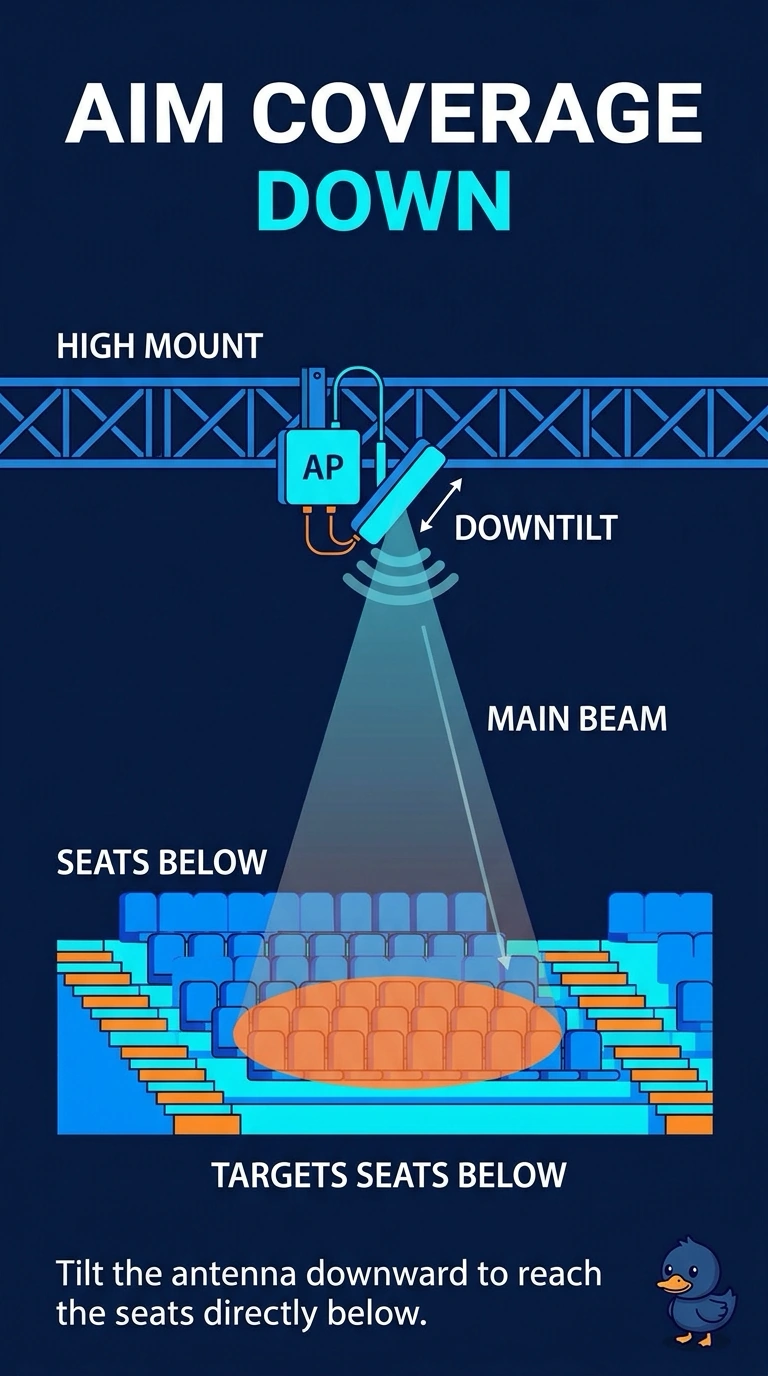
The antenna is looking across the bowl, so the people under it are outside the beam. Your fix is to tilt that beam down. More power just shouts farther in the wrong direction.
Full Explanation
A directional or high-mounted antenna has a main lobe. Mounted high and aimed flat, that lobe crosses the bowl and leaves the seats underneath on a weak edge of the pattern. Downtilt, mechanical or as designed into the antenna, points the lobe at those seats without raising power. More transmit power increases energy along the existing aim. The seats below are missing the pattern, not the watts. It does not bend a flat beam downward, so the far seats get louder and the seats below stay on the edge. A hidden SSID changes beacons. It does not aim an antenna, and the mount is what points the beam. A DHCP lease is an address timer. It has no effect on the main lobe. Exam caveat: too much downtilt creates a small hot spot under the antenna and a new coverage hole farther out. Aim for the seats you meant to cover, then survey both under the antenna and across the bowl. Operational check: tilt the antenna, leave the power alone, and compare a survey under the mount with a survey across the bowl.