
A logistics engineer reads a radio configured at a high transmit power and cannot understand why a handheld at the end of the aisle shows a weak received signal. What is the engineer comparing incorrectly?
Select an answer to reveal the explanation.
Short Explanation
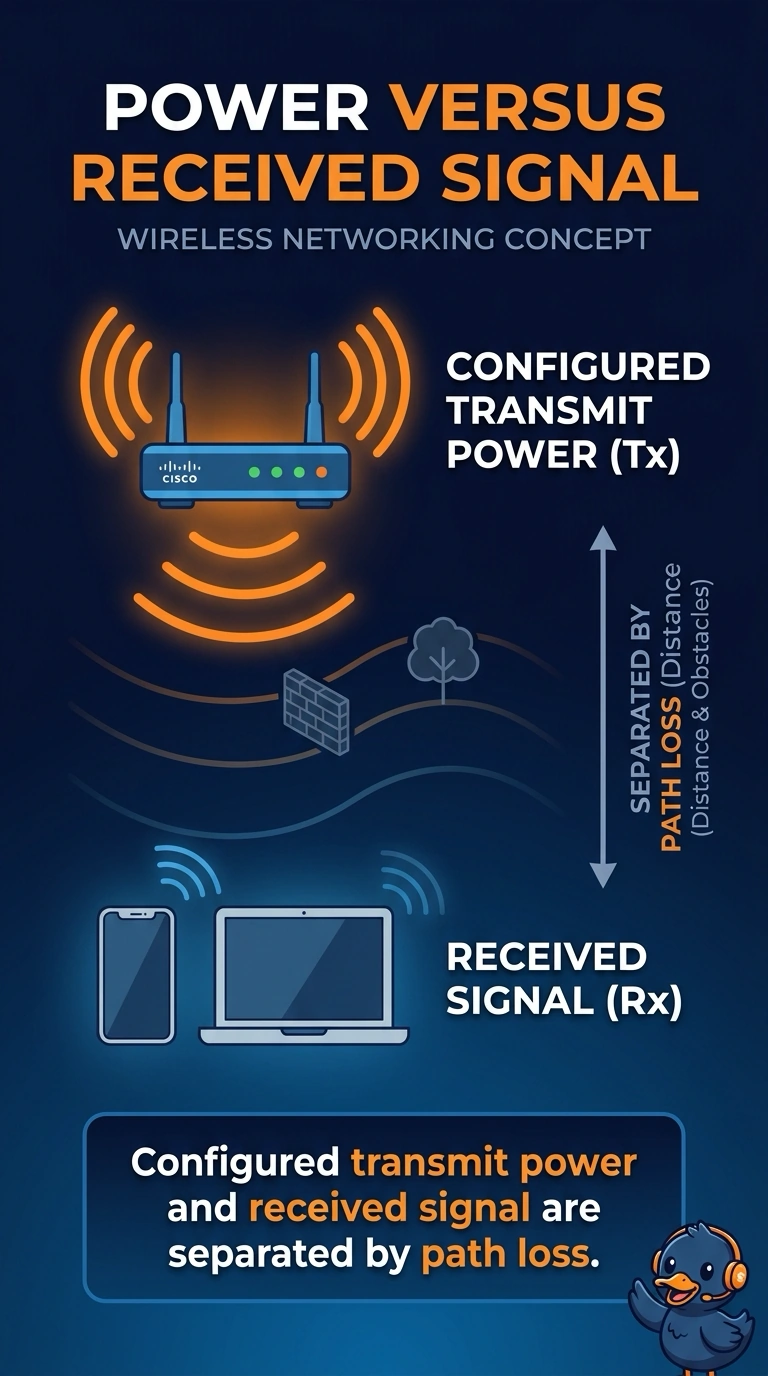
The number on the radio is what it sends, not what the handheld catches after the aisle has eaten most of it. You are comparing transmit power with received signal and skipping the path in between. A lease timer will not explain that gap.
Full Explanation
Configured transmit power is the output of the radio, before the path. Received signal is what is left after free-space loss, walls, and racks. A high transmit setting and a weak handheld reading can both be true, because the path loss between them is large. The engineer is treating those two different measurements as if they were the same number. DHCP lease time and the beacon interval are timers. Neither one sets the received signal strength, and changing them will not make the end of the aisle louder. A VLAN number and a channel number are different identifiers. They are not two units for one RF measurement, and the handheld's weak reading is not a VLAN mismatch by itself. A certificate end date is a security validity time. It does not expire because RSSI is low, and it is not a signal unit. Exam caveat: antenna gain and cable loss sit in the EIRP math on the transmit side, and they still do not tell you the received number until you subtract the path. Operational check: read the handheld's received signal in dBm at the end of the aisle and compare it with a reading next to the access point, using the same device, before you raise power again.