
A stadium designer replaces a low-gain omnidirectional antenna with a higher-gain directional antenna aimed at one seating section, using the same radio transmit power. What changes in the coverage pattern?
Select an answer to reveal the explanation.
Short Explanation
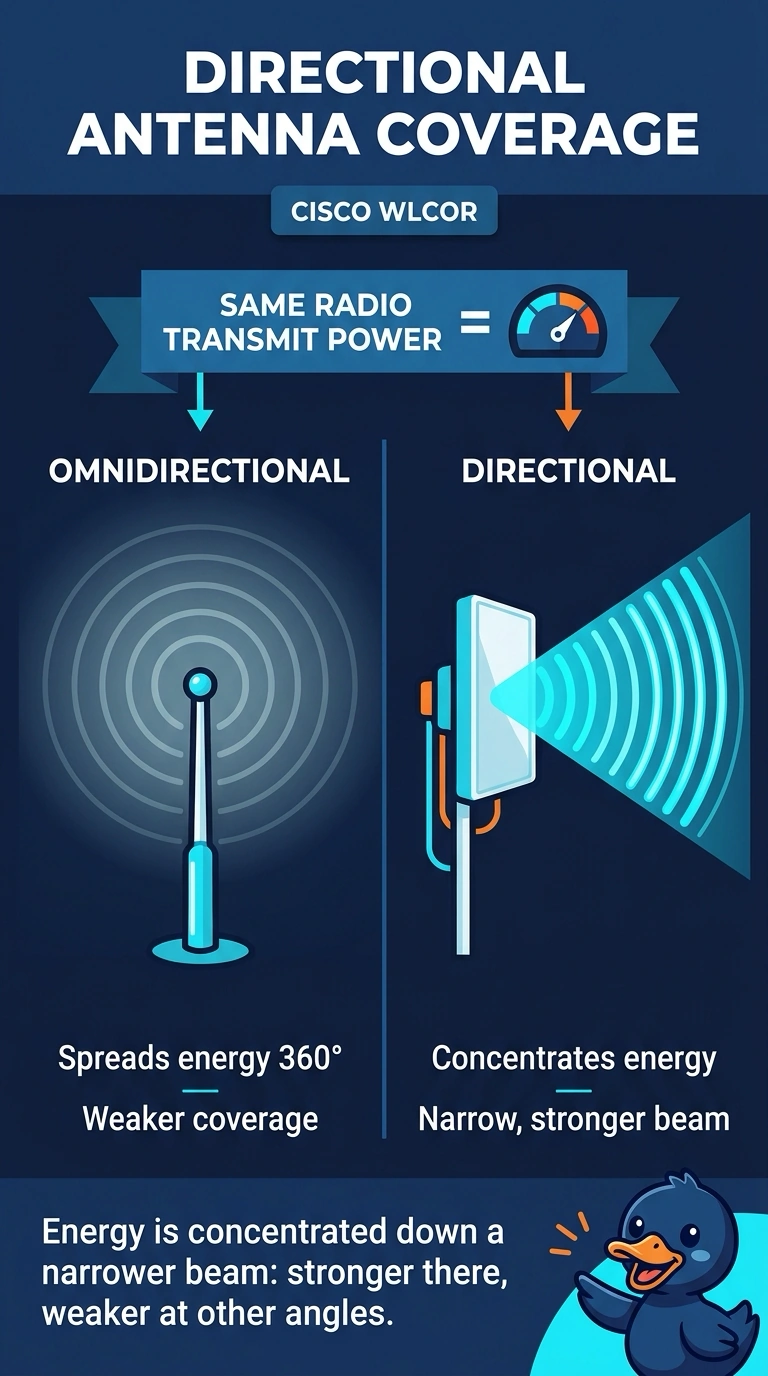
Antenna gain is a lens, not a bigger bulb. You aimed the same transmit power into a tighter beam, so that seating section gets stronger and the sides get weaker. A higher-gain antenna does not mint new watts inside the radio.
Full Explanation
Passive antenna gain comes from directing the radio's existing power into a smaller solid angle. With transmit power held constant, the seating section in the main beam sees a stronger signal, and angles outside that beam, including behind a directional antenna, see less. The total energy did not increase. The pattern changed. The idea that gain multiplies the radio's wattage describes an amplifier, not a passive antenna. Any regulatory EIRP math adds the antenna gain to the conducted power because the energy is concentrated, not because the radio generated more of it. Channel width is a PHY setting, 20 MHz and wider. An antenna does not bond channels, and hanging a directional antenna does not double the channel. A directional pattern is unequal by design. Seats behind the antenna are outside the main lobe and should be weaker, often much weaker, than seats in the beam. Treating them as equal would be the omnidirectional pattern that was just removed. Exam caveat: the uplink still depends on the client. A strong downlink in the beam does not help a phone that cannot transmit back, and aiming a narrow beam at only part of a bowl leaves the rest of the seats uncovered on purpose. Operational check: survey inside the beam and behind the antenna at the same distance and confirm the front-to-back difference before you copy that antenna to the next section.