
Most new access points join. One got its address from a different DHCP scope, and that scope has no option 43. The access-point scope does. The stray access point never joins. Why?
Select an answer to reveal the explanation.
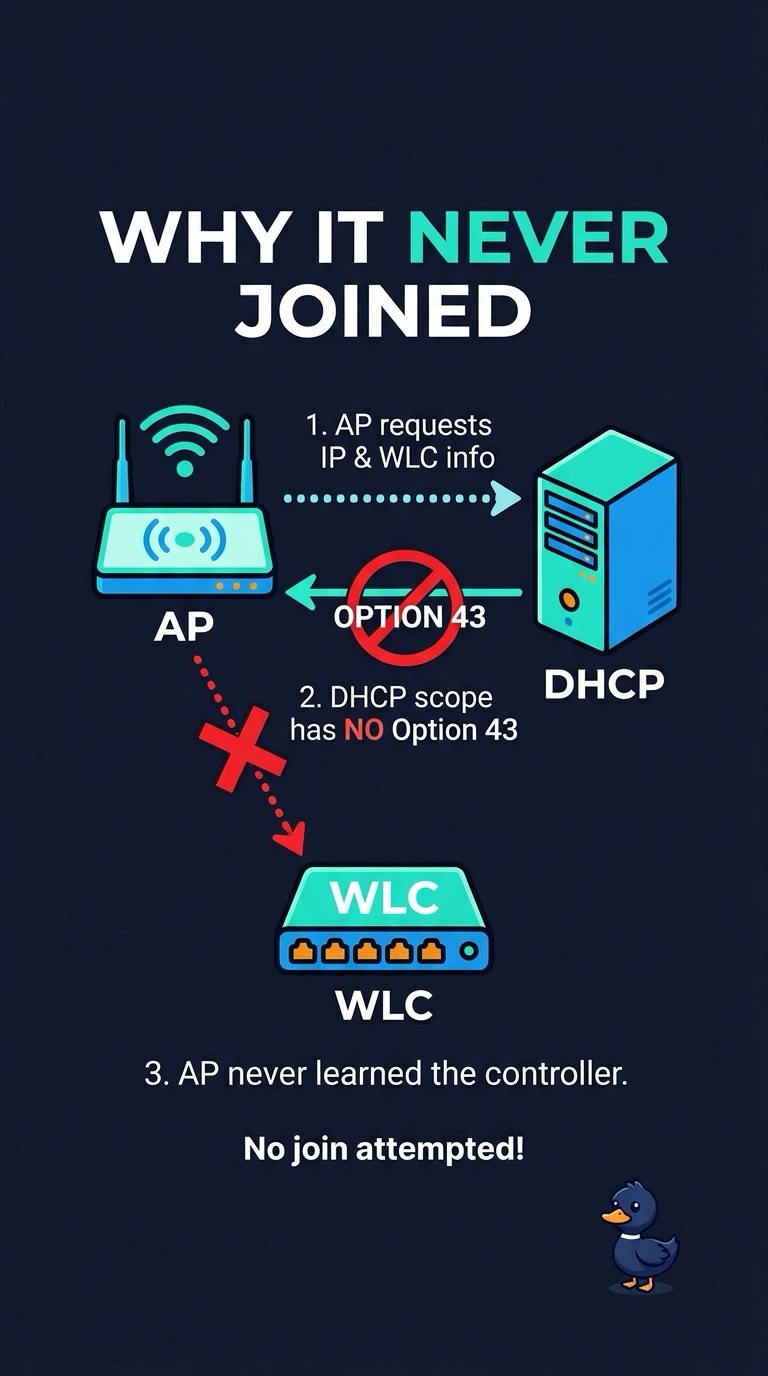
Short Explanation
The scope that knows the controller is not the scope that answered this access point. You gave it an address and no direction. Put it on the access-point scope, or teach the scope it actually used.
Full Explanation
DHCP option 43 is how this design tells an access point the controller address. The stray access point was answered by a different scope that has no option 43, so it never learned the controller, while access points on the real scope join. Option 43 on the correct scope does not block other scopes. It simply is not present on the scope this access point used. A scope without option 43 does not join faster. It omits the direction. The controller is not ignoring the access point. The access point never started a join toward it. Option 43 is correct on the access-point scope. This access point got its address from a different scope that has no option 43, so it never learns the controller. Check one live client after the change and leave the rest of the floor alone until that client matches the result you expected. Read the live counters after you retest. Exam caveat: if that other scope was used because the access-point VLAN is wrong, fixing option 43 there may hand it a controller and still leave it in the wrong VLAN. Confirm the VLAN and the scope together. Operational check: move the access point to the access-point scope, or add option 43 to the scope it uses, and confirm it joins.