
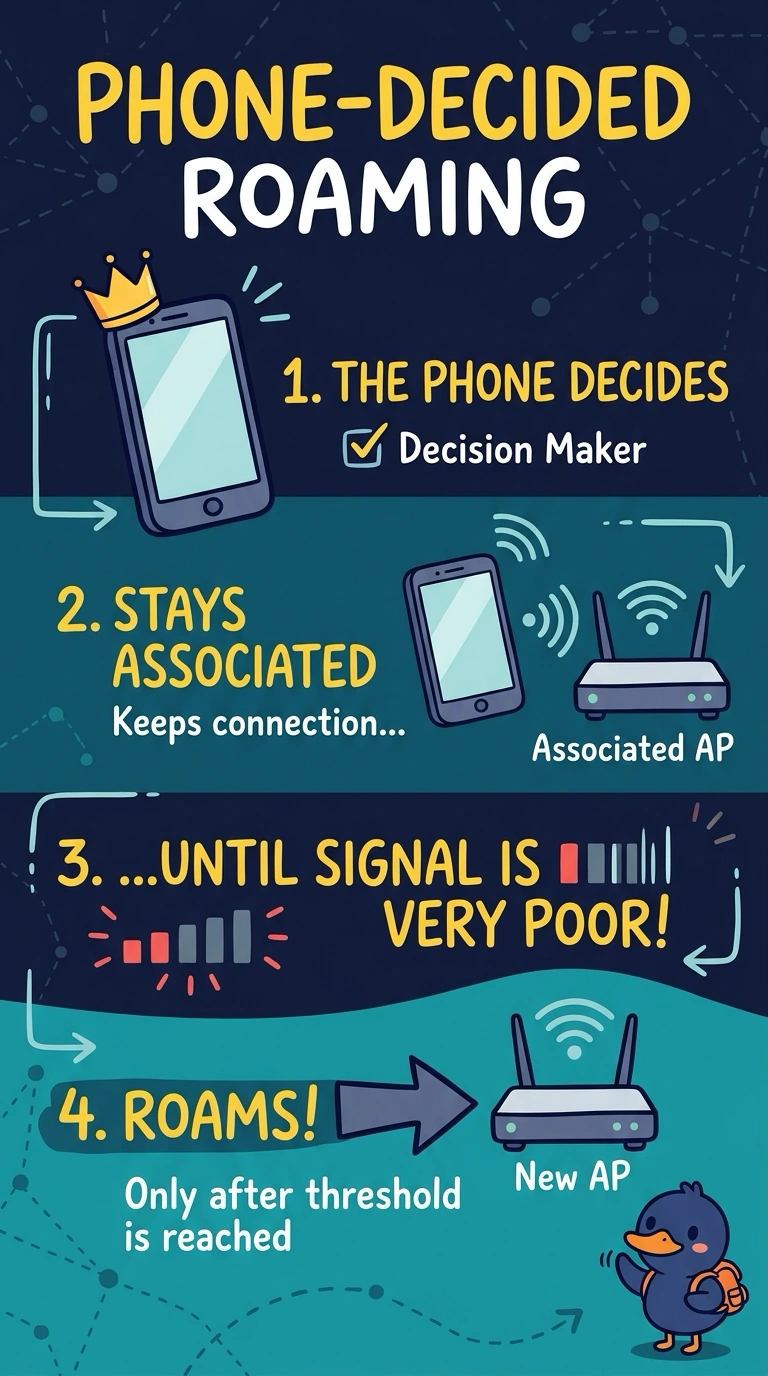
A phone clings to the first access point long after a nearer access point is much stronger. The phone is set to stay associated until the signal is very poor. What is deciding the roam?
Select an answer to reveal the explanation.
Short Explanation
A much stronger neighbor is right there, and the phone is under orders to stay until the first signal is awful. Your client is deciding the roam, and it is deciding to wait. The lease does not have to run out first.
Full Explanation
The client decides when to roam. This phone is set to stay associated until the signal is very poor, so it clings to the first access point while a nearer one is already much stronger. The nearer access point is not refusing the roam. The phone has not attempted it. The country code does not lock a client to the first radio it heard. DHCP does not gate roaming. A lease can be hours long while a healthy client still roams. The phone is set to stay associated until the signal is very poor, so it clings to the first access point. The neighboring access point is strong. The client is choosing to stay. Check one live client after the change and leave the rest of the floor alone until that client matches the result you expected. Read the live counters after you retest. Exam caveat: 802.11v can suggest a better access point, and a client with this setting can ignore the suggestion. If the phone will not roam on its own, a suggestion is still only a suggestion. Operational check: relax the phone's stay setting, walk toward the nearer access point, and confirm the phone roams while the first signal is still usable.