
A phone roams between two campus access points and keeps the SSID. The new policy puts it in a different VLAN. Existing sessions stall until the phone gets an address in the new subnet. What kind of roam is this?
Select an answer to reveal the explanation.
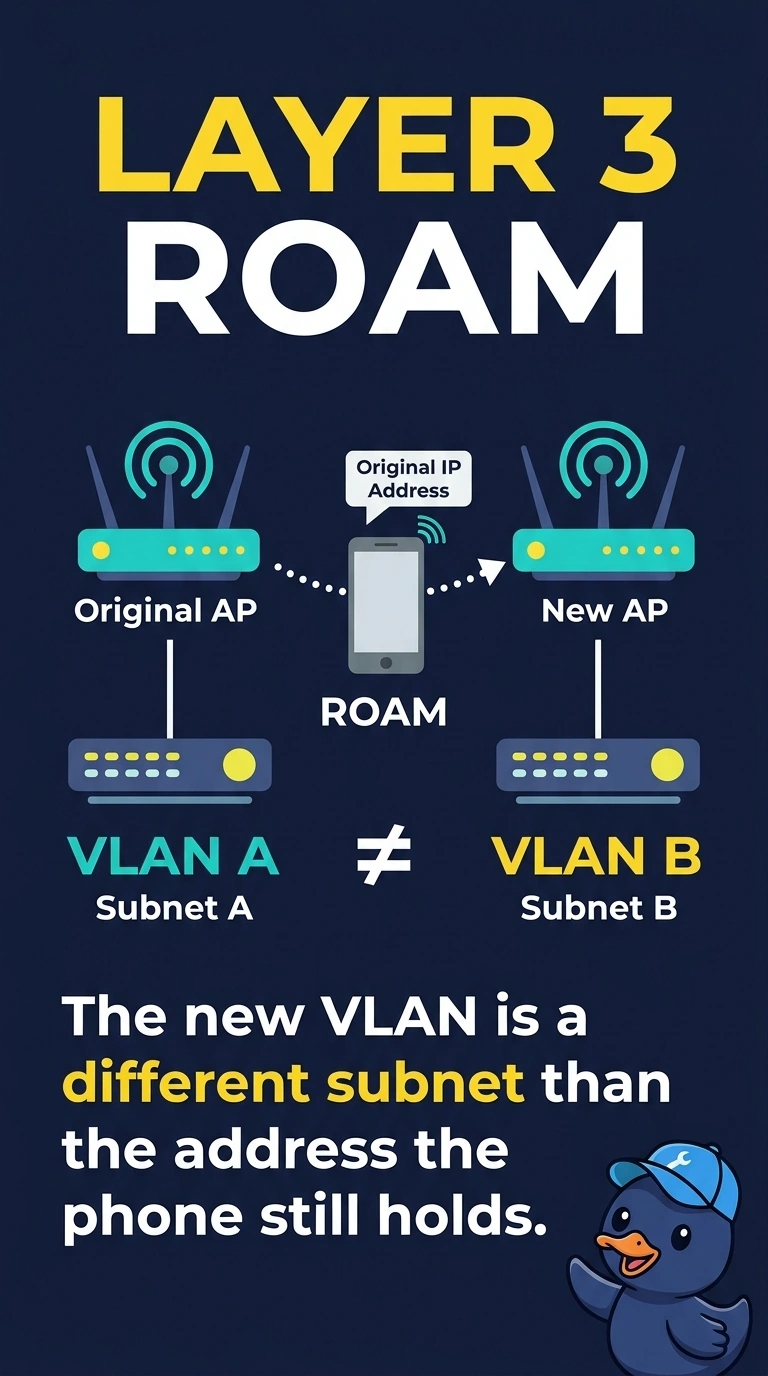
Short Explanation
The name stayed the same and the subnet did not. Your phone is still wearing the old address on a VLAN where that address does not belong. That is a Layer 3 roam, and keeping the SSID does not keep the subnet.
Full Explanation
A Layer 2 roam stays in the same subnet, so the client keeps its address and its sessions. This phone kept the SSID and was placed in a different VLAN, and its sessions stalled until it obtained an address in the new subnet. That is a Layer 3 roam. The SSID is not the subnet. Two policies can advertise one name and drop clients into different VLANs. An 802.11k neighbor report helps the client choose a target. It does not move the client into a VLAN. DFS is a radar response on a 5 GHz channel. A VLAN change is a policy decision, not a radar vacation. The phone kept the SSID and lost the subnet. Sessions stall because the old address does not belong on the new VLAN. Confirm the result on one live client before changing anything else. Exam caveat: fast transition shortens the security hop and does not glue two subnets together. If the VLAN changes, plan on broken sessions even when the roam itself is fast. Operational check: make both access points use the same client VLAN for that WLAN, roam the phone, and confirm the address and the sessions survive.