
Bank guests get online and can also resolve internal bank hostnames. The guest DHCP scope is handing out the internal DNS servers. What should change?
Select an answer to reveal the explanation.
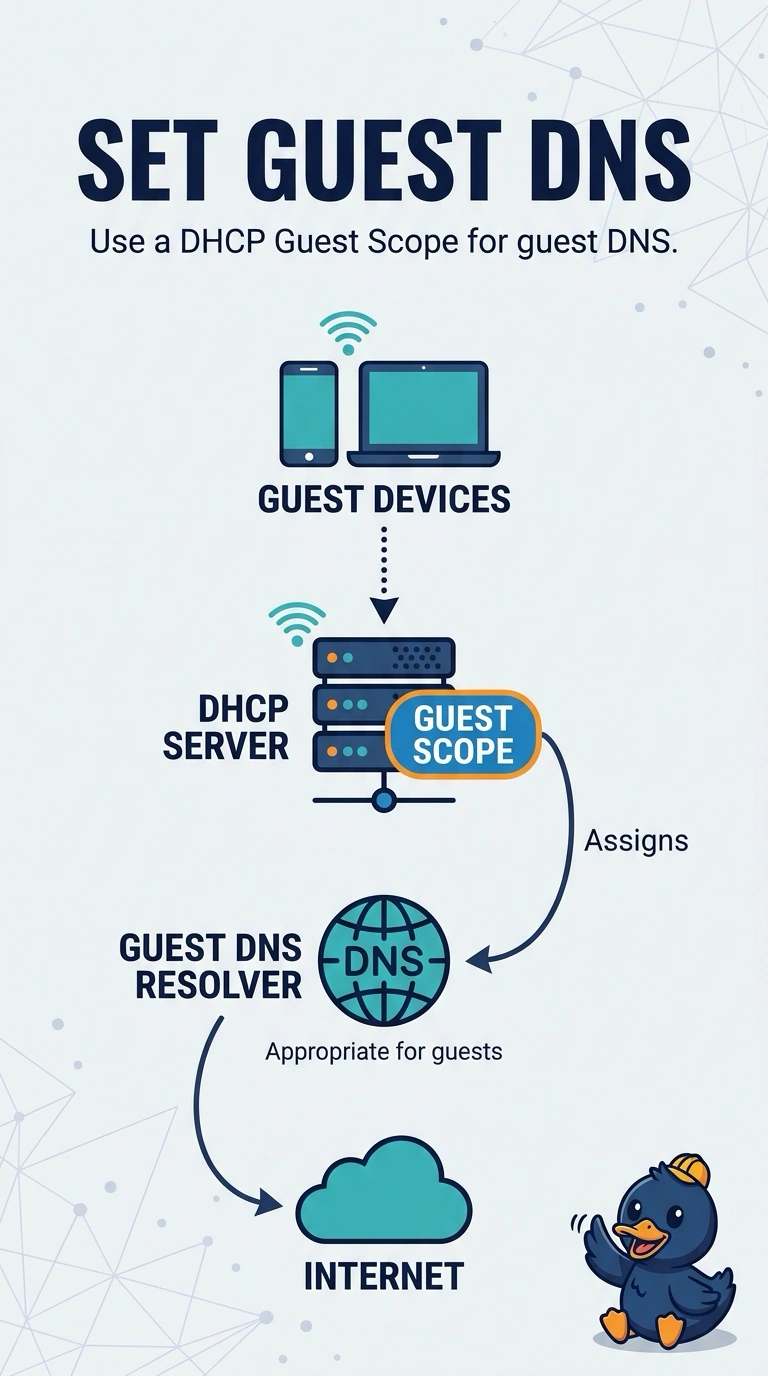
Short Explanation
Your guest DHCP scope is handing out internal DNS servers, so guests can resolve internal names. Give the guest scope a DNS resolver appropriate for guests. The SSID name and RF channel do not choose the DNS server.
Full Explanation
Clients generally query the DNS servers supplied in their DHCP offer. Because the guest scope offers the bank’s internal resolvers, guests can resolve internal hostnames; change the scope so it offers a resolver appropriate for guests, such as a public or filtered resolver, and keep internal resolvers out of that offer. The guest SSID name does not select DNS servers regardless of what DHCP offers; the DHCP configuration determines the resolver clients receive. An RF profile does not block internal names based on whether the channel is above 36: channel selection concerns wireless radio operation, not DNS resolution. A beacon interval also does not list DNS servers; DNS settings come from DHCP or a client’s static configuration, not beacon timing. Exam caveat: resolving an internal name does not by itself prove a guest can connect to the corresponding host. A firewall may still block guest traffic to internal networks, so verify both name resolution and access controls. Practical check: renew a test guest’s DHCP lease, confirm the offer contains the guest-appropriate DNS resolver rather than the internal bank resolvers, then test an internal hostname and confirm the firewall denies guest access to internal networks.