
A script calls a list API and prints the raw response text. An engineer reads the length of that text and reports it as the number of access points. What did the length actually measure?
Select an answer to reveal the explanation.
Short Explanation
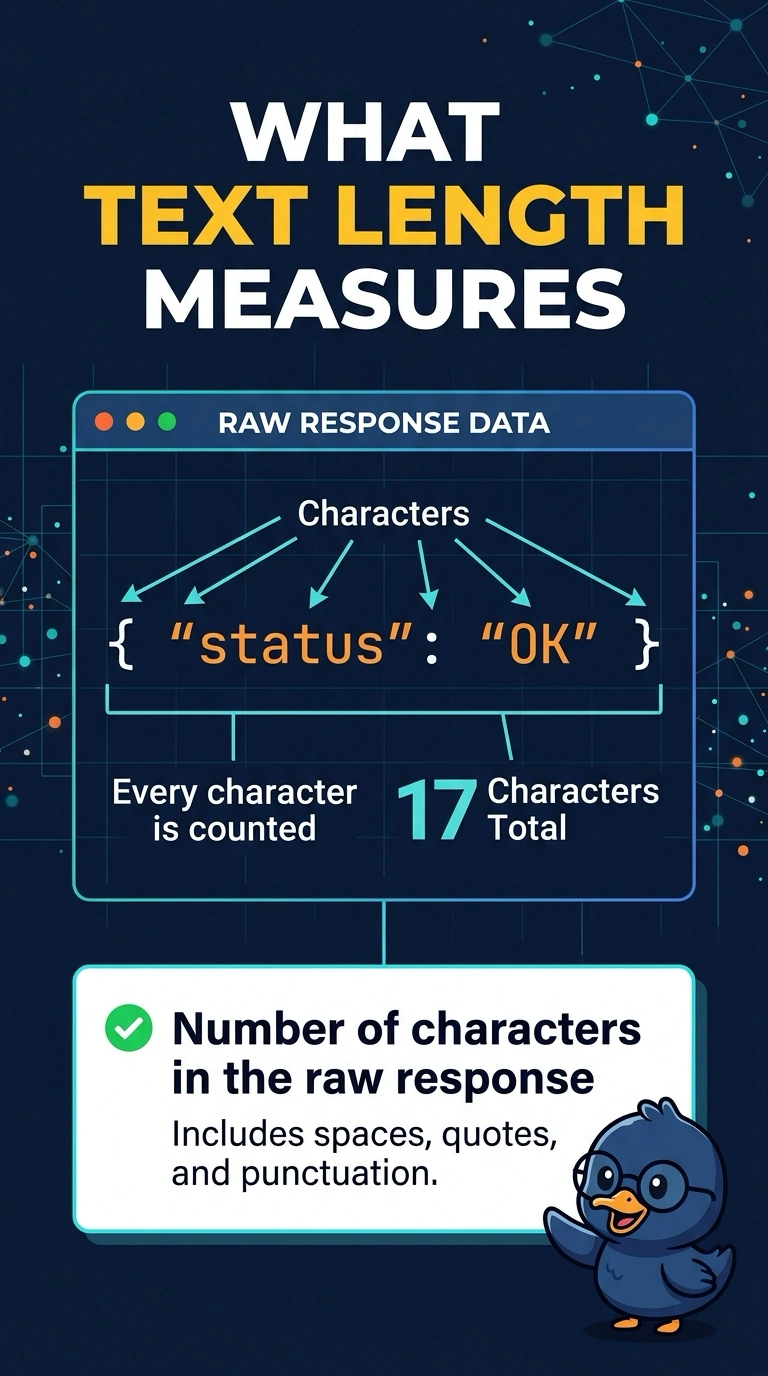
You measured the characters in the response, not the access points it describes. Parse the list to count the access points; the HTTP status code is a separate value.
Full Explanation
The raw response text is the body represented as a string, so its length measures how many characters the string contains. Names, spaces, and punctuation can change that length without changing the number of access points. The body’s character count is not defined to be the inventory count; you must parse the list and count its access-point objects. The HTTP status code is a separate value, not the length of the body. A list API does not encode the channel number as the text length, either; channel and inventory count are read from parsed fields. Here, the script prints the raw response, and the engineer mistakes its character count for the number of access points. Exam caveat: the length of a parsed list can give the number of items in that list, but only after you have followed every page; one page’s raw-text length is neither its item count nor the full inventory. Practical check: parse the body, count the access-point objects, and confirm the result against the dashboard. After a change, check one live client and do not retune the rest of the floor until that client matches the expected result.