
A hospital access point on a 5 GHz channel suddenly changes channel, and the log says radar was detected. Clients rejoin on the new channel. What happened?
Select an answer to reveal the explanation.
Short Explanation
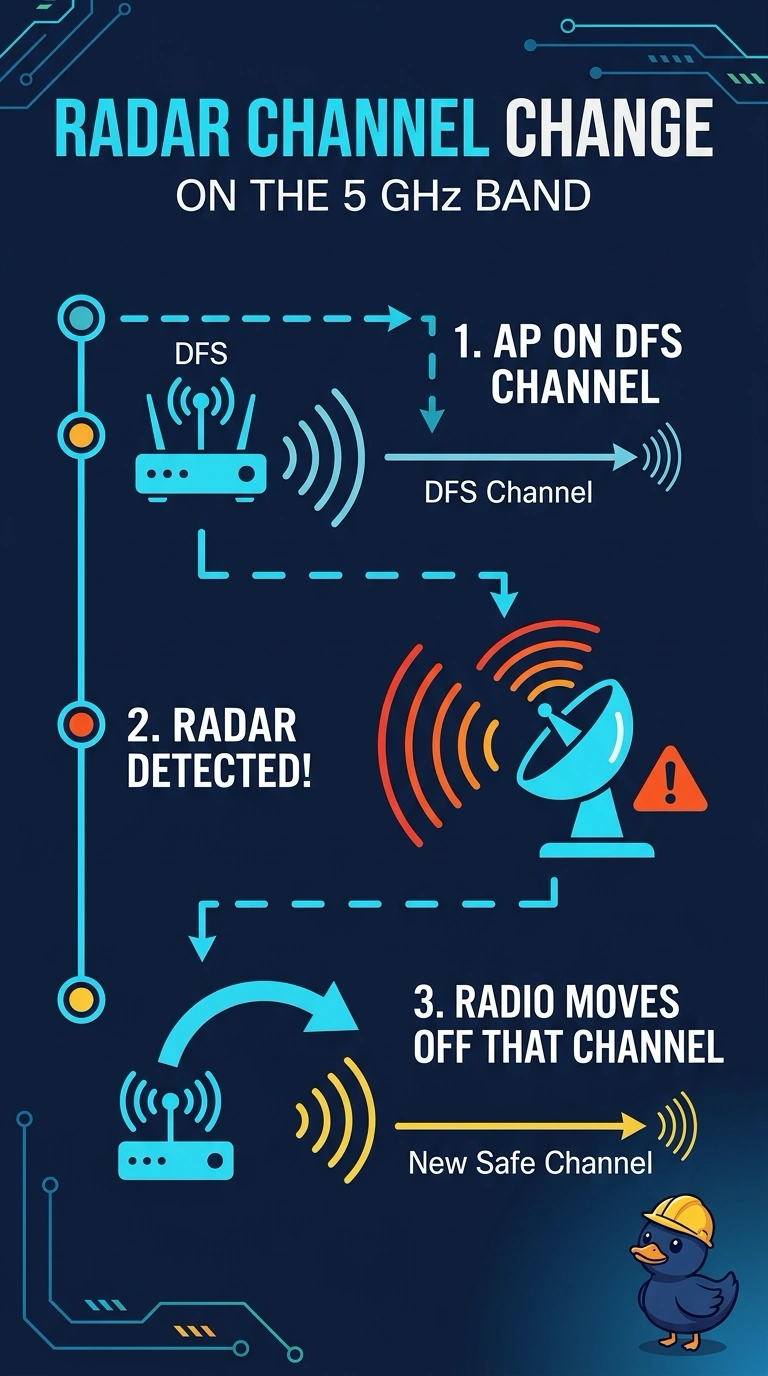
Radar owns some 5 GHz channels, and your access point is a guest there. It heard radar and had to leave. That is DFS, not a DHCP event and not a full guest list.
Full Explanation
Dynamic frequency selection requires a 5 GHz radio on certain channels to leave if it detects radar. The log says radar was detected and the access point changed channel, then clients rejoined. That is DFS working, and the rejoin on the new channel is the normal recovery. Client exclusion rejects one client for a timer. It does not change the channel for everyone, and an expiring exclusion puts a client back, it does not retune the radio. A DHCP scope has no relationship to the channel. Using the last address does not generate a radar log. The beacon interval is a repeating timer for advertisements. It does not expire into a radar event, and the log would not call a beacon timer radar. Exam caveat: after a radar hit the radio must stay off that channel for the required period. Putting it back immediately is both illegal and likely to bounce again. Operational check: note the channel it left and the channel it landed on, confirm the new channel is allowed, and avoid pinning that radio back onto the radar channel.