
A retailer sets each radio to the highest conducted power its country allows, then adds a high-gain antenna and ignores cable loss. Which limit can that combination break?
Select an answer to reveal the explanation.
Short Explanation
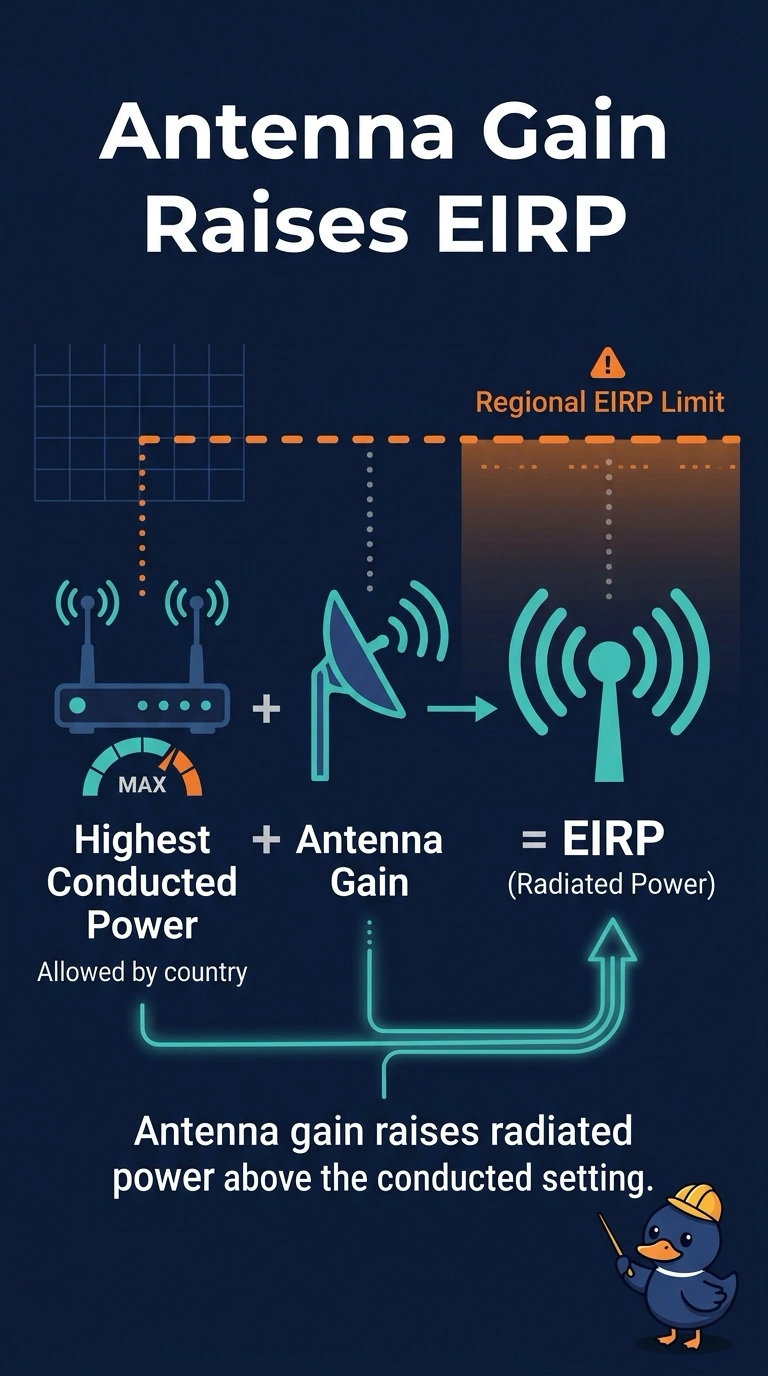
The legal limit cares about what leaves the antenna, not the number alone on the radio. You turned the radio up to the cap and then focused that energy with gain, so the radiated result can be over the line. A longer lease will not bring it back.
Full Explanation
EIRP is the radiated result: conducted transmit power, plus antenna gain, minus cable and connector loss. A country limit is enforced on that radiated value, not on the conducted setting by itself. Setting the radio to the highest conducted power the country allows and then adding antenna gain, without subtracting the real cable loss, can push the radiated power past the legal EIRP. The antenna did not create energy, but it concentrates the energy that is already at the legal conducted cap. DHCP lease time is an address timer. Antenna gain does not shorten leases, and a lease limit is not a spectrum rule. Neighbor reports are a roaming advertisement. Gain does not disable them, and they are not the regulatory cap. A guest anchor is a tunneling choice for guest VLANs. Antenna gain does not move clients into the DMZ or consume an anchor session limit. Exam caveat: a high-gain antenna can be legal if you lower conducted power so the sum stays under the EIRP cap. The mistake is stacking gain on top of an already maxed conducted setting. Operational check: add conducted power and antenna gain, subtract cable loss, and compare the result with the country's limit for that band before you leave the high setting in place.